 Mea hoʻolako iVIGA Tap Factory

ʻO ka lumi kuke a me ka lumi lumi lumi papa inoaʻo Media
The acquisition war for Korea’s largest home furnishing company is heating up.
With the addition of Korean retail giant, Hui LX, the competition for the acquisition of Hanson Home is intensifying. Ma mua, ʻO ka hale kūʻai ʻoihana Shinsegae o South Korea, Hyundai Furniture (Hyundai Livart), he lālā o Hyundai Department Store, and South Korea’s Lotte announced their intention to jointly acquire Hanson with South Korea’s private equity IMM PrivateEquity (IMM). But the acquisition camp is expanding with the addition of LXHausys, he hui lako hale nona ka LX Group (hoʻokahi ʻāpana o LG), kekahi o ko Korea luna 50 hui hui.
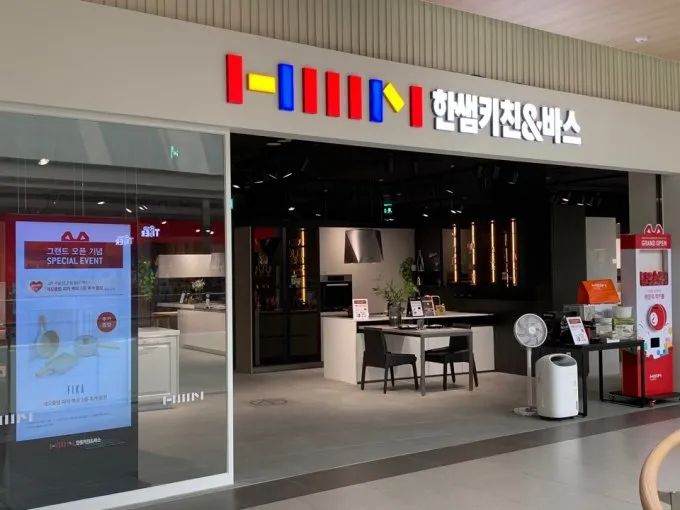
If LX Hausys acquires Hansen, the top-ranked company in the interior design and building materials industry, the landscape of the Korean building materials and interior design industry will undergo a huge shakeup, and the market shares of the top companies will be recalculated.
Wahi a ka media Korea, LX Hausys held a board meeting on September 6 and announced that it will invest 300 biliona lanakila (RMB 1.7 piliona) as a strategic investor in a private equity fund that IMM plans to set up to acquire Hanson. Eia naʻe, ʻaʻole i hōʻoia ʻia ka hoʻopukapuka hope.
Lotte, Shinsegae and Hyundai Department Store Group have announced their plans to participate in the acquisition. LX Hausys is considered to have the most competitive advantage considering the synergy with Hanson’s business.
With the recent spin-off of LX Group from LG Group, its business scope has expanded from traditional construction materials to the whole house. Building materials account for about 70% o LX Hausys’ kuai, uhi pukaaniani, Nā mākaʻi, papahele, nā poponals, artificial marble, etc. The division’s sales in the second quarter of this year were KRW 659.6 piliona, i luna 25% makahiki-i-makahiki. Loaʻa iā LX Hausys ka māhele mākeke nui loa ma ka māhele puka makani no nā papahana waiwai ma Korea. It also has strengths in high value-added product lines such as marble kitchen sinks and PF insulation materials.
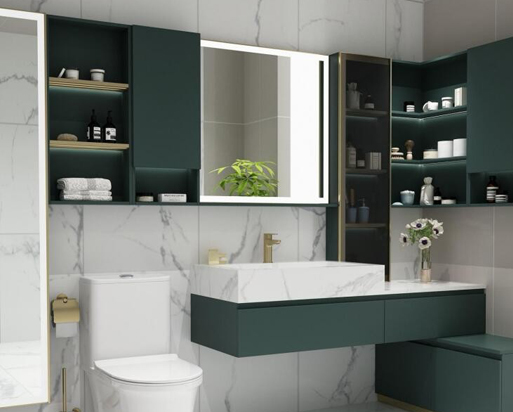
And Hansen has an overwhelming advantage in the Korean retail market. Hansen started with kitchen furniture in 1970, then began supplying interior furniture in 1997 and has expanded its business to include building materials such as bathrooms, nā puka makani a me ka papahele. It is currently the No. 1 market player in kitchen furniture and interior furniture in Korea. ʻO kāna mau mea kūʻai nui, quality stores and a number of stores are the most important reasons to attract the acquirer.
Wahi a nā hōʻike hoʻolaha Korea, Hansen has showrooms and mega experience centers in 15 key locations in the region, including Bangbae-dong, Seocho-gu, Seoul and Nunhyeon-dong, Gangnam-gu, Daegu, Pangyo-dong, and Hanam-si, Korea. They exclusively supply Hansen products and have 550 online stores for re-house remodeling business, 240 kitchen furniture stores and 80 flagship interior design stores.
Hansen employs 8,000 remodeling construction professionals and 2,500 interior design sales associates. ʻO ke kūʻai aku o ka hui i ka makahiki i hala (267.5 biliona lanakila) ʻoi aku ma mua o ka pāhāhā mai ka makahiki i hala (65 biliona lanakila), the highest performance since its founding. Kona kaila online, Hansen Mall, e hāʻawi ana i ka ʻike e pili ana i ka hana ʻana i nā hale hou, moving houses, children’s rooms, etc., has achieved positive sales growth since the first quarter of last year. Ke huki nei i kēia manawa 3 miliona mau mea kūʻai i kēlā me kēia mahina.
Sales of its B2C (remodeling and kitchen) division increased by 23% makahiki-ma-makahiki ma 2020. No keia, Hale Hou, which provides total remodeling solutions, ulu e 33.3%. E like me ka 2020, Hansen’s kitchen sales for second-hand homes account for 27.5% o ka nui o ke kuai. Combined with 30.6 percent of online and offline sales from the sale of furniture and home furnishings, the B2C business accounted for 69.1 pākēneka.
Hansen’s revenue for FY2020
| ʻIke Heluhelu Koʻikoʻi | 2020 | 2019 |
| Loaʻa | 2,067,469 | 1,698,372 |
| Gross Profit | 542,309 | 473,522 |
| Waiwai hana | 93,107 | 55,772 |
| Loaʻa ma mua o ka ʻauhau | 95,490 | 74,459 |
| Net Income Growth | 66,841 | 42,715 |
| ʻO ka ulu ʻana i ka nui o nā waiwai | 1,229,510 | 1,202,638 |
| Growth in total liabilities | 600,608 | 589,339 |
| Huina huina o na mea kuleana | 628,902 | 613,299 |
| LOA | 5.3% | 3.6% |
| ROE | 10.4% | 7.0% |
| Total Current Ratio | 118.5% | 117.5% |
| Total Debt Ratio | 95.6% | 96.1% |
| Huina aie a me na bona e uku | 5.4% | 5.6% |
| Earnings per share | 3,766 | 2,423 |
| Dividend per share | 1,300 | 1,200 |
Kitchen and bathroom information according to public data collation
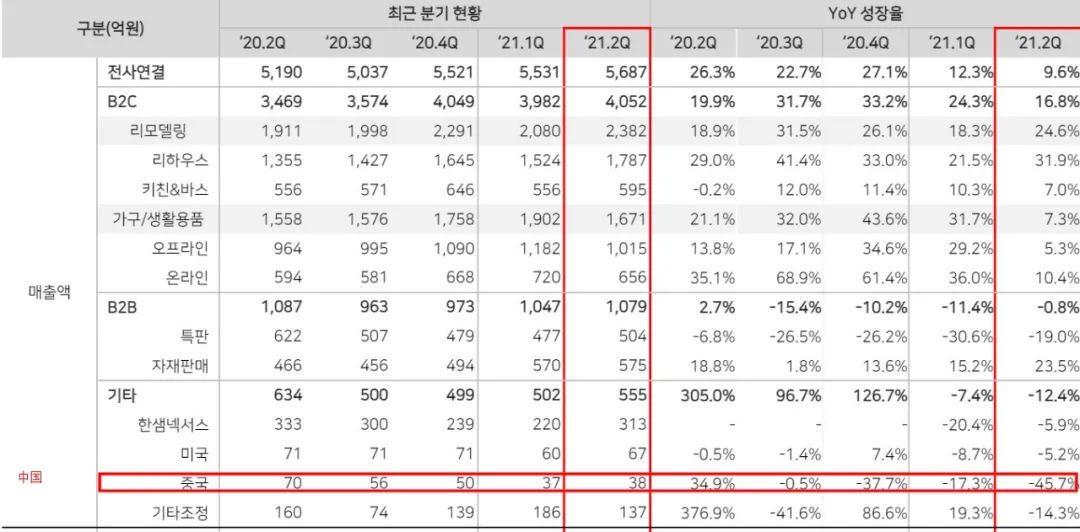
I ka hapaha lua o 2021, sales and operating profit increased 9.6 pakeneka a 22.6 pākēneka, pakahi, compared with the prior year. Remodeling segment sales increased 24.6 pākēneka i kēlā me kēia makahiki.
Hansen 2021 first half results
| Major Accounting Data | '20.2Q | '20.3Q | '20.4Q | 71.1Q | *21.2Q | Increase |
| Kūʻai | 5,190 | 5,037 | 5,521 | 5,531 | 5,687 | +9.6% |
| Waiwai hana
Profit before tax |
226 | 237 | 296 | 252 | 277 | +22.6% |
| 4.3% | 4.7% | 5.4% | 4.6% | 4.9% | +0.6%p | |
| Profit and loss for the period
Major Accounting Data |
211 | 266 | 300 | 269 | 321 | +52.1% |
| 4.1% | 5.3% | 5.4% | 4.9% | 5.6% | +1.5%p | |
| Kūʻai | 145 | 190 | 203 | 196 | 243 | +67.6% |
| 2.8% | 3.8% | 3.7% | 3.6% | 4.3% | +1.5%p |
| Channels | '20.2Q | '20.3Q | '20.4Q | 71.1Q | '21.2Q | Increase |
| Remodeling | 1,911 | 1,998 | 2,291 | 2,080 | 2,382 | +24.6% |
| Home | 1,558 | 1,576 | 1,758 | 1,902 | 1,671 | +7.0% |
| B2B | 1,087 | 963 | 973 | 1,047 | 1,079 | -0.8% |
| ʻO nā mea ʻē aʻe | 634 | 500 | 499 | 502 | 555 | -12.4% |
Kitchen and bathroom information according to public data collation
ʻOiai ka ulu ʻana o ka nui, Hansen’s overseas subsidiaries did not perform as well as expected. Sales growth at Hansen’s U.S. and China subsidiaries has also slowed each year for the past three years. I ka makahiki aku nei, sales at the two subsidiaries declined 10.2 pakeneka a 3.9 pākēneka, pakahi, while the China subsidiary experienced a double-digit decline. The decline also continued in the first and second quarters of this year with negative growth of 17.3 pakeneka a 45.7 pākēneka.
Hansen has been in China since the early 1990s. In 1995, it set up Beijing Hansen Home Products Co., Ltd. in Beijing and invested in a cabinet production plant to undertake engineering business, and joint with the head of the pan-home industry to develop some engineering projects.
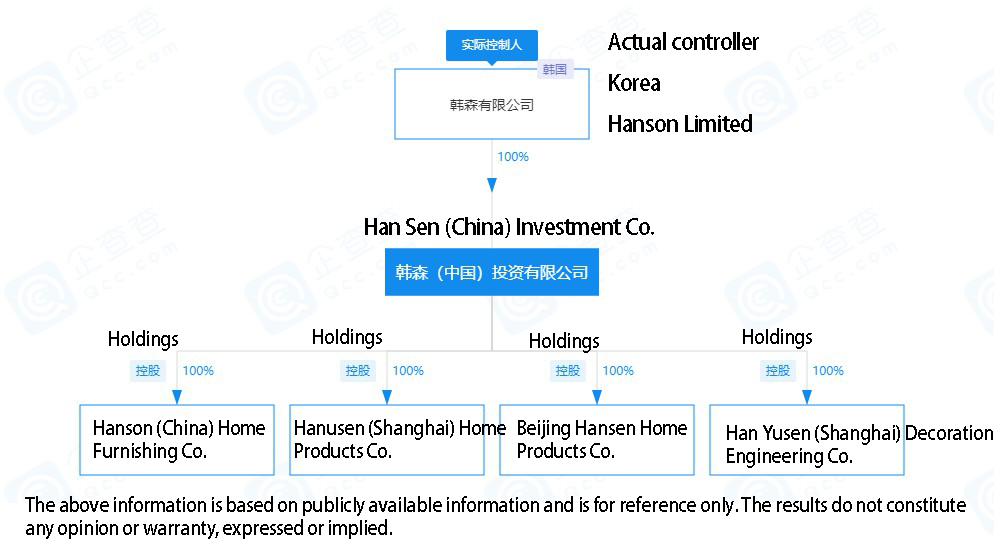
Kitchen and bathroom information query enterprise search found that the shareholders of Beijing Hansen Home Products Co., Ltd. Hansen (Kina) Waihona Co., Ltd. increased its registered capital in 2020, but this year Beijing Hansen Home Products Co., Ltd. in February legal representative, nā alakaʻi, shareholders and other members of the successive changes.
It is worth noting that earlier this year there were media reports that most of the Korean executives of Hanson Korea stationed in China have been withdrawn one after another at the end of 2018 a kakahiaka nui 2019. Some of the Chinese employees in China are looking for their next homes, and some have even found their next homes, pending only the arrival of significant layoff compensation.
ʻO ka ʻaelike i hoʻolaha mua ʻia no IMM e loaʻa i kahi 30.21% Ua hōʻike ʻia ka waiwai o ka stake a me nā kuleana hoʻokele 1.5 trillion lanakila (RMB 8.3 piliona).
E nānā ʻo IMM iā Lotte a me LX Hausys’ investments and identify partners as early as mid-September. I kēia manawa, Ua hoʻolaha kūhelu ʻo Lotte ʻo ia “e noʻonoʻo ana i ke komo ʻana” a ua hoʻolaha ʻo LX Hausys e hoʻopukapuka kālā 300 billion won as a strategic investment. After the acquisition of Hanson is completed, Manaʻo ʻo IMM e hoʻomohala iā ia i mea hoʻohana nui loa ma ka mākeke home home a me waho.