 iVIGA Tẹ ni kia kia Factory Supplier

Idana Ati Ile-iṣẹ Baluwe Agbo Media Idana Ati Alaye Baluwe
Gẹgẹbi awọn ijabọ media Vietnamese, awọn Vietnam gedu ati Forest Products Association (VIFORES) ti beere awọn ajo interdepartmental ti o yẹ Vietnam lati ṣe awọn ayewo alaibamu ti awọn ile-iṣẹ ifura (awọn ti o nwọle awọn ọja ti o ni eewu giga) pẹlu idagbasoke iyara ni awọn agbewọle lati ilu okeere ati mu awọn igbese akoko.
It is reported that the association has sent a document to the Vietnam Ministry of Agriculture and Rural Development and the Vietnam Ministry of Industry and Trade. It contains information about the transit of Chinese bathroom cabinets and kitchen cabinets through Vietnam.
Ni ọdun meji sẹhin, iye owo okeere ti awọn ọja igi ti Vietnam ti pọ si ni kiakia. Ni oṣu mẹta akọkọ ti ọdun yii, Awọn ọja okeere ti Vietnam ti igi ati awọn ọja igi ti de 3.788 billion dollars, ilosoke ti fere 45% lori akoko kanna ni ọdun to kọja. 2020. Its exports to the US market exceeded US$2.29 billion, soke 77.02% from the same period in 2020, iṣiro fun 61% of the total export turnover of the entire timber industry (farawe si 50% ni akoko kanna odun to koja).
Ni awọn ofin ti agbewọle, in the first three months of the year, Vietnam gbe wọle fere $729 million in wood products, soke 37.2% lori akoko kanna ni 2020. Lára wọn, awọn ọja lati China de ọdọ 225 milionu U.S. dọla, ilosoke ti diẹ ẹ sii ju 50 ogorun, iṣiro fun 31 ogorun ti lapapọ iye ti agbewọle. Lára wọn, gẹgẹbi awọn apoti ohun ọṣọ idana, imports of bathroom cabinets were $30.17 milionu, ilosoke ti 41%. Imports of plywood were 49.27 milionu U.S. dọla, ilosoke ti 71%. Imports of solid wood sofa frame for 36.7 milionu U.S. dọla, ilosoke ti 46%.
The association noted that the strategy of Chinese wood importers located in Vietnam is to export components of kitchen and bathroom cabinets (awọn nkan ti o ni ewu) lati China to Vietnam. Ọna ti o wọpọ julọ ni lati ṣii ile-iṣẹ kan ni Vietnam laarin kẹhin 1-2 years and then import kitchen cabinets, baluwe minisita irinše ati itẹnu, which is then exported to Vietnam for processing and assembly into finished products (with very low processing volume). Awọn keji ni wipe a ile-ni Vietnam agbewọle awọn ẹya ara pẹlu kan “ewu ifosiwewe” ati rira ati ta wọn laarin awọn ile-iṣẹ oriṣiriṣi. Awọn paati ọja wọnyi lẹhinna ni ipari pejọ nipasẹ ile-iṣẹ ẹyọkan ati gbejade lọ si Amẹrika.
Gege bi iroyin na, ko si deede ijerisi ti awọn loke alaye, ṣugbọn Ẹgbẹ Vietnam Timber ati Awọn Ọja Igbo ti beere lọwọ awọn ẹgbẹ agbegbe ti Vietnam ti o yẹ lati ṣe awọn ayewo lẹẹkọọkan ati awọn sọwedowo lori awọn gbigbe ati lati gbe awọn igbese lodi si awọn ile-iṣẹ pẹlu awọn ami ifura..
Moen Brothers MasterBrand
Ẹsun “arufin transshipment” by Chinese importer in the US
lati ya mọlẹ lori awọn oludije’ iṣowo
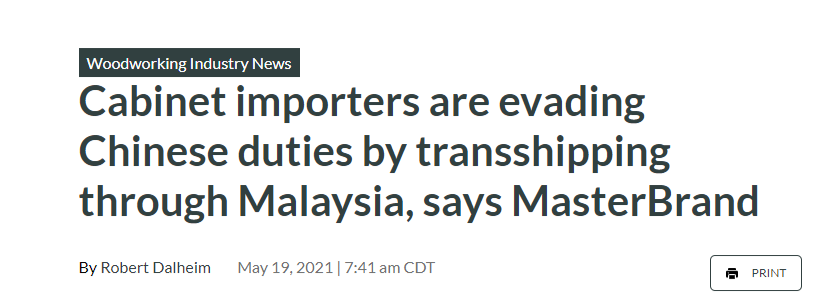
Ni afikun, according to recent reports in the U.S. media, Moen Brothers MasterBrand, a member of the KCMA American Cabinetmakers Association, which initiated the largest anti-dumping case against China, ti fi ẹsun kan pẹlu U.S. Customs and Border Protection alleging that “importers are now avoiding duties by trans-shipping cabinets to Malaysia, Vietnam ati Indonesia” to avoid customs duties. (Jẹmọ: Idajọ ikẹhin ti kọja ni iṣọkan, Orilẹ Amẹrika ti paṣẹ awọn iṣẹ ilodisi-idasonu ati awọn iṣẹ atako ti o ti kọja 250% lori balùwẹ minisita ati dù ni China)
The company claimed that the number of bathroom cabinets imported from countries such as Vietnam, Malaysia and Indonesia increased by 1,000% tabi diẹ ẹ sii.
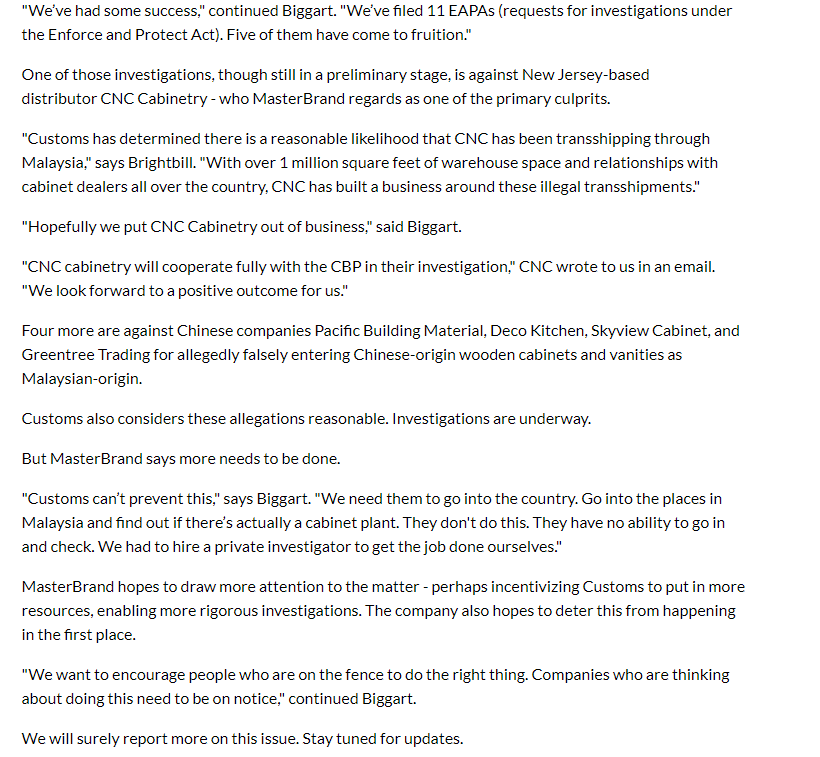
MasterBrand ti fi ẹsun lelẹ 11 Awọn ẹbẹ lati tẹsiwaju pẹlu awọn idiyele labẹ Imudaniloju ati Ofin Idaabobo, marun ninu eyi ti a ti fi ẹsun. Ọkan ninu awọn iwadii naa fojusi olupin CNC ti o da lori New Jersey, eyiti MasterBrand gbagbọ ti kọ iṣowo rẹ nipa nini diẹ sii ju 1 miliọnu ẹsẹ onigun mẹrin ti aaye ile-itaja ati iṣeto awọn ibatan pẹlu awọn oniṣowo minisita jakejado U.S. MasterBrand nireti lati kọlu ikọlu si iṣowo CNC nipasẹ ọna yii.
Mẹrin miiran Chinese ilé, Ohun elo Ilé Pacific, Ningbo Deco idana, Skyview Cabinet, and Greentree Trading, ti gba ẹsun.
Iwadi na nlọ lọwọ.
Alaye ti o jọmọ.
Ifipaya ati Idaabobo Ofin (Ifipaya ati Idaabobo Ofin,) ti Orilẹ Amẹrika, ti iṣeto labẹ Abala 421 ti Iṣowo Iṣowo ati Imudaniloju Iṣowo ti 2015 (ẸSẸ̀). The EAPA system is designed to prevent and sanction evasion of anti-dumping and countervailing duty orders.
EAPA ni anfani ti ṣiṣẹda ọpọlọpọ awọn alabaṣe ati pinpin alaye ti o tobi ju ati ilana iṣipaya fun ṣiṣe ṣiṣe ilodisi-idasonu / countervailing iṣẹ ṣiṣe awọn iwadii imukuro.
It requires CBP to determine whether there has been an evasion of a duty order during a specific period of time and to make a determination.
It gives CBP new tools to investigate allegations and to gather information from the applicant, agbewọle, awọn ajeji o nse / atajasita, ati paapaa ijọba ajeji.
It allows investigating parties to object to and challenge CBP’s rulings by applying for administrative review, eyi ti o le tun ti wa ni atẹle nipa ohun teduntedun si U.S. Ẹjọ ti International Trade (Ile-ẹjọ) fun idajo awotẹlẹ.