 iVIGA Tẹ ni kia kia Factory Supplier

Laipe, a number of Japanese sanitary ware companies have successively reported that there are a large number of counterfeit faucets filter elements, water purifier filter elements and other products on the market.
Counterfeit products are mostly sold on e-commerce platforms and have been distributed to many countries in Asia
Ni afikun, many companies also reported finding illegal products such as counterfeit shower heads, iro tile adhesives, and counterfeit ceramic knives.
Some companies call on consumers to be more vigilant and try their best to make purchases through official websites or directly-operated stores.
Fake faucets filter products are rampant, and large e-commerce platforms are available for sale
Ni Oṣu Keje 20, TOTO issued an announcement saying that it found counterfeit “TOTO” brand faucets filter products on the market.
TOTO said that counterfeit products are mainly sold on some well-known large e-commerce platforms, but did not disclose the specific platform names.
TOTO advises consumers that if there is a problem with the product purchased, it is best not to use it for safety and health reasons.
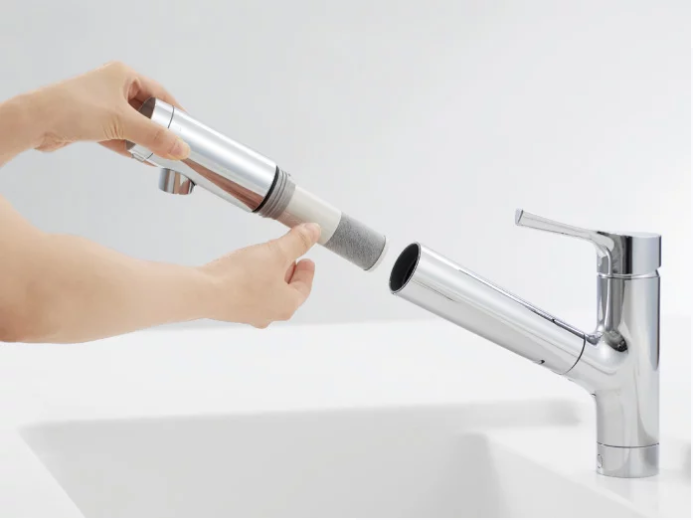
Lairotẹlẹ, another building materials giant LIXIL also issued a similar announcement not long ago, saying that the company received complaints from consumers that it bought counterfeit “LIXIL” brand faucets filter products on e-commerce platforms.
LIXIL sọ pe ni igba atijọ, iru awọn ọja iro le ṣe iyatọ si apoti, such as unnatural expressions in Japanese, ṣugbọn nisisiyi o jẹ soro lati se iyato lati apoti.
LIXIL detailed the characteristics of counterfeit products:
1. The price is much cheaper than the genuine product;
2. There are differences between the outer packaging font and the genuine product;
3. The product cannot be installed normally;
4. There are differences in internal materials and shapes.
LIXIL said that although the company has requested platforms that sell counterfeit products to remove related products from the shelves, it has not been able to completely remove them because of the application for each removal.
Call on consumers to buy from self-operated websites or regular stores.
Asian sanitary ware market fake “Awọn ọja Japanese” prevail
Ni atijo, made in Japan was synonymous with high quality, eyi ti o yori si ibigbogbo awọn ọja ayederu, and some unscrupulous merchants put Japanese brand trademarks on their products for sale. Fun apere, it was reported last year that some consumers in Shanghai bought a counterfeit “TOTO” brand toilet on an e-commerce website.
A urinal with a purchase price of more than 200 yuan can be sold for more than 400 yuan after labeling, and a toilet with a purchase price of more than 1,000 yuan.
O han ni, high profits are the reason why these unscrupulous merchants take risks.
Ni pato, rere ti “Ṣe ni Japan”, which once dominated the world with its “craftsman spirit”, has continued to decline in recent years, ati “Ṣe ni Japan” ti pada si ipo atilẹba rẹ.
It can be seen from the sales data of many listed sanitary companies in Japan that the Chinese market’s enthusiasm for Japanese sanitary ware products has tended to decline, and consumers are more willing to choose domestic big-name products.
Sibẹsibẹ, it cannot be denied that due to “consumption inertia”, many consumers still prefer to choose Japanese and other foreign products. It is believed that the process of common development and common progress of domestic and foreign brands will continue for a longer period of time.
If you are looking for some high quality, jọwọ lero free lati kan si pẹlu VIGA