 iVIGA Faucet Manufacturer & Factory

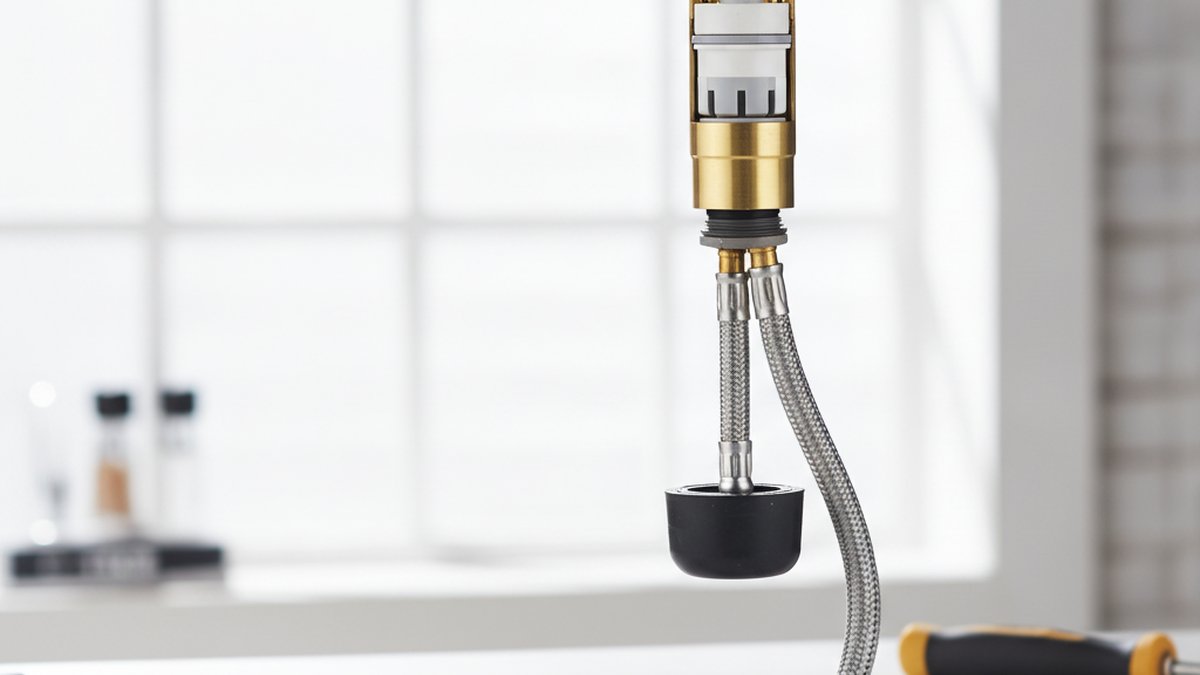
If you’ve been searching for the best kitchen faucet durable enough to survive a decade of hard water, dropped pans, and a dishwasher-full of daily use, the honest answer is that durability is decided by three parts you can’t see in a product photo: the body metal, the cartridge, and the hose. Get those three right and almost any faucet lasts. Get them wrong and the prettiest brushed-gold spout will drip within two years. This guide breaks down exactly what to look for, compares the real material and valve choices side by side, and gives you concrete specs to check before you spend a dollar.
At Vigacc (viga.cc), we’ve manufactured and pressure-tested kitchen faucets for global brands for over 15 years, so the recommendations below come from cartridge cycle-testing and salt-spray corrosion data — not marketing copy. Let’s get into what actually makes a faucet last.
What actually makes a kitchen faucet durable — is it the price or the parts?
It’s the parts, not the price. A durable kitchen faucet comes down to three internal components: a solid brass body (not zinc alloy or plastic), a ceramic disc cartridge rated for at least 500,000 open-close cycles, and a braided stainless or reinforced nylon hose with a quality quick-connect. Everything else — spout height, sprayer style, finish color — is about convenience and looks, not lifespan.
Here’s why those three matter so much. The body is the skeleton; if it’s made of cheap pot-metal zinc (often labeled “metal construction” without saying which metal), it corrodes from the inside where water sits, and pinhole leaks appear behind the sink where you can’t reach them. The cartridge is the single most-used part — every time you turn the water on or off, two polished ceramic discs slide against each other. A good ceramic disc seals for well over a decade; a rubber ball valve or a low-grade cartridge starts dripping in a year or two. And the hose on a pull-down faucet flexes thousands of times, so a thin plastic hose eventually cracks at the spray head.
A quick reality check on price: you do not need to spend $400. The durability sweet spot in 2026 sits around $120–$220. Below roughly $80 you start seeing zinc bodies and no-name cartridges; above $250 you’re mostly paying for finish, brand, and design, not extra years of life.
How can I tell if a faucet body is solid brass and not cheap zinc?
Three quick tests. First, check the weight — a solid brass kitchen faucet body feels noticeably heavy for its size; zinc feels lighter and hollow. Second, read the spec sheet for the words “lead-free brass” or a specific alloy like C46500 or C69300; vague terms like “premium metal” or “stainless steel look” are red flags. Third, look for certification: a faucet certified to NSF/ANSI 61 and 372 has documented its wetted materials, which almost always means brass or genuine stainless in the waterway. If you want the deeper trade-off between the two most common body metals, we cover it in detail in our guide on brass vs stainless steel faucet manufacturing.
Which cartridge lasts longest — ceramic disc or ball valve?
Ceramic disc wins, clearly. A ceramic disc cartridge uses two ultra-hard, mirror-polished ceramic plates that create a near-frictionless seal and shrug off grit and mineral scale. A ball valve relies on rubber seats and springs that wear, harden, and leak — especially in hard water. For a durable kitchen faucet, a ceramic disc cartridge is non-negotiable, and it’s the biggest single predictor of how many drip-free years you’ll get.
The numbers back this up. In our own bench testing, a quality ceramic cartridge routinely passes 500,000+ actuation cycles — the equivalent of roughly 68 uses a day for 20 years — without a measurable leak. Rubber-seated ball valves typically start weeping well before 100,000 cycles. If you’d rather understand the mechanism yourself before buying, our breakdown of ceramic disc vs ball valve faucet cartridges walks through exactly how each seals and fails.
One more durability tip most buyers miss: even the best ceramic cartridge suffers if sediment reaches it. If you’re on a well or older municipal lines, a simple inline filter or a clean aerator keeps grit out. And if a drip ever does start, it’s almost always a $10 cartridge, not the whole faucet — here’s how to fix a kitchen faucet drip yourself in about 20 minutes.
Solid brass vs stainless vs zinc: which faucet material holds up best?
For the longest life, choose solid brass or genuine 304 stainless steel; avoid zinc alloy entirely. Brass resists corrosion, machines into a tight leak-free waterway, and takes finishes beautifully. Stainless steel is a hair more corrosion-resistant and lighter, but harder to cast into complex shapes. Zinc is cheap and common in budget faucets, and it’s the number-one reason inexpensive faucets fail early.
| Body Material | Typical Lifespan | Corrosion Resistance | Best For | Watch Out For |
|---|---|---|---|---|
| Solid Brass (lead-free) | 15–20+ years | Excellent | Everyday durability, hard water, any finish | Slightly heavier; costs a bit more |
| 304 Stainless Steel | 15–20 years | Excellent | Modern brushed looks, lead-free purists | Fewer finish options; higher price |
| Zinc Alloy | 2–5 years | Poor | Low upfront budget only | Internal corrosion, hidden pinhole leaks |
| Plastic / ABS internals | 1–3 years | N/A (cracks) | Nothing you want to keep | Cracks at threads and spray head |
Notice that brass and stainless are effectively tied on lifespan. The tie-breaker is usually finish availability and price: brass supports warm tones like champagne bronze and matte black more reliably, while stainless leans toward brushed-nickel and steel looks. Either is a genuinely durable choice — the mistake is only ever the zinc or plastic body hiding under a shiny coat.
Does the finish affect how long a faucet lasts, or just how it looks?
Finish affects both, but mostly looks — with one big exception. A PVD (physical vapor deposition) finish is molecularly bonded and is the most scratch- and tarnish-resistant coating available; it will outlast the faucet itself. Cheap electroplated chrome, by contrast, can flake and pit. So finish durability is really about the coating process, not the color. Matte black and brushed gold look premium but need slightly more care to avoid water spotting — our guide on matte black faucet care covers the exact cleaning routine that keeps them from fading.
What’s the best durable kitchen faucet for hard water?
For hard water, the most durable setup is a solid brass faucet with a ceramic disc cartridge and a silicone or rubber-nub spray face on the aerator. The silicone nubs let you wipe away mineral buildup with your thumb — no scale, no reduced flow. Hard water is the number-one enemy of faucet longevity because dissolved calcium and magnesium crystallize inside every narrow passage, so the goal is choosing parts that either resist scale or let you clean it off easily.
Concretely, look for these hard-water-friendly features:
- Ceramic disc cartridge — smooth ceramic resists scale far better than rubber, which traps it.
- Rubber-nub / silicone spray face — wipe mineral deposits off in seconds instead of soaking the head in vinegar.
- Removable, tool-free aerator — so you can descale it every few months without a wrench.
- Solid brass or stainless waterway — scale won’t cause the corrosion that zinc suffers.
- A magnetic dock (on pull-downs) — keeps the spray head seated so the hose doesn’t sag and stress over time.
If your aerator still clogs even though you think your water is soft, the culprit is usually pipe sediment or a water heater’s sacrificial anode shedding particles — a surprisingly common issue we explain in why your faucet aerator still clogs on soft water.
Pull-down vs pull-out vs single-handle: which style is most reliable long term?
All three can be equally durable — reliability depends on the internal parts, not the style — but the pull-down design tends to age best for most kitchens because its hose runs straight down through the spout with less sideways flex. Pull-out faucets pull the hose horizontally, which stresses the hose more over years of use. Single-handle vs two-handle is purely about how many cartridges can wear (one vs two), so a single-handle faucet has one fewer part that can eventually drip.
Here’s how the common styles stack up for long-term durability:
| Faucet Style | Durability Notes | Best Kitchen Fit |
|---|---|---|
| Single-handle pull-down | Fewest wear points; hose flexes vertically; magnetic dock reduces sag | Most kitchens; daily heavy use |
| Single-handle pull-out | Great for shallow sinks; hose sees more lateral stress | Small sinks, low-clearance windows |
| Two-handle bridge | Two cartridges to maintain; classic look; very serviceable | Traditional / farmhouse kitchens |
| Touchless / motion-sensor | Solenoid and battery add electronic failure points | Convenience-first buyers who accept extra parts |
A quick word on touchless faucets: they’re genuinely handy, but every added component — solenoid valve, control box, battery pack — is one more thing that can fail before the brass body ever wears out. If maximum decades-long reliability is your goal, a mechanical single-handle pull-down is the safest bet. If you love the convenience, just buy a touchless model from a maker that sells replacement solenoids.
How long should a good kitchen faucet last, and what warranty proves it?
A well-built kitchen faucet should last 15 to 20 years, and the warranty is your best proxy for how confident the maker is. Look for a limited lifetime warranty on the finish and function — that’s the industry standard for quality faucets and a strong signal the body is brass and the cartridge is ceramic. A 1- or 5-year warranty quietly tells you the manufacturer expects the parts to wear out sooner.
Beyond the warranty length, check what it covers and how easy replacement parts are to get. The best durability insurance isn’t a piece of paper — it’s a faucet whose cartridge, aerator, and hose are standard, orderable parts. A faucet you can rebuild for $15 outlasts a “premium” sealed unit you have to throw away. Look for these certifications and standards, which back the warranty with real testing:
- NSF/ANSI 61 & 372 — verifies lead-free wetted materials and safe drinking-water contact.
- cUPC / IAPMO — the plumbing-code listing required across the US and Canada; confirms pressure and structural testing.
- ASME A112.18.1 / CSA B125.1 — the core faucet performance standard covering flow, cycle life, and burst pressure.
Every faucet we build at Vigacc is cartridge cycle-tested and salt-spray-tested against these standards before it ships, which is exactly why we can talk about 500,000-cycle cartridges as a measured number rather than a slogan.
Author note & brand credibility
Written by the Vigacc product engineering team. Vigacc (www.viga.cc) has manufactured kitchen and bathroom faucets for 15+ years as an OEM/ODM partner to brands across North America, Europe, and Australia. Our recommendations here are grounded in in-house testing: hydraulic burst tests, 500,000-cycle cartridge endurance runs, and 24–72 hour neutral salt-spray corrosion trials on finishes. We manufacture faucets, so our incentive is simple — build ones that last, because warranty returns cost us more than good brass ever does.
FAQ
What is the most durable type of kitchen faucet I can buy?
A single-handle pull-down faucet with a solid brass body, a ceramic disc cartridge rated for 500,000+ cycles, and a braided stainless hose. That combination routinely lasts 15–20 years. The style matters less than those three internal specs — a bridge or pull-out faucet with the same parts will last just as long.
How much should I spend on a durable kitchen faucet in 2026?
Around $120–$220 hits the durability sweet spot. Below roughly $80 you risk zinc bodies and unbranded cartridges that fail early; above $250 you’re mostly paying for design, brand, and finish rather than additional years of service life.
Is a stainless steel faucet more durable than a brass one?
They’re effectively tied — both 304 stainless and lead-free brass last 15–20 years and resist corrosion excellently. Brass is easier to cast into detailed shapes and supports more finish colors; stainless is lighter and slightly more corrosion-resistant. The material to avoid is zinc alloy, which corrodes internally within a few years.
Why does my kitchen faucet drip even though it’s not that old?
Almost always a worn or scale-fouled cartridge, not a dead faucet. In hard water a low-grade cartridge can start leaking within a year or two. The fix is usually a $10–$15 replacement cartridge you can swap in about 20 minutes — no plumber required. Choosing a ceramic disc cartridge up front prevents most of these early drips.
Do touchless kitchen faucets last as long as manual ones?
The mechanical parts do, but touchless models add a solenoid valve, control box, and batteries — extra components that can fail before the brass body ever wears out. If you want one, buy from a brand that sells replacement solenoids, and keep the batteries fresh. For maximum long-term reliability with the fewest failure points, a manual single-handle pull-down is the safer choice.
WeChat
Scan the QR Code with WeChat