 iVIGA Faucet Manufacturer & Factory

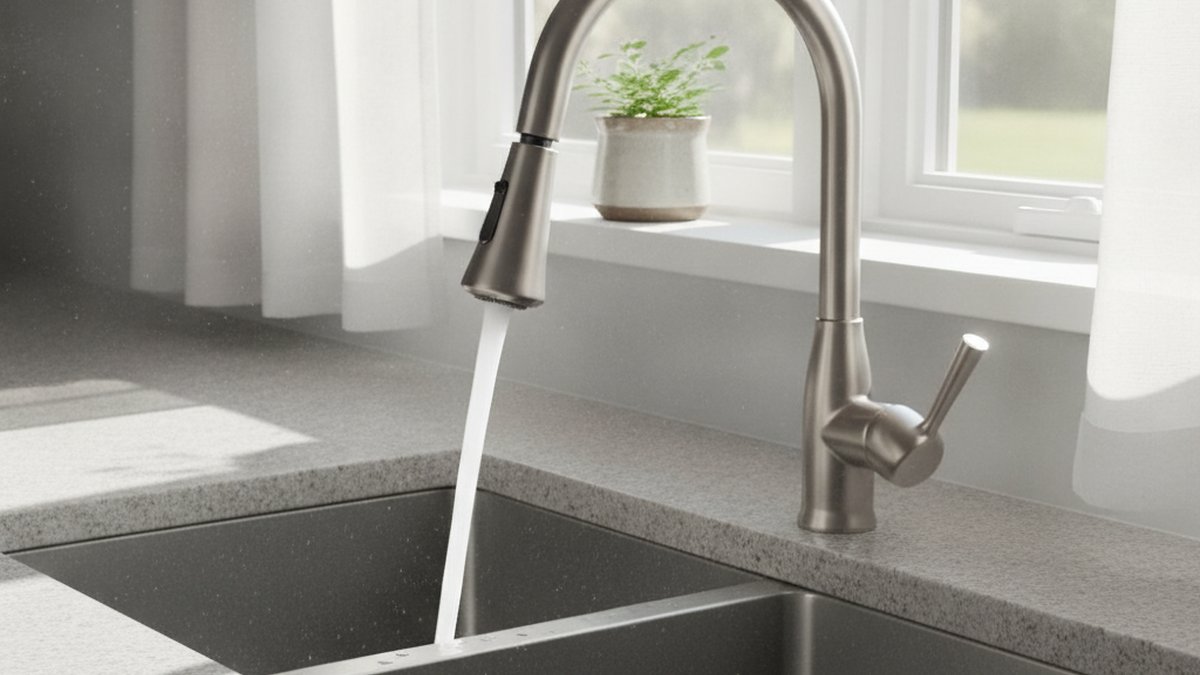
If you’ve been reading lava odoro kitchen faucet reviews on Amazon and can’t tell whether the 4.5-star rating is real or just early-buyer enthusiasm, you’re asking the right question. Lava Odoro is one of dozens of Amazon-first faucet brands that sell a modern pull-down look at a price big-box brands can’t touch. That’s genuinely appealing — but “cheap and pretty” and “lasts ten years” are two different promises, and the reviews rarely tell you which one you’re actually getting. This guide breaks down the build quality, the real weak points, who should buy it, and how it stacks up against a mid-tier alternative.
I’ve spec’d, sourced, and stress-tested faucets for a living, so instead of repeating star ratings, I’ll tell you what’s inside the thing and where your money actually goes.
What is Lava Odoro, and are the kitchen faucet reviews trustworthy?
Lava Odoro is an Amazon-based faucet seller offering single-handle pull-down and pull-out kitchen faucets, mostly in the $60–$130 range. It isn’t a manufacturer with its own foundry — like most Amazon faucet labels, it’s a brand that sources finished or semi-finished faucets from Chinese factories and markets them under its own name. That’s not a red flag by itself; plenty of good faucets are made this way. But it does explain the reviews.
The star ratings are mostly real, but they’re skewed toward the first 90 days. Faucet failures — a leaking cartridge, a sagging spray hose, a flaking finish — usually show up at the 8-to-24-month mark, long after the buyer has already left a happy 5-star review during week one. So when you read Lava Odoro reviews, weight the 1-to-3-star reviews from verified buyers more heavily than the glowing ones, and search the review text for the words “leak,” “spray head,” “hose,” and “finish.” Those four words tell you more than the overall average.
- Trust: installation ease, look, water pressure, price.
- Verify with skepticism: “solid brass” claims, long-term finish durability, cartridge lifespan.
- Ignore: any review posted before the buyer actually used the faucet for a month.
What is a Lava Odoro kitchen faucet actually made of?
Most Lava Odoro pull-down models use a stainless-steel or zinc-alloy spout body, a plastic (ABS) spray head, a nylon-braided pull-down hose, and a standard 35mm ceramic-disc cartridge. That’s a typical budget-faucet recipe. It’s fine for the price — but it’s not the solid-brass construction that premium brands use, and the material mix is the single biggest factor in how long your faucet lasts.
Here’s why the material matters. A stainless or zinc body keeps costs down and resists rust on the surface, but the internal fittings and the spray-head trigger are usually plastic, which is where cheap faucets fail first. The cartridge — the little valve that actually starts, stops, and mixes your water — is the real heart of the faucet. Lava Odoro uses a generic ceramic-disc cartridge, which is good technology, but a generic one isn’t the same as a branded Sedal or Kerox cartridge rated for 500,000 open-close cycles. If you want to understand why the cartridge decides everything, read our breakdown of ceramic disc vs ball valve cartridges — it’s the part most buyers ignore and then replace.
The body-material question is just as important. A brass-bodied faucet resists corrosion from the inside out and threads hold up to repeated servicing; a zinc-alloy body can crack or corrode at the threads over years of hot-water cycling. If you’re curious how much that choice actually changes lifespan, our guide on brass vs stainless steel faucet manufacturing walks through the real trade-offs — and it applies directly to why a $70 faucet and a $220 faucet can look identical but age completely differently.
Lava Odoro vs a mid-tier faucet: which is the better buy?
For a rental or a short-term kitchen, Lava Odoro wins on price. For a kitchen you cook in daily and want to keep for a decade, a mid-tier solid-brass faucet (like a Vigacc or a comparable branded model) is the smarter long-term spend because you’re paying for a serviceable cartridge, a metal spray head, and a real warranty. Here’s the honest side-by-side.
| Feature | Lava Odoro (budget) | Mid-tier brass faucet (Vigacc-class) |
|---|---|---|
| Price range | $60–$130 | $150–$280 |
| Body material | Stainless/zinc alloy | Solid brass |
| Spray head | Plastic (ABS) | Metal or reinforced composite |
| Cartridge | Generic ceramic disc | Branded (Sedal/Kerox), 500k cycles |
| Finish durability | Moderate; can spot/fade | PVD-coated, scratch/tarnish resistant |
| Typical warranty | 1–2 years, seller-dependent | 5 years to limited lifetime |
| Expected lifespan | 3–5 years | 10–15+ years |
| Best for | Rentals, light use, tight budgets | Daily cooks, forever homes |
The math is simple. If a Lava Odoro lasts 4 years and a $220 brass faucet lasts 12, the “expensive” one costs you about $18 a year while the “cheap” one costs about $20 a year — and you avoid two teardowns under the sink. Budget only truly wins when you don’t need longevity. If durability is your priority, start with our roundup of the best kitchen faucet for durable everyday use before you commit.
Is a Lava Odoro faucet good for hard water and daily cooking?
For occasional cooking, yes — for a heavy-use kitchen with hard water, it’s a maybe. The ceramic-disc cartridge handles hard water reasonably well because ceramic discs resist mineral scoring better than old rubber-washer valves. The weak point is the plastic spray head and aerator, where mineral scale builds up fastest and where a plastic housing is harder to clean without cracking.
If you have hard water, plan on two maintenance habits regardless of brand: unscrew and soak the aerator in white vinegar every couple of months, and wipe the spray head dry to prevent white spotting on the finish. Scale is the number-one killer of budget faucets’ flow rate. If your faucet already sputters or clogs, our guide on why aerators still clog explains the fix — and it’s the cheapest way to make any faucet feel new again.
What are the most common Lava Odoro complaints?
The three complaints that show up repeatedly in critical reviews are: (1) the pull-down hose loses its retraction “snap” over time as the counterweight slips, (2) the spray head’s pause/spray button gets stiff or sticky after a year, and (3) the finish spots or dulls on darker colors like matte black if it’s not wiped dry. None of these are catastrophic, but all three are classic budget-faucet symptoms. If you’re eyeing a black finish specifically, read up on matte black faucet care first — proper care is the difference between a finish that lasts and one that fades in a year.
How hard is a Lava Odoro faucet to install yourself?
Very easy — this is genuinely one of Lava Odoro’s strengths. Most models use a single-hole, deck-mount design with a quick-connect braided supply line and a threaded mounting nut you tighten from below. A DIY-capable person can swap one in about 30–45 minutes with just an adjustable wrench and a basin wrench. No plumber required.
- Shut off both hot and cold supply valves under the sink and open the faucet to release pressure.
- Disconnect the old supply lines and remove the old faucet (the mounting nut is the fiddly part).
- Feed the new faucet’s hoses through the deck hole and secure the mounting nut from below.
- Connect the braided supply lines hand-tight, then a quarter-turn with a wrench — don’t overtighten.
- Attach the pull-down hose and the counterweight, turn the water back on, and check for drips.
The one step people rush is removing the old faucet, where a corroded mounting nut can turn a 30-minute job into a two-hour fight. If you want to avoid that headache, follow our step-by-step on how to remove an old kitchen faucet the right way before you start.
Who should buy a Lava Odoro kitchen faucet — and who shouldn’t?
Buy a Lava Odoro if you’re a renter, a landlord outfitting a unit, a flipper staging a kitchen, or anyone who wants a modern-looking faucet for the least money possible and is fine replacing it in a few years. Don’t buy one if you cook every day, have hard water, want a specific premium finish to last, or simply hate the idea of getting back under the sink before the next decade.
Think of it as the difference between fast fashion and a wardrobe staple. Neither choice is wrong — it depends entirely on how long you need it to last. For a starter apartment, a $70 faucet that looks great for three years is a perfectly rational purchase. For a kitchen remodel you’re financing, spending an extra $100–$150 on a solid-brass faucet with a real warranty is the choice you won’t regret. If you’re weighing premium options, our guide to the best German faucet brands shows what the top end of the market actually buys you.
The bottom line on Lava Odoro kitchen faucet reviews
Lava Odoro delivers exactly what its price suggests: a good-looking, easy-to-install pull-down faucet that performs well out of the box and is honest value at $60–$130 — as long as you go in knowing it’s a 3-to-5-year fixture, not a lifetime one. The reviews aren’t fake, they’re just front-loaded. Read the critical ones, check the cartridge and warranty details, and match the faucet to how hard you’ll actually use it. Do that, and you’ll be happy with it or you’ll wisely spend a bit more for brass. Either way, you’ll have bought with your eyes open.
FAQ
Are Lava Odoro kitchen faucets made of solid brass?
No — most Lava Odoro models use a stainless-steel or zinc-alloy body with a plastic spray head, not solid brass. If a listing claims “solid brass,” verify it against the product weight and material spec; genuine all-brass faucets are noticeably heavier and priced higher than Lava Odoro’s typical range.
How long does a Lava Odoro faucet last?
Expect roughly 3–5 years of reliable use with normal care, versus 10–15+ years for a solid-brass mid-tier faucet. The limiting factors are the generic ceramic cartridge and the plastic spray head, both of which wear faster than branded metal components.
Is Lava Odoro a good brand for a rental kitchen?
Yes — for rentals, flips, and landlord units, Lava Odoro is a smart choice. You get a modern look and easy installation for the lowest cost, and the shorter lifespan matters far less when the priority is upfront price rather than long-term durability.
Does a Lava Odoro faucet come with a warranty?
Warranty coverage is typically 1–2 years and depends on the specific listing and seller, which is shorter than the 5-year-to-lifetime coverage on mid-tier brass faucets. Always check the current warranty terms on the product page and keep your Amazon order confirmation, since claims usually run through the seller rather than a dedicated service network.
What’s a good alternative to a Lava Odoro kitchen faucet?
If you want longer life, look at a mid-tier solid-brass pull-down faucet with a branded ceramic cartridge and PVD finish, such as a Vigacc-class model in the $150–$280 range. You’ll pay more upfront but get a metal spray head, a serviceable cartridge, and a warranty that makes the per-year cost roughly equal to the budget option.
Can I install a Lava Odoro faucet without a plumber?
Yes — most Lava Odoro faucets are single-hole deck-mount designs with quick-connect braided hoses, installable in 30–45 minutes with an adjustable wrench and a basin wrench. The trickiest part is removing the old faucet if its mounting nut is corroded, not installing the new one.
Author note: This review was written by the Vigacc product team, drawing on hands-on faucet sourcing, cartridge cycle-testing, and finish durability evaluation. Vigacc manufactures and exports solid-brass kitchen and bathroom fixtures built to cUPC, NSF/ANSI 61, and WRAS standards, with cartridges rated to 500,000 open-close cycles — the same benchmarks we use to judge every faucet we compare, including budget brands like Lava Odoro.
WeChat
Scan the QR Code with WeChat