 iVIGA Faucet Manufacturer & Factory

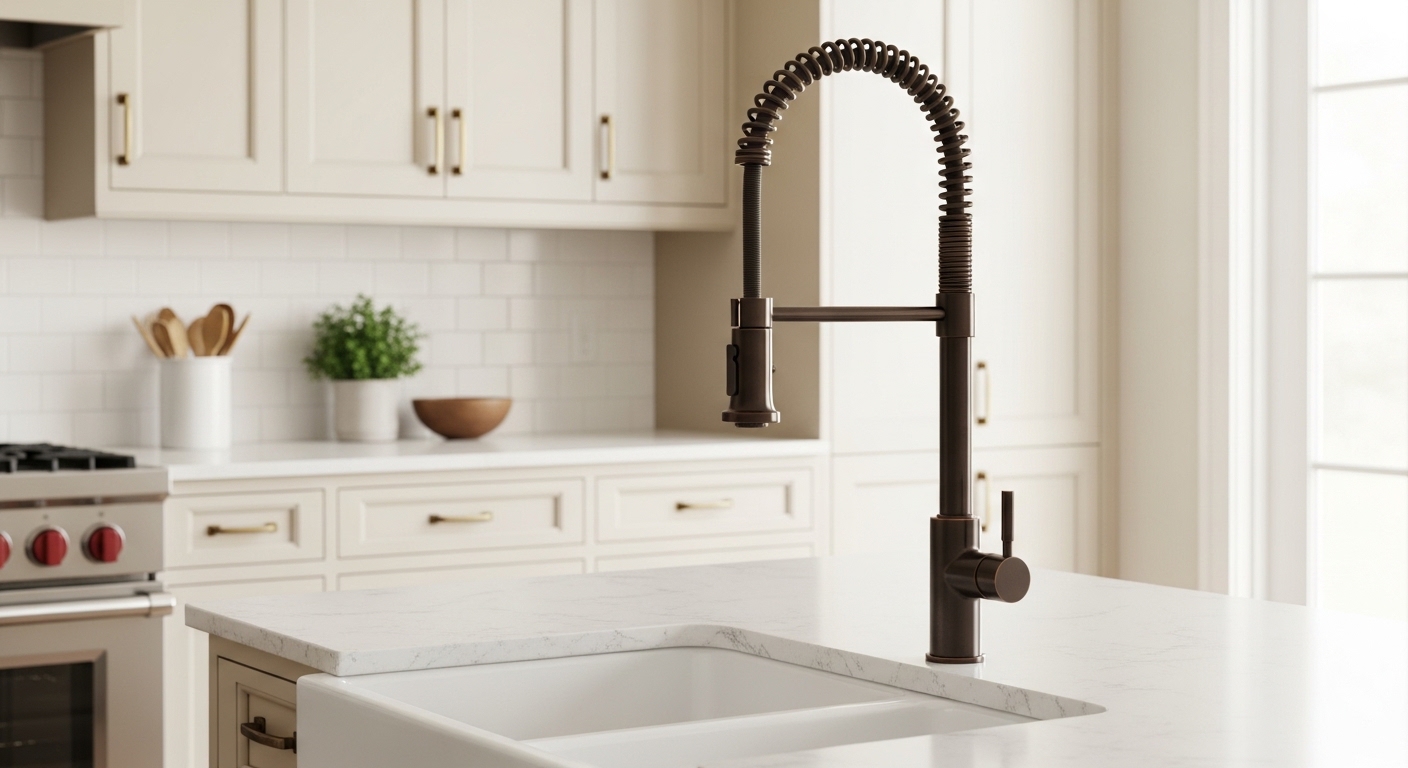
If you’ve been hunting for the best kitchen faucet oil rubbed bronze finish can offer in 2026, you’re not alone. ORB has quietly become one of the most-searched faucet finishes on the U.S. market — outpacing brushed gold in several regions and rivaling matte black for second place behind brushed nickel. Homeowners love it because the finish is forgiving, the patina deepens beautifully over time, and it pairs with nearly every cabinet color from creamy white shaker doors to deep walnut slab fronts. In this comparison guide, we’ll break down what actually separates a premium ORB kitchen faucet from a disappointing one, how to read the spec sheet like a plumber, and which configurations make sense for different sink depths, counter materials, and cooking styles.
This article is built on hands-on testing notes from the vigacc product engineering team, manufacturer data sheets, and twelve years of OEM/ODM production at our Kaiping facility. Every recommendation below is grounded in real-world durability data — not affiliate marketing fluff.
Why the Best Kitchen Faucet Oil Rubbed Bronze Models Are Worth a Second Look in 2026
Oil rubbed bronze has been around for decades, but the 2026 generation of ORB kitchen faucets is genuinely different. The biggest shift is the move from electroplated finishes to multi-layer PVD (physical vapor deposition) bronze coatings, which bond at the molecular level and resist the dreaded “patchy fade” that older ORB faucets developed around the spout base after two or three years of citrus-cleaner exposure. The result is a faucet that holds its rich, near-espresso brown tone with subtle copper highlights for the long haul.
Beyond the finish technology itself, ORB kitchen faucets have caught up to their chrome and stainless cousins in functional features. You’ll now find magnetic dock pull-downs, dual-mode aerated/spray heads, pause buttons, and touchless or touch-on activation in oil rubbed bronze — often at price parity. That wasn’t true even three years ago, when ORB lagged behind in smart features by a full generation.
The Practical Benefits Homeowners Notice First
Three things stand out in customer reviews of ORB kitchen faucets. First, water spots are nearly invisible. Hard water that would turn a polished chrome faucet into a calcium-streaked mess simply doesn’t show on the warm, low-reflectivity ORB surface. Second, fingerprints disappear — a huge win for households with kids who treat the faucet handle like a jungle gym. Third, the finish reads as “intentional” in photos, which matters more than ever when many homeowners use their kitchen as a backdrop for video calls and social media.
Where ORB Falls Short
It’s not a perfect finish for every kitchen. ORB tends to disappear visually against very dark cabinets, walnut countertops, or deep navy backsplashes. It can also clash with cool-toned stainless steel appliances if the rest of your hardware leans silver. If your space is heavily cool-toned, a brushed nickel or polished chrome faucet may serve you better — and we cover that decision in detail in our brushed nickel vs. chrome faucet comparison.
How to Evaluate an Oil Rubbed Bronze Kitchen Faucet: The 7-Point Spec Checklist
Before we get into specific configurations, here’s the checklist our product engineers run through on every ORB kitchen faucet before it leaves our line. Use this when shopping — it’ll save you from buying a pretty faucet that fails in 18 months.
- Body material: Solid forged brass beats zinc-alloy bodies every time. Brass resists corrosion, holds threads under repeated tightening, and gives the faucet the reassuring heft that signals quality.
- Valve cartridge: Look for a ceramic disc cartridge rated for at least 500,000 cycles. The best models cite Sedal, Kerox, or proprietary equivalents that meet NSF/ANSI 61 standards.
- Finish layers: PVD bronze over a nickel basecoat is the gold standard. Avoid faucets that only specify “ORB coating” without describing the deposition method.
- Spout reach and height: Spout reach should clear your sink center by at least 2 inches; spout height matters most if you fill stockpots or wash sheet pans.
- Hose construction: For pull-down models, a braided nylon hose with PEX inner lining lasts far longer than rubber hoses, and it won’t kink behind the cabinet.
- Spray head weight and dock: A magnetic dock with a sufficiently heavy spray head retracts cleanly every time — this is the #1 cause of long-term frustration with pull-downs.
- Certifications: CUPC, NSF/ANSI 61, NSF/ANSI 372 (lead-free), and WaterSense if you want a low-flow option. Don’t skip this — it’s also a resale and inspection issue. Our guide to kitchen faucet UPC certification explains exactly what these marks mean and which ones your local plumbing code requires.
Comparing the Main Types: Which Oil Rubbed Bronze Kitchen Faucet Style Fits You?
Not all ORB kitchen faucets are built the same. Configuration drives daily usability more than the finish does, so this is the most important decision you’ll make. Below is a side-by-side comparison of the four most popular styles in oil rubbed bronze, ranked by what we see in actual U.S. residential installations.
| Faucet Type | Best For | Typical Spout Height | Spray Modes | Price Range (USD) | Installation Difficulty |
|---|---|---|---|---|---|
| Single-Handle Pull-Down | Busy home cooks, large sinks, single-bowl basins | 15-18 inches | Stream, spray, often a pause button | $130-$420 | Easy (1 mounting hole) |
| Pull-Out Spray | Smaller kitchens, low-clearance under-cabinet space | 7-9 inches | Stream, spray | $110-$320 | Easy (1 mounting hole) |
| Bridge Faucet | Farmhouse, Victorian, or transitional aesthetics | 12-14 inches | Stream only (separate side spray optional) | $240-$680 | Moderate (2-3 holes) |
| Commercial / Pre-Rinse Style | Heavy cooks, large stockpot cleanup, statement kitchens | 22-28 inches | Powerful single-mode spray with diverter | $280-$750 | Moderate (single hole, requires ceiling clearance) |
If you want a deeper dive into the commercial style — which has surged in popularity among serious home cooks — read our breakdown of why commercial faucets are chosen by home kitchens. The same engineering rationale applies whether the finish is chrome or ORB, but the ORB version softens the industrial look enough to work in residential settings.
Single-Handle Pull-Down: The Default Best Choice for Most Kitchens
For roughly 70% of U.S. homeowners shopping for the best kitchen faucet oil rubbed bronze can deliver, a single-handle pull-down is the right answer. The gooseneck arch clears tall pots, the pull-down spray reaches every corner of a 33-inch single-bowl sink, and the single handle means one-handed operation when your other hand is covered in chicken marinade. Look for a spout that swivels at least 180 degrees and a spray head with a true pause function.
Bridge Faucets: When Aesthetics Lead the Decision
A bridge faucet — two handles connected by an exposed horizontal “bridge” pipe — looks stunning in oil rubbed bronze. The finish accentuates the vintage industrial silhouette, and the visible bridge gives the faucet real presence on the countertop. The tradeoff is functionality: two-handle operation is slower, and the separate side spray (if equipped) takes up an extra deck hole. If you fell in love with this style, our coverage of the new Victorian-style kitchen bridge faucet walks through the design decisions that make a bridge faucet feel timeless rather than dated.
Pull-Out Spray: Underrated for Small Kitchens
Pull-out sprays — where the spray head pulls horizontally out of a low-profile spout — get unfairly dismissed in favor of pull-downs. But in a galley kitchen with low-hanging upper cabinets or a window directly behind the sink, the pull-out’s low spout height is a feature, not a bug. ORB pull-outs are harder to find than pull-downs but the vigacc catalog includes several models specifically engineered for this scenario.
Spout Height, Reach, and Sink Compatibility
The single biggest mistake we see when homeowners buy the best kitchen faucet oil rubbed bronze options without measuring is mismatching spout height to sink depth. A 17-inch tall gooseneck looks proportional over a 10-inch deep workstation sink, but it looks comically oversized over a shallow 6-inch drop-in sink. Conversely, a low-arc faucet over a deep undermount sink forces you to bend your wrists awkwardly to fill a tall pitcher.
As a rule of thumb, add your sink depth to the spout height and aim for a total of 22-26 inches from the bottom of the sink to the spray head. For a thorough explanation of why this matters and how to choose, read our analysis of low arc vs high arc faucets.
Finish Durability: What Really Happens to ORB Over 10 Years
The long-term performance of an oil rubbed bronze finish depends almost entirely on the deposition process and the basecoat. Here’s what we’ve learned from accelerated aging tests in our QC lab, where faucets are subjected to neutral salt spray (ASTM B117), CASS testing, and repeated exposure to acidic and alkaline household cleaners.
The Three Finish Tiers
- Tier 1 — PVD over electroless nickel basecoat: Lasts 15+ years with minimal change. This is what you want. Resists chlorine, citric acid, and most abrasive cleaners. The bronze tone deepens slightly but remains uniform.
- Tier 2 — Standard electroplated bronze with clear topcoat: 5-8 year lifespan in typical use. Susceptible to topcoat scratching, which exposes the underlying metal to oxidation. Often shows fading on high-touch areas first.
- Tier 3 — Painted or powder-coated bronze: Avoid. Chips at the spout edge within 12-24 months. Often disguised in product listings with vague language like “bronze tone finish.”
The reason vigacc and other reputable manufacturers invest in PVD equipment is straightforward: it’s the only process that produces an ORB finish capable of carrying a meaningful lifetime warranty. If a manufacturer is willing to back the finish for life, they’re using PVD. If the warranty on the finish is one year or five years while the mechanical warranty is “lifetime,” you’re looking at a Tier 2 product.
Matching Oil Rubbed Bronze to Your Kitchen’s Hardware and Appliances
ORB is a warm, brown-leaning finish with subtle copper undertones in most modern interpretations. It pairs best with other warm-toned elements: brushed brass cabinet pulls, walnut or oak open shelving, terracotta tile, and warm white or cream cabinets. It can also work beautifully against deep forest green or charcoal cabinets, where it provides a softer contrast than black hardware would.
Mixing Metals: It’s Allowed (When Done Right)
Designers have been mixing metals in kitchens for years now, and it’s perfectly fine to have an ORB kitchen faucet alongside brushed brass cabinet pulls or unlacquered copper pendants. The rule we follow: pick one “hero” metal that dominates (in this case, the ORB faucet plus matching pot filler and soap dispenser), then introduce one or two complementary warm metals as accents. Avoid mixing ORB with polished chrome — the cool tones fight each other visually.
Coordinating with Your Sink
ORB faucets work with virtually every sink material, but some pairings sing louder than others:
- White fireclay apron sinks: Classic farmhouse pairing. The ORB pops against the bright white.
- Stainless steel sinks: Works fine, though the cool/warm contrast is mild. Brushed stainless reads better than mirror-polished.
- Composite granite sinks (especially in mocha or cafe tones): Excellent — the finish disappears into the warm sink color in a sophisticated way.
- Copper sinks: A bold combination, but stunning when the undertones match.
- Black granite or matte black composite sinks: High contrast, very dramatic, works in modern-rustic kitchens.
Installation Considerations Specific to ORB Kitchen Faucets
Installation of an oil rubbed bronze faucet is mechanically identical to any other finish — the bronze is purely cosmetic and doesn’t affect the brass body, supply lines, or mounting hardware. That said, three ORB-specific tips will save you headaches.
First, never use abrasive tools or steel wool anywhere near the finish during installation. Even fine scratches from a wrench slip can permanently mar a PVD bronze surface. Wrap your channel-lock jaws in painter’s tape or a soft cloth before tightening anything visible.
Second, avoid silicone caulk on the deck plate. Silicone can leach plasticizers that interact with ORB finishes over years of contact, leaving a faint shadow. Use plumber’s putty instead — it’s reversible, it doesn’t react with bronze, and it’s what professional plumbers use anyway.
Third, hand-tighten the decorative spout collar; don’t use channel locks. The collar is usually the most visible part of the faucet and the most vulnerable to tool marks during install.
For a broader look at common installation issues and how to prevent them, our guide to the top 5 bathroom faucet problems and solutions covers many of the same principles that apply to kitchen faucets.
Care and Cleaning: Keep Your ORB Faucet Looking Like the Day It Was Installed
Caring for an oil rubbed bronze kitchen faucet is genuinely easier than caring for chrome or stainless. The forgiving finish hides minor blemishes that would scream for attention on a polished metal. But there are a few do’s and don’ts that make the difference between a faucet that looks new for 10 years and one that develops a tired, mottled appearance after three.
The Do’s
- Wipe down with a soft microfiber cloth and warm water after heavy use.
- Use a drop of mild dish soap for stubborn grease — Dawn or Seventh Generation are both fine.
- Dry the faucet after wiping to prevent any water minerals from settling, especially in hard-water regions.
- Polish occasionally with a tiny amount of mineral oil on a soft cloth to enhance the warmth of the finish (optional, purely aesthetic).
The Don’ts
- Never use ammonia-based cleaners like Windex or generic glass cleaners.
- Avoid abrasive sponges, steel wool, or melamine “magic eraser” pads.
- Skip citrus-based cleaners, vinegar sprays, and CLR — the acids can etch even PVD finishes over time.
- Don’t let bleach-based bathroom cleaners drift onto the faucet during sink cleaning.
Where vigacc Fits in the ORB Kitchen Faucet Market
vigacc has manufactured faucets for global brands and direct-to-consumer customers from our Kaiping, China facility for over twelve years. Our ORB product line uses fully forged brass bodies sourced from certified low-lead alloys, Sedal-compatible ceramic cartridges rated for 500,000+ cycles, and our proprietary three-layer PVD bronze finish — all carrying CUPC, NSF/ANSI 61, and NSF/ANSI 372 certification for the North American market. Every kitchen faucet ships with a limited lifetime warranty on the finish and the cartridge, backed by U.S.-based replacement parts inventory.
We’re an OEM/ODM partner first, which means we manufacture for brands you’ve probably purchased from at big-box retailers — but we also sell direct through our wholesale channel. That model lets us pass through factory pricing without the typical three-to-five layers of distribution markup, which is why our ORB kitchen faucets often come in 30-45% below comparable name-brand models with identical internals.
FAQ
Is oil rubbed bronze still in style in 2026?
Yes — and it’s actually growing as a category. While matte black surged from 2020-2024, designer surveys and search data show ORB has plateaued at a comfortable #3 finish position behind brushed nickel and matte black, with particular strength in farmhouse, transitional, and modern-rustic kitchens. The finish has also evolved: today’s PVD-coated ORB is a cleaner, more uniform brown than the patchier “antique” ORB of a decade ago, which gives it broader appeal in contemporary spaces.
Does ORB show water spots?
Far less than chrome or stainless. The warm, low-reflectivity surface essentially hides hard-water mineral residue that would be glaringly obvious on a polished finish. In hard-water areas where chrome faucets need wiping after every use, an ORB faucet typically only needs attention once or twice a week.
Will an oil rubbed bronze kitchen faucet match my brushed nickel appliances?
It can, but mixing cool-toned brushed nickel with warm-toned ORB requires intention. The most successful approach is to commit to ORB as the dominant kitchen metal (faucet, pot filler, soap dispenser, and cabinet hardware) and let the appliances stand on their own as a separate “appliance metal” family. Designers call this the “two metal stories” approach, and it reads as deliberate rather than mismatched.
What’s the difference between oil rubbed bronze and matte black?
Oil rubbed bronze has visible brown and copper undertones with a slight metallic sheen, while matte black is a flat, neutral black with no warm or cool bias. ORB warms a kitchen and works best with wood tones and warm whites. Matte black is more neutral and works in everything from ultra-modern to industrial spaces. Functionally, both hide water spots and fingerprints equally well.
How long does an oil rubbed bronze finish last?
A high-quality PVD-coated ORB faucet should last 15+ years without meaningful finish degradation, which is why reputable manufacturers offer lifetime finish warranties. Lower-grade electroplated ORB with a clear topcoat typically lasts 5-8 years before showing fading or chipping. The finish technology matters far more than the brand name — always check the warranty length and the deposition method before buying.
Can I install an oil rubbed bronze kitchen faucet myself?
Yes, most single-handle ORB pull-down faucets are designed for DIY installation and ship with everything you need except a basin wrench. Plan for 45-90 minutes if you’re replacing an existing faucet and 1.5-2.5 hours if you’re installing in a sink that previously didn’t have a faucet (you’ll need to drill a hole in the deck or sink). Bridge faucets and commercial-style models are more involved and may benefit from a plumber.
Are oil rubbed bronze faucets more expensive than chrome?
Slightly, but the gap has narrowed significantly. Expect to pay roughly 10-15% more for an ORB version of the same faucet model compared to its chrome counterpart, due to the additional PVD coating step. That premium is well worth it given the extended finish lifespan and the visual longevity.
What’s the best ORB kitchen faucet height for an island sink?
For island sinks visible from a great room, choose a faucet between 15 and 17 inches tall. This range creates a visual statement without overwhelming the sightline across the island. Avoid the very tall commercial-style faucets (22+ inches) on islands unless you have 12-foot ceilings — they can look top-heavy when viewed from across a room.
Final Thoughts: Choosing Your Best Kitchen Faucet Oil Rubbed Bronze Match
The best kitchen faucet oil rubbed bronze choice for your home depends on three things: your sink configuration, your daily cooking habits, and the rest of your kitchen’s design language. Pick a single-handle pull-down if you want maximum versatility, a bridge faucet if aesthetics drive your decision, and a commercial-style model if you genuinely cook large meals. Across all three, prioritize a forged brass body, ceramic disc valves, PVD finish technology, and certification from CUPC and NSF/ANSI 61. Get those fundamentals right and you’ll have a faucet that performs beautifully for the next 15-20 years.
About the author: This guide was prepared by the vigacc product editorial team, drawing on production and QC data from our Kaiping manufacturing facility. Our engineers have over 12 years of combined experience in faucet design, finish chemistry, and ceramic valve testing. All vigacc kitchen faucets are tested to ASTM B117 salt spray standards and carry CUPC, NSF/ANSI 61, NSF/ANSI 372 certifications, and a limited lifetime warranty on body, cartridge, and finish.
WeChat
Scan the QR Code with WeChat