 iVIGA Faucet Manufacturer & Factory

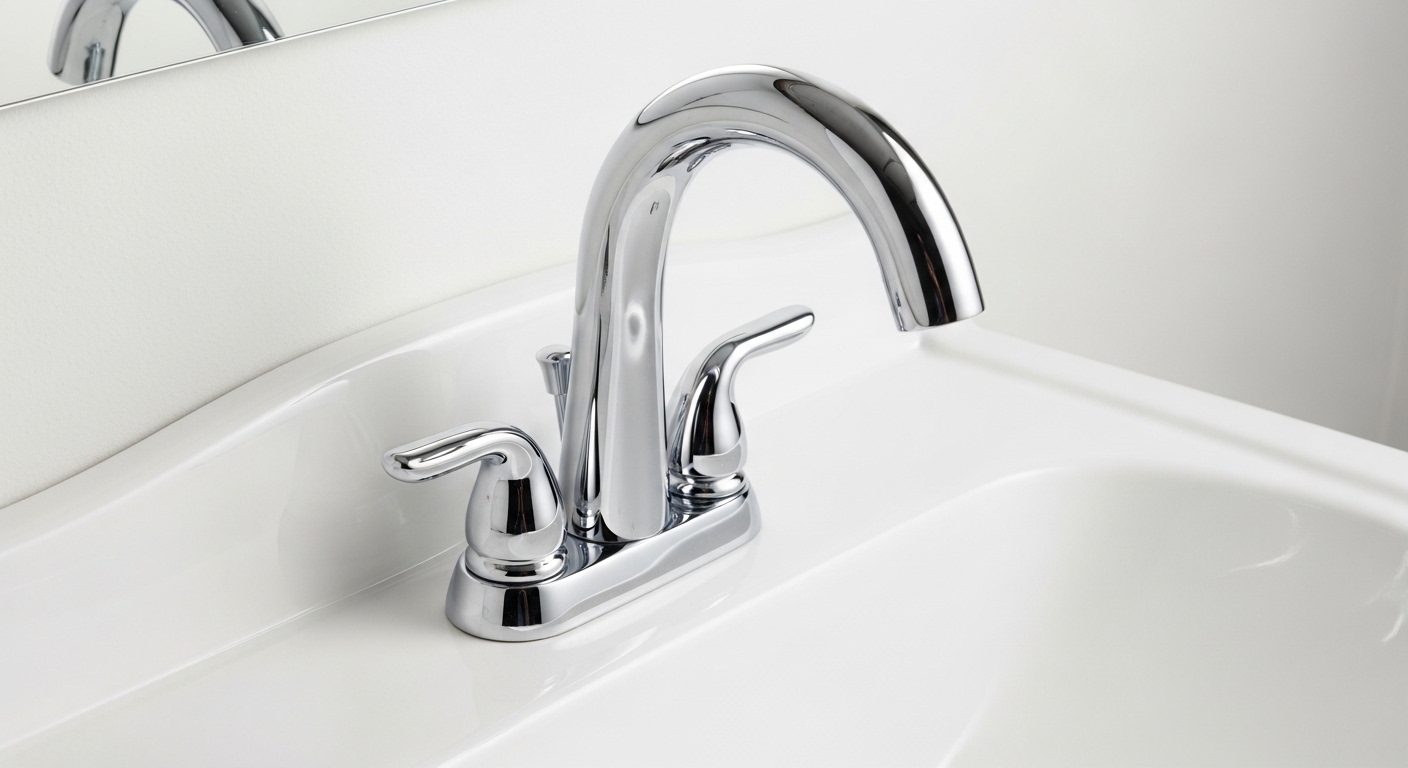
If you’re specifying fixtures for a hotel, restaurant restroom, medical office, or multi-tenant property, the centerset gooseneck faucet sits in a uniquely useful sweet spot. It mounts on a standard 4-inch hole pattern — the most common pre-drilled configuration on commercial lavatories — but its high-arc spout (typically 8 to 12 inches) gives users the under-spout clearance they need to wash hands, fill cleaning bottles, or rinse forearms in a healthcare setting. That single fact is why procurement teams keep coming back to this style: it solves a real problem without requiring a custom sink order.
This guide is written for facility managers, designers, and bulk buyers who need to make a defensible decision, not just a pretty one. We’ll cover when this faucet style genuinely outperforms the alternatives, how to evaluate spec sheets, what finishes hold up in heavy-traffic restrooms, and where the common procurement mistakes happen. No fluff, just the things we wish every buyer asked before placing an order.
What exactly is a centerset gooseneck faucet, and how is it different from a regular centerset?
A centerset gooseneck faucet is a three-hole faucet built on a 4-inch (102 mm) center-to-center mounting pattern, with two handles and a single tall, curved “gooseneck” spout that arches upward before turning down. The “centerset” part refers to the mounting footprint — all three components share a single deck plate or escutcheon. The “gooseneck” part refers to the spout geometry: a tall, swan-like curve, usually 8 to 12 inches in height, that delivers more vertical clearance than the short J-shape of a standard centerset.
The functional difference matters more than the cosmetic one. A standard centerset faucet typically gives you 3 to 5 inches of clearance between the aerator and the basin. That’s fine for rinsing toothpaste, but it’s cramped when someone needs to wash a serving tray, fill a 32-oz hydration bottle, or rinse off after handling food prep. A gooseneck spout doubles that clearance, which is exactly why you see them in restaurant prep sinks, hotel public restrooms, dental offices, and break rooms.
One thing buyers often miss: the 4-inch centerset spec refers to the distance between the centers of the two outermost holes, not the overall faucet width. The faucet body itself is usually 6 to 7 inches wide. Always verify your sink’s drilled spread before ordering, because some older European-style basins use 100 mm or even 6-inch (152 mm) patterns that won’t accept a US-standard centerset.
How does a centerset gooseneck compare to a widespread gooseneck?
Short answer: the centerset version is faster to install, easier to clean around, and meaningfully cheaper to buy in volume — but it gives you less design flexibility than a widespread. With a widespread, the two handles and the spout are independent pieces connected by flexible supply lines underneath, so the spread can range from 6 to 16 inches. That looks impressive on a wide vanity, but it adds installation time and three failure points instead of one. For commercial bathrooms where standardization and serviceability matter, the centerset wins on total cost of ownership.
If you want a deeper breakdown of these two formats, our piece on 4 Inch Centerset Faucets vs 8 Inch Widespread Faucets walks through the dimensional differences in detail.
When should a commercial property choose centerset gooseneck over wall-mount or sensor faucets?
Choose a centerset gooseneck when you have existing 4-inch pre-drilled lavatories, you need user-controlled temperature, and the budget per fixture is in the $90–$280 range. It’s the practical middle ground: cheaper than full sensor/touchless retrofits, easier to install than wall-mounts (which require in-wall rough-in plumbing), and more versatile than a single-hole spout that can’t be paired with a separate soap dispenser hole.
Here’s the decision logic most procurement managers use:
- Existing sink, three holes drilled at 4 inches: Centerset gooseneck is the drop-in answer. No plumbing changes, no sink replacement.
- New build, high-traffic public restroom (airports, stadiums): Sensor or wall-mount may pay back faster on water savings, but capital cost is 3–5× higher.
- Hotel guestroom, mid-scale: Centerset gooseneck hits the design + cost balance. Guests appreciate the tall spout for filling toiletry bottles.
- Restaurant prep/handwash station: Gooseneck clearance is non-negotiable. Centerset format simplifies NSF-compliant installation.
- Medical/dental offices: Often need wrist-blade handles — centerset gooseneck is available in wrist-blade configurations that meet ADA/CDC handwashing guidance.
The categories of commercial spaces where this format has been losing ground are airports, stadiums, and Class-A office towers, where sensor-activated faucets win on water savings and hygiene optics. Everywhere else — which is the majority of the commercial market by unit volume — the centerset gooseneck remains the workhorse.
What specs actually matter when buying a centerset gooseneck faucet in bulk?
The specs that matter most for commercial buying are: valve type (ceramic disc is non-negotiable), flow rate (1.2 GPM for public lavatories under most water codes), body material (solid brass beats zinc alloy by 5–10 years of lifespan), and certifications (UPC, NSF/ANSI 61, and CALGreen for California projects). Everything else is secondary.
Let’s walk through each one honestly.
Valve type. Ceramic disc valves are rated for 500,000+ on/off cycles. Compression and ball valves wear out in 50,000–100,000 cycles. In a public restroom that sees 200+ uses per day, the math is brutal — a compression valve faucet can fail in 1–2 years, while a ceramic disc version will run 7–10 years before needing a cartridge swap. Always specify ceramic disc.
Flow rate. Federal maximum is 2.2 GPM for residential and 0.5 GPM for metering faucets in public lavatories. Most US states and commercial codes now restrict public lav faucets to 1.2 GPM or lower (California Title 24 mandates 1.2 GPM; CALGreen pushes some applications to 0.5 GPM). Order with aerators that match your jurisdiction; reputable manufacturers like VIGA include swappable aerators so the same faucet body can serve multiple markets.
Body material. Solid forged brass is the gold standard. Zinc alloy and “brass-plated” bodies look identical out of the box but corrode at the threads within 3–5 years in chlorinated or hard water. For a deeper dive on why this matters, see why crucial plumbing components are made of brass.
Certifications. UPC (Uniform Plumbing Code) certification is the baseline for North America. NSF/ANSI 61 covers drinking water safety (lead content). Without these, the fixture won’t pass commercial inspection in most US jurisdictions. Our explainer on UPC certification and why it matters covers the testing process in plain English.
What’s the right flow rate for a hotel versus a restaurant handwash sink?
For hotel guestroom lavatories, 1.2 GPM is the sweet spot — it feels generous to guests while meeting most green building codes. For restaurant employee handwash sinks, you actually want 2.2 GPM (the maximum allowed), because the FDA Food Code requires a continuous warm-water stream sufficient for proper handwashing technique, and overly restricted flow can extend wash time past what staff will tolerate. Always check your local health department’s interpretation.
Which finish holds up best in heavy-traffic commercial restrooms?
Polished chrome and brushed nickel/PVD-stainless are the two finishes that genuinely survive commercial abuse. Matte black and bronze finishes look great in design photos but show water spots, fingerprints, and cleaner damage within months of installation. If your maintenance team uses anything stronger than dish soap, you need a PVD (Physical Vapor Deposition) finish, period.
Here’s the realistic comparison:
| Finish | Initial Look | 5-Year Durability | Cleaner Tolerance | Best For |
|---|---|---|---|---|
| Polished Chrome | Bright, classic | Excellent | Most acid/alkaline cleaners OK | Any commercial bathroom; safest default |
| Brushed Nickel (PVD) | Soft, warm | Excellent | Excellent | Hotels, mid-scale offices |
| Matte Black | Bold, modern | Fair | Poor — citrus & abrasive cleaners damage | Boutique hotels with controlled cleaning protocols |
| Oil-Rubbed Bronze | Vintage, warm | Fair | Poor in hard water areas | Low-traffic boutique installs only |
| Brushed Gold / Champagne | Luxe | Good (if PVD) | Moderate | Luxury hotels, spas |
| Stainless Steel (PVD) | Industrial, clean | Excellent | Excellent | Restaurants, hospitals, gyms |
If you’re torn between brushed nickel and chrome — which is the most common procurement decision — our breakdown of brush nickel faucet vs chrome faucet compares them on cost, cleaning behavior, and lighting performance in detail.
How much should a commercial buyer expect to pay per unit, and what affects the price?
Direct from a Chinese OEM factory like VIGA, expect $38–$85 per unit FOB at MOQ of 100–500 pieces for ceramic-disc, solid-brass centerset gooseneck faucets in standard chrome or brushed nickel. Retail equivalents from US brands run $140–$320 for comparable specs. Custom finishes, wrist-blade handles, or low-flow CALGreen certification typically add 8–15% to the unit price.
The price drivers, in order of impact:
- Body material: Solid brass adds $12–$25 per unit over zinc alloy. Worth every cent.
- Cartridge brand: Sedal, Kerox, or Flühs European cartridges add $4–$8 per unit but extend service life dramatically.
- Finish: PVD coatings add $6–$15 per unit over electroplating. Black, gold, and bronze finishes cost more than chrome.
- Certifications: NSF/ANSI 61 + UPC + CALGreen testing adds about $3–$5 per unit when amortized across a production run, but is required for commercial sale.
- Order volume: MOQs of 500+ typically unlock 10–18% off list FOB. MOQs of 50–100 are possible with VIGA but at higher per-unit cost.
- Packaging & branding: Custom-printed boxes and brand engraving for OEM/ODM orders add modest tooling costs but very little per-unit cost at volume.
One pricing trap buyers fall into: comparing FOB China prices against US retail prices without factoring shipping, duties, warehousing, and warranty support. The real comparison is landed cost plus reliability. A $40 faucet that fails in 18 months costs more than a $75 faucet that runs 8 years — and that’s before counting plumber callout fees.
Are there installation gotchas specific to commercial centerset gooseneck installs?
Yes — three big ones: deck thickness limits, escutcheon gasket failures, and supply line corrosion at the connection point. Most commercial centerset goosenecks are spec’d for decks up to 1.5 inches thick. Stone or concrete countertops thicker than that require extended mounting hardware that should be ordered with the faucet, not sourced last-minute.
The escutcheon gasket — the rubber or foam pad under the deck plate — is the most overlooked failure point. Cheap faucets ship with EPDM that hardens in 2–3 years, allowing water to seep through to the underside of the deck and into the cabinet. Specify silicone gaskets or apply a thin bead of plumber’s silicone under the escutcheon during installation. This is the single best $0 upgrade you can make.
For supply lines, always use braided stainless steel with brass nuts, not the cheap polymer-coated lines that come with budget faucets. In a commercial setting, you’ll be replacing budget lines every 4–6 years; stainless braided lines reliably last 12–15.
Can a centerset gooseneck faucet be retrofitted onto an existing widespread sink?
Usually no, and trying to force it is a costly mistake. Widespread sinks have three separate holes drilled 6–16 inches apart, while centerset faucets are built for a 4-inch span. Adapter plates exist but they look industrial and rarely seal well long-term. If you’re switching from widespread to centerset, plan to replace the sink or add a deck plate that genuinely covers the old holes — and verify the deck plate is rated for commercial use, not just decorative.
What are real users (designers, facility managers, contractors) saying in 2026?
The 2026 conversation in commercial procurement has shifted in two clear directions: stricter water-efficiency mandates and rising scrutiny of finish durability. California Title 24 updates and similar mandates in New York, Washington, and Colorado are pushing 1.2 GPM as the new ceiling for public lavatories, and several hospitality groups are voluntarily moving to 1.0 GPM. The centerset gooseneck format is benefiting from this because retrofitting existing 4-inch sinks is cheaper than full sensor conversions for properties not chasing LEED Platinum.
On the design side, the matte black backlash is real. Several large hotel groups have walked back matte black bathroom packages installed in 2022–2023 after seeing how poorly they aged in housekeeping rotation. The default specs are returning to brushed nickel and PVD chrome — both available in centerset gooseneck format from any reputable manufacturer.
If you want to track where commercial faucet design is heading, the crossover between commercial and residential faucets is one of the strongest signals of 2026 buyer preferences.
How do you know if a manufacturer is legitimate for commercial bulk orders?
A legitimate commercial faucet manufacturer will publish three things openly: certifications with valid file numbers, factory audit reports (BSCI, Sedex, or ISO 9001 minimum), and clear warranty terms. If a supplier can’t produce a current NSF/ANSI 61 certificate on request, walk away — that’s not a faucet for the US or Canadian commercial market.
Ask for these documents before placing a sample order:
- UPC or cUPC certificate (look up the file number on IAPMO’s database)
- NSF/ANSI 61 lead-content compliance documentation
- CALGreen compliance letter (if shipping to California)
- ISO 9001 quality management certificate
- Material test report for brass content (especially for “lead-free” claims)
- Written warranty terms — 5 years on finish and 10 years on the valve is the commercial baseline
VIGA, for context, has been manufacturing OEM/ODM faucets in Kaiping, China since 1998, holds UPC, NSF, CE, and WaterMark certifications, and runs in-house electroplating, PVD coating, and ceramic-cartridge testing lines. The factory’s accelerated salt-spray testing runs at 24-hour, 48-hour, and 200-hour intervals depending on finish grade, and finished products are pressure-tested at 1.6 MPa before packaging.
FAQ
What’s the difference between a centerset gooseneck and a single-hole gooseneck faucet?
A centerset gooseneck mounts in three holes drilled at a 4-inch spread and has two separate handles for hot and cold. A single-hole gooseneck mounts in one hole and uses a single lever or joystick handle. Single-hole is faster to install and is preferred for kitchens; centerset is the standard for commercial bathrooms because most lavatory sinks come pre-drilled with three holes and dual handles let users tune temperature precisely. See our comparison of single hole vs widespread faucets for related context.
Can a centerset gooseneck faucet meet ADA accessibility requirements?
Yes, when specified with lever or wrist-blade handles. ADA Standard 4.27.4 requires faucet controls operable with one hand and without tight grasping, pinching, or twisting of the wrist, and applying no more than 5 pounds of force. Wrist-blade and long-lever handles meet this standard. Avoid knob or cross-handle styles for ADA-compliant restrooms.
How long does a quality commercial centerset gooseneck faucet last?
A solid-brass body with ceramic disc cartridges typically delivers 8–12 years of service in a moderate-traffic commercial restroom (50–200 uses per day per fixture), with a cartridge replacement around year 5–7. Finish lifespan is usually the limiting factor — chrome and PVD brushed nickel hold their appearance for 10+ years; black and bronze finishes typically show wear in 3–5 years.
Do centerset gooseneck faucets work with tankless water heaters?
Yes, but with one caveat: tankless heaters have minimum activation flow rates, usually 0.4–0.6 GPM. If you pair a 0.5 GPM ultra-low-flow centerset gooseneck with a tankless heater, the heater may not consistently trigger. For tankless systems, 1.2 GPM aerators are the safer specification.
What’s the warranty I should expect from a commercial-grade manufacturer?
For commercial-grade centerset goosenecks, the industry standard is a lifetime warranty on the brass body, 10 years on the ceramic cartridge, and 5 years on the finish. Some manufacturers offer 1-year labor coverage for commercial accounts. Warranties on residential-grade fixtures sold for commercial use are typically voided — always confirm the warranty covers commercial installation explicitly.
Can I get a centerset gooseneck faucet customized with my hotel brand’s finish or logo?
Yes — OEM/ODM manufacturers like VIGA offer custom PVD finishes, laser-etched branding, and bespoke packaging starting at modest MOQs (typically 200–500 pieces for custom finishes, 1,000+ for custom castings). See our overview of faucet customization options and features for what’s actually achievable on a commercial timeline.
Author note and credibility
This article was written by the VIGA editorial team in collaboration with our senior commercial product engineers, who specify faucets daily for hotel chains, restaurant groups, and healthcare facilities across North America, Europe, and the Middle East. VIGA is an ISO 9001-certified OEM/ODM faucet manufacturer based in Kaiping, China — the heart of the global faucet industry — with over 25 years of production experience, in-house PVD and electroplating, and full UPC, NSF/ANSI 61, CE, and WaterMark certification. All performance claims in this guide reflect our internal testing protocols (1.6 MPa pressure test, 500,000-cycle valve test, and ASTM B117 salt-spray testing) and current US and EU plumbing code references as of 2026.
WeChat
Scan the QR Code with WeChat