 iVIGA Faucet Manufacturer & Factory

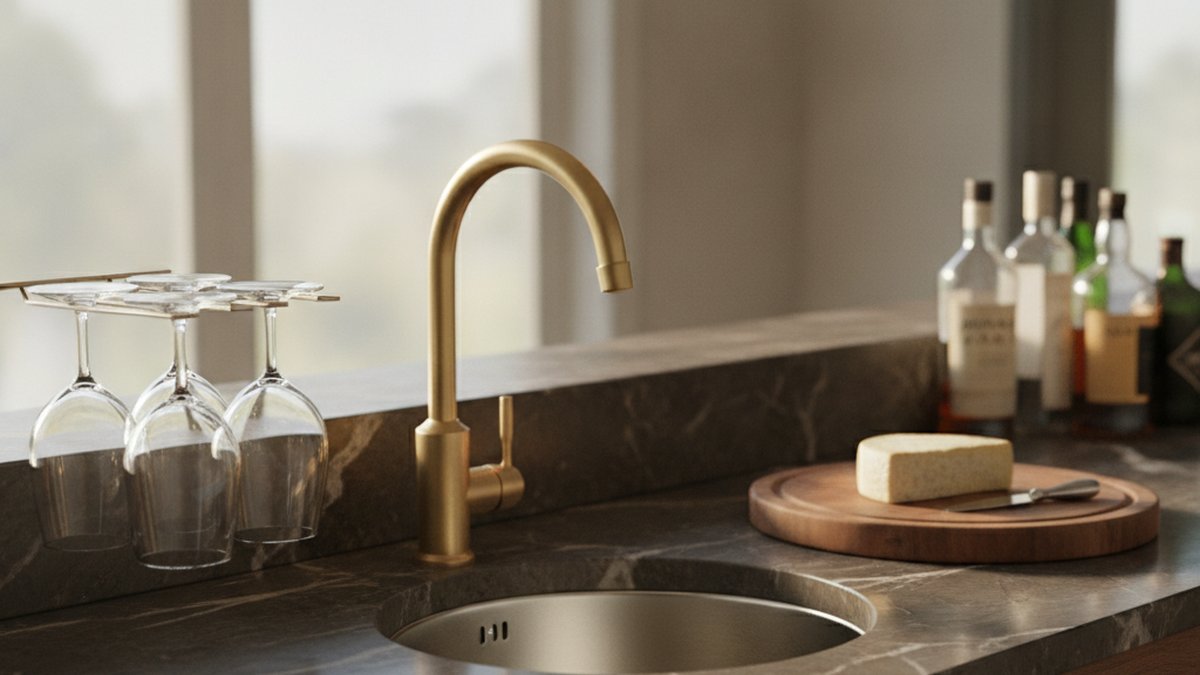
If you’re shopping for bar faucet home hardware for a wet bar, basement bar, or a small kitchen prep sink, the short version is this: you want a compact, single-handle faucet built from solid brass, sized to fit a smaller, deeper bar sink, and certified lead-free for drinking water. A bar faucet is not just a shrunken kitchen faucet — it’s a purpose-built fixture for a secondary sink where you rinse glasses, fill pitchers, wash a few produce items, and grab drinking water. Getting the size, mounting, and valve right the first time saves you a return trip to the hardware store and a second round under the cabinet with a basin wrench.
This guide walks through everything that actually matters — spout height, hole count, finish, valve type, flow rate, and price — in plain language, so you can pick the right fixture whether you’re standing in a store aisle or comparing tabs online at midnight.
What exactly is a bar faucet, and how is it different from a kitchen faucet?
A bar faucet is a smaller, single-handle faucet designed for a bar sink or prep sink — typically 8 to 14 inches tall, with a narrower spout and a lower flow rate than a full-size kitchen faucet. The difference isn’t just looks; it’s scale and job. A kitchen faucet has to fill stockpots and rinse sheet pans, so it’s tall (15–18 inches) and pushes 1.5–1.8 gallons per minute. A bar faucet serves a sink that’s often only 9–15 inches wide and 5–6 inches deep, so it’s built proportionally.
Here’s what separates the two in practice:
- Size: Bar faucets are shorter and slimmer so they don’t visually overwhelm a small basin.
- Flow: Many bar faucets run at 1.0–1.5 GPM — plenty for filling a glass or rinsing, without splashing out of a shallow bar sink.
- Reach: The spout reach is shorter (roughly 5–8 inches) to stay centered over a compact bowl.
- Handle: Most use a single lever, which is faster for one-handed use when your other hand is holding a glass.
If you’re weighing a lever versus a cross or knob handle, our deep-dive on the best bar faucet with a lever handle for a small prep sink breaks down exactly why the lever wins for tight spaces and wet hands.
How do I know how many mounting holes my bar sink needs?
Count the pre-drilled holes in your sink or countertop first — that number decides which faucet fits. Most bar sinks are drilled for a single-hole faucet, but some have three holes (one for the spout, two for separate handles or a soap dispenser). If you buy a single-hole faucet for a three-hole sink, you’ll need a deck plate (escutcheon) to cover the extra openings; buy a three-hole widespread faucet for a single-hole sink and it simply won’t mount.
Here’s the quick decision path:
- Look under and on top of the sink — count the holes and measure their center-to-center spacing.
- Single hole (most common): choose a single-hole bar faucet. Cleanest look, easiest install.
- Three holes, 4 inches apart: that’s “centerset” spacing — pick a centerset bar faucet or add a deck plate.
- Three holes, 6–8 inches apart: that’s “widespread” — you’ll need a widespread configuration.
Measuring hole spacing correctly is the single most common thing DIYers get wrong. If your basin sits close to a backsplash or a second sink, the geometry gets fussy fast — the same spacing math we cover in our guide to getting the spacing right on a wide faucet sink applies to bar setups too.
What spout height and reach should a bar faucet have?
For a bar or prep sink, aim for a spout that clears the rim by at least 8–10 inches so a pint glass or water bottle fits under it, but not so tall that water splashes out of a shallow bowl. A high-arc gooseneck (10–14 inches tall) looks great and gives you room to fill tall glasses; a low-arc spout is more splash-friendly for shallow bar sinks but limits what fits underneath.
The trade-off is real and worth thinking through before you buy:
- Gooseneck / high-arc: best for filling pitchers, ice buckets, and tall tumblers. Needs a deeper bowl (6″+) to avoid splashback.
- Low-arc / standard: gentler on shallow sinks, more compact under a wall cabinet, but you can’t fit a big vase or stockpot.
- Swivel range: a 360° swivel spout is a big quality-of-life upgrade if you have a double bar sink or need to swing the spout out of the way.
One overlooked detail: measure the clearance to any wall cabinet or shelf above the sink. A tall gooseneck can hit the underside of an upper cabinet, so grab a tape measure before you commit to the dramatic arc.
Which faucet finish holds up best in a home bar — and which is easiest to clean?
Brushed nickel and brushed/matte black are the most forgiving finishes for a home bar because they hide water spots and fingerprints far better than polished chrome. Polished chrome is the cheapest and brightest, but it shows every drip; brushed gold and champagne bronze are on-trend and warm but cost more. Whatever you choose, look for a PVD (physical vapor deposition) coating — it’s dramatically more scratch- and tarnish-resistant than cheap electroplating.
| Finish | Fingerprint / spot resistance | Relative price | Best for |
|---|---|---|---|
| Polished Chrome | Low (shows spots) | $ | Bright, budget, easy to source |
| Brushed Nickel | High | $$ | Warm neutral, hides marks, all-rounder |
| Matte Black | High | $$ | Modern bars, bold contrast on light counters |
| Brushed Gold | Medium-High | $$$ | Statement wet bars, warm metals trend |
| Champagne Bronze | Medium-High | $$$ | Softer gold look, pairs with wood/marble |
If you love the warm-metal look but want a safer bet on cleanability, brushed nickel is the workhorse — the same reasoning we lay out in our piece on why brushed nickel is such a strong finish choice holds true for bar faucets. And if your bar counter is light stone or you want a full brand comparison across finishes, the roundup of the top bathroom faucet brands for 2026 is a useful cross-reference for build quality by price tier.
What should I actually pay, and what do I get at each price?
Plan on $70–$180 for a quality solid-brass bar faucet with a ceramic disc cartridge and a lifetime or long-term warranty — that’s the sweet spot where durability and looks meet. Below $50 you’re usually getting zinc-alloy or thin-wall construction that corrodes or drips within a couple of years; above $250 you’re paying for a designer name or exotic finish, not necessarily better function.
Here’s a rough breakdown of what each budget tier buys you:
- Under $50: Often zinc alloy body, rubber-washer or budget cartridge, plastic internals. Fine for a rarely-used guest bar; expect a shorter life.
- $70–$130: Solid brass or stainless body, ceramic disc cartridge, PVD finish, cUPC/NSF certification. Best value for a daily-use home bar.
- $130–$200: Premium finishes (gold, bronze), smoother swivel, better packaging, and stronger warranty terms.
- $200+: Designer brands, specialty finishes, or commercial-grade pull-down bar faucets.
The internals matter more than the sticker. A ceramic disc cartridge is the part that turns the water on and off, and it’s the number-one reason a faucet either lasts a decade or starts dripping in year two. If a listing doesn’t say “ceramic cartridge,” treat that as a warning sign. A slow drip isn’t just annoying — it wastes real water, as we explain in our walkthrough on fixing a faucet drip before it wastes another gallon.
How do I install a bar faucet myself, and how long does it take?
Most single-hole bar faucets take 30–60 minutes to install with basic tools, no plumber required. If your bar sink already has a faucet, you’re mostly doing a swap: shut off the water, disconnect the old one, drop in the new one, and connect the supply lines. The trickiest part is reaching the mounting nut under a cramped bar cabinet, which is why a basin wrench is worth the $12.
The basic sequence looks like this:
- Turn off the shutoff valves under the sink and open the faucet to release pressure.
- Disconnect and remove the old faucet if you’re replacing one — the same steps in our guide to removing an old faucet the right way apply to bar faucets.
- Feed the new faucet’s lines through the mounting hole and set it on the deck (use the gasket or a bead of plumber’s putty if specified).
- Tighten the mounting nut from below with a basin wrench.
- Connect the flexible supply hoses to the shutoff valves — hand-tight plus a quarter turn with a wrench.
- Turn the water back on, remove the aerator, and flush for 15 seconds to clear debris before checking for leaks.
If the water pressure at your new bar faucet feels weak after install, don’t panic — it’s usually a clogged aerator or a supply valve that isn’t fully open, both of which are quick fixes covered in our piece on restoring weak kitchen faucet flow.
Do bar faucets need to be certified, and does that really matter for a home bar?
Yes — for any faucet that dispenses water you might drink, look for cUPC and NSF/ANSI 61 (and ideally NSF 372 lead-free) certification. Those marks mean the faucet meets North American plumbing code and lead-content limits for potable water. A bar faucet fills drinking glasses and rinses fruit, so this isn’t optional fine print — it’s the difference between a code-compliant, lead-safe fixture and a gamble.
Quick certification cheat sheet:
- cUPC/UPC: meets Uniform Plumbing Code — often required for permits and inspections.
- NSF/ANSI 61: the material safely contacts drinking water.
- NSF/ANSI 372: “lead-free” — weighted-average lead content at or below 0.25%.
- WaterSense (optional): flags water-efficient flow rates.
If you want to understand what these certifications actually test for and why serious manufacturers pursue them, our guide to faucet certifications (cUPC, NSF 61, CE, WRAS) explains the whole system in plain terms.
iVIGA bar faucet buying checklist
Before you check out, run through this quick list — it catches the mistakes that cause 90% of returns:
- ☐ Counted the mounting holes and measured the spacing
- ☐ Confirmed spout height clears your tallest glass and any cabinet above
- ☐ Solid brass or stainless body (not zinc alloy)
- ☐ Ceramic disc cartridge
- ☐ PVD finish in a spot-hiding color (brushed nickel, matte black)
- ☐ cUPC / NSF 61 lead-free certification
- ☐ Supply lines included, or the right size/thread noted
- ☐ Warranty terms in writing
FAQ
Can I use a regular bathroom faucet as a bar faucet?
You can, but it’s usually a compromise. Bathroom faucets are short and have very shallow spout reach designed for a small basin, so they often won’t clear a glass or reach the center of a bar bowl. A purpose-built bar faucet has a taller, more centered spout and a single lever for one-handed use, which matters when you’re rinsing glasses and prepping drinks.
What’s the difference between a bar faucet and a prep faucet?
They’re essentially the same category — “bar faucet” and “prep faucet” are used interchangeably for the compact fixture that serves a secondary sink. If there’s any distinction, “prep faucet” sometimes implies a pull-down sprayer for rinsing produce, while “bar faucet” leans toward filling glasses. Both are smaller than a main kitchen faucet.
Do bar faucets come with a sprayer?
Some do. Pull-down and pull-out bar faucets have a spray head that pulls from the spout, which is handy for rinsing a cutting board or a sink full of glassware. Standard bar faucets have a fixed spout, which is simpler and cheaper. Choose a sprayer model if your bar doubles as a real prep station; skip it if you mostly fill glasses.
What size supply lines does a bar faucet use?
Most bar faucets connect with standard 3/8-inch compression fittings on flexible braided supply lines, matching typical under-sink shutoff valves. Many faucets include the supply hoses; if yours doesn’t, take a photo of your shutoff valves to the hardware store to match the connection size and thread.
Why is my new bar faucet dripping or leaking at the base?
A drip from the spout is almost always the cartridge — either it wasn’t seated correctly or debris got trapped during install, so remove the aerator and flush the lines. A leak at the base usually means the mounting nut is loose or the deck gasket isn’t compressed evenly. Both are quick fixes; if the cartridge is genuinely faulty, a good warranty will cover a free replacement part.
About the author: This guide was written by the iVIGA product team, drawing on hands-on testing of hundreds of kitchen, bath, and bar faucets across finishes, cartridges, and mounting configurations. iVIGA (www.viga.cc) designs and manufactures faucets and bathroom fixtures with an in-house factory, and every potable-water fixture we sell is engineered to meet cUPC and NSF/ANSI 61 lead-free standards and is backed by a manufacturer warranty. We test cartridges to industry cycle-life benchmarks and finishes to salt-spray and abrasion standards before a product ships — so the advice here reflects what actually survives daily use, not just spec sheets.
WeChat
Scan the QR Code with WeChat