 iVIGA Faucet Manufacturer & Factory

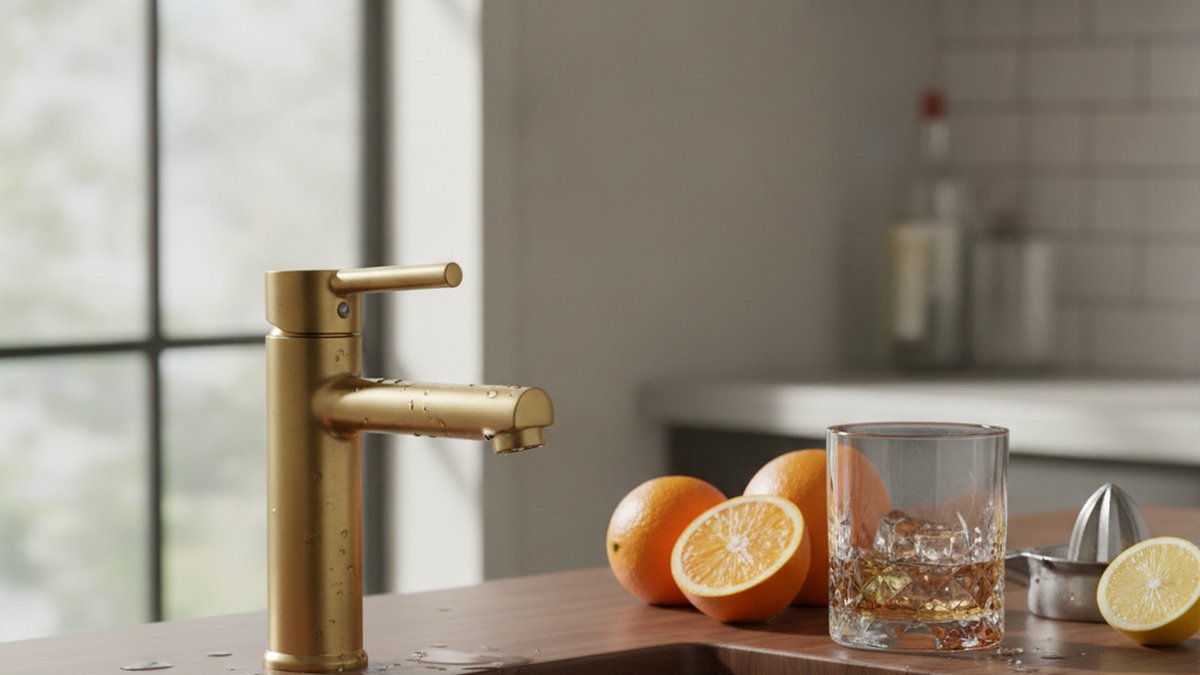
A bar faucet lever handle is the single most practical control style for a small bar or prep sink, because you can nudge it hot, cold, and off with one wrist — even when your other hand is holding a glass, a lime, or a fistful of herbs. If you’re shopping for a bar or wet-bar faucet in 2026 and you keep seeing “single lever” and “single handle” thrown around, this guide breaks down exactly what to look for, what the specs actually mean, and how to avoid the three mistakes that make people return these faucets.
We’ll answer the real questions buyers ask: what size fits a bar sink, how a lever handle differs from a cross or wrist-blade handle, which finishes hold up, and whether it’s worth spending more than $80. Let’s get into it.
What exactly is a bar faucet, and how is it different from a kitchen faucet?
A bar faucet is a scaled-down kitchen-style faucet built for a bar sink or prep sink — typically 9 to 14 inches tall with a narrower spout and a lower flow rate than a full kitchen faucet. It does the same job (hot and cold at a small basin) in a smaller footprint, so it fits the 15-inch bar sinks common in islands, wet bars, butler’s pantries, and outdoor kitchens.
The core differences from a main kitchen faucet:
- Size: Bar faucets are shorter and slimmer. A big kitchen faucet can be 16–18 inches tall; a bar faucet usually tops out around 12–14 inches so it doesn’t overwhelm a small sink or bang the underside of a wall cabinet.
- Flow rate: Many bar faucets run at 1.0–1.5 GPM instead of the kitchen-standard 1.8 GPM, because you’re rinsing cocktail shakers and washing berries, not filling stockpots.
- Spout reach: Shorter reach (roughly 6–8 inches) to match a compact bowl.
- Handle: This is the big one — most bar faucets use a single lever handle for tight, one-handed operation, since counter space around a bar sink is precious.
If you’re weighing spout height for the space, our guide on high arc vs low arc faucets applies to bar sinks too: high-arc gives you clearance to rinse a tall pitcher, low-arc fits under a window or upper cabinet.
Why choose a lever handle over cross or wrist-blade handles?
Choose a lever handle when you want fast, one-handed control and a modern look — it’s the most convenient handle style for a working bar or prep sink. A single lever moves left-right for temperature and up-down for flow, so you can turn the water on with the back of your hand or a forearm when your fingers are messy. Cross handles and wrist blades require two hands to balance temperature and look more traditional or commercial.
Here’s how the common handle styles stack up for a bar sink:
| Handle type | One-handed use? | Best for | Watch-outs |
|---|---|---|---|
| Single lever | Yes | Everyday bar/prep sinks, modern kitchens, one-handed rinsing | Side-mount levers need side clearance to swing |
| Cross handle (two) | No | Traditional, farmhouse, transitional looks | Two hands to set temperature; more to clean |
| Wrist blade / lever (two) | Partial | Commercial, ADA-style, elbow operation | Larger footprint; industrial look |
| Joystick / top lever | Yes | Ultra-compact under-window installs | Fewer style/finish options |
For most home bars, the single lever wins on convenience. The one thing to check: whether the lever is a side-mount (sticks out to the side of the body) or a top-mount (sits on top). Side-mount levers need a few inches of clearance to swing, which matters if your bar sink sits close to a wall or a backsplash return.
What size bar faucet with a lever handle fits my sink?
Match the faucet to your sink bowl and the space above it: for a standard 15-inch bar sink, aim for a spout height of 9–12 inches and a spout reach of 6–8 inches so the water lands near the center of the drain, not against the back wall. Measure the distance from your countertop to the bottom of any wall cabinet or window before you buy — that’s the number that kills more bar faucet purchases than any other.
A quick sizing checklist before you add to cart:
- Mounting hole: Most bar sinks are single-hole (one 1.25″–1.5″ hole). Confirm you have a single-hole deck plate or that your faucet includes an optional escutcheon to cover a wider cutout.
- Clearance above: Measure counter-to-cabinet height. Under a window? Choose a low-arc lever faucet. Open island? A high-arc gooseneck gives you room to fill a cocktail shaker.
- Spout reach: The spout should end roughly over the drain. Too short and water splashes the back wall; too long and it overshoots a small bowl.
- Swivel: Look for a 360° swivel spout if the sink is shared or used for prep from two sides.
If your bar or prep station has a wider deck with multiple holes, read our breakdown of the wide faucet sink layout and spacing so you get the escutcheon and hole spacing right the first time. And if you’re outfitting a full prep-and-cook zone, the principles in our best kitchen tap design guide carry straight over to the bar sink.
Which finish holds up best on a bar faucet lever handle?
The most durable finishes for a bar faucet lever handle are PVD-coated finishes — brushed nickel, brushed gold, and matte black PVD — because the color is bonded to the metal and resists scratching, tarnish, and the citric acid from limes and cocktails. Chrome is the budget classic and wipes clean easily but shows water spots; living finishes like unlacquered brass will patina over time by design.
Because bar sinks get splashed with acidic juices (lime, lemon, tomato) and alcohol, finish durability matters more here than at a bathroom sink. A PVD (physical vapor deposition) finish is the safest bet for a lever handle that gets grabbed with wet, sticky hands dozens of times a night.
| Finish | Durability | Shows spots/fingerprints | Best for |
|---|---|---|---|
| Brushed nickel (PVD) | Excellent | Low | Most kitchens; hides water spots |
| Brushed / champagne gold (PVD) | Excellent | Low | Warm, modern bars |
| Matte black (PVD) | Very good | Medium (shows dried minerals) | Contemporary, high-contrast bars |
| Polished chrome | Good | High (water spots) | Budget builds, bright looks |
| Unlacquered brass | Good (patinas) | N/A (living finish) | Vintage/heritage bars |
If you love the warm look but worry about upkeep, brushed gold PVD gives you the richness of brass with the wipe-clean toughness of a modern coating. Prefer cool tones near stainless appliances? Brushed nickel is the forgiving all-rounder — the same logic we walk through in our brushed nickel finish guide.
What should I look for inside — cartridge, body, and valve?
Buy a bar faucet with a ceramic-disc cartridge and a solid-brass body — that combination is what separates a faucet that lasts 15 years from one that drips in 18 months. The cartridge is the heart of a single-lever faucet: it’s the part that mixes hot and cold and shuts the water off, so a cheap plastic cartridge is the number-one cause of drips and stiff handles.
The internals that actually matter:
- Ceramic-disc cartridge: Two polished ceramic discs slide against each other to control flow. They resist wear and hard-water grit far better than rubber-washer valves. Look for a rated cartridge life of 500,000+ cycles.
- Solid brass body: Brass resists corrosion and gives the faucet weight and rigidity. Avoid zinc-alloy (ZAMAK) bodies on a faucet you’ll use daily — they’re lighter and cheaper but corrode faster. For the full material story, see our comparison of brass vs stainless steel faucet construction.
- Lead-free waterway: Confirm the faucet is certified lead-free to NSF/ANSI 61 and 372 (and cUPC/UPC listed). This is a health and code issue, not a luxury.
- Braided stainless supply lines: Better than plastic or thin copper for connecting under the sink.
A quick weight test tells you a lot: a solid-brass bar faucet feels noticeably heavier than a hollow zinc one of the same size. If it feels suspiciously light for its price, be skeptical.
Is a bar faucet with a lever handle worth it, or should I just use a kitchen faucet?
A dedicated bar faucet with a lever handle is worth it whenever the sink is small and space is tight — which describes almost every bar and prep sink. A full-size kitchen faucet on a 15-inch bar sink looks oversized, splashes because the spout overshoots the small bowl, and can block a window or cabinet. The compact lever faucet is proportioned for the job.
When would you skip the bar-specific faucet? If your “bar” sink is actually a full-size secondary prep sink (18 inches or wider) that you use for real cooking prep, a standard pull-down kitchen faucet with a lever may serve you better — you get a sprayer and more reach. In that case, prioritize durability the way we outline in our guide to the most durable everyday kitchen faucets.
For a true bar or wet-bar sink, though, the lever-handle bar faucet is the right tool: compact, one-handed, and easy to keep clean between rounds.
How much should I spend on a bar faucet lever handle in 2026?
Expect to pay $50–$90 for a solid, brass-bodied bar faucet with a lever handle and a ceramic cartridge, $90–$160 for premium finishes and designer styling, and under $45 for budget zinc-alloy models you’ll likely replace sooner. The sweet spot for most homeowners is the $60–$110 range: solid brass, PVD finish, ceramic cartridge, and a real warranty.
| Price tier | Typical build | What you get |
|---|---|---|
| Under $45 | Zinc-alloy body, plastic cartridge | Works short-term; higher drip/corrosion risk |
| $50–$90 | Solid brass, ceramic cartridge, PVD finish | Best value; lasts 10–15+ years |
| $90–$160 | Premium brass, designer finish, smoother lever | Style upgrade, better warranty coverage |
Spending a little more up front on a ceramic cartridge and brass body almost always costs less over the life of the faucet than buying a cheap one twice — plus the labor of swapping it out.
How do you install a single-lever bar faucet yourself?
You can install a single-hole bar faucet with a lever handle in about 30–45 minutes with basic tools — shut off the water, drop the faucet through the deck hole, secure it from below, and connect the braided supply lines. No plumber required for a straightforward single-hole swap.
- Shut off the water at the under-sink stop valves and open the faucet to release pressure.
- Remove the old faucet (if replacing) by disconnecting supply lines and loosening the mounting nut from below.
- Feed the new faucet down through the single deck hole; add the escutcheon/deck plate if your cutout is wider.
- Tighten the mounting nut from underneath, keeping the spout aligned over the drain.
- Connect braided supply lines to the hot and cold stops — hand-tight plus a quarter turn with a wrench.
- Turn the water back on slowly, run the lever through hot and cold, and check every connection for drips.
If your bar sink also feeds a nearby appliance or you’re rethinking the whole layout, our note on planning faucet placement is a useful sanity check before you drill anything.
FAQ
Can a bar faucet with a lever handle be used as a bathroom faucet?
Yes, a compact bar faucet works well on a small bathroom vanity as long as the spout reach lands over the basin and the mounting matches your sink’s hole. Many “bar/prep” faucets are effectively single-hole lavatory faucets. Just confirm the height clears your mirror and backsplash.
What’s the difference between a single-handle and single-hole bar faucet?
Single-handle refers to the control — one lever for hot, cold, and flow. Single-hole refers to the installation — the faucet mounts through one hole in the deck. Most lever bar faucets are both, but always check the spec sheet, since some single-handle models still need a wider or three-hole deck.
Why is my bar faucet lever stiff or hard to move?
A stiff lever is almost always a hard-water buildup or a worn cartridge. Mineral deposits grind against the ceramic discs and make the handle feel gritty. Cleaning or replacing the cartridge usually restores smooth movement; a quality ceramic cartridge should stay smooth for years.
Is 1.0 GPM enough flow for a bar sink?
For a bar or prep sink, yes — 1.0–1.5 GPM is plenty for rinsing glasses, washing produce, and filling small containers. Bar faucets deliberately run lower than kitchen faucets to save water on tasks that don’t need high volume. If you routinely fill large pitchers, step up to 1.5 GPM.
Do lever-handle bar faucets meet plumbing codes and water standards?
Quality bar faucets are certified to standards like cUPC/UPC listing and NSF/ANSI 61 and 372 for lead-free waterways. Always look for these certifications on the box or spec sheet — they confirm the faucet is safe for drinking-water use and legal to install. You can read more in our faucet certifications guide.
How long should a good bar faucet lever handle last?
A solid-brass bar faucet with a ceramic-disc cartridge should last 10–15 years or more with basic care. The finish, if PVD-coated, typically outlasts the cartridge. Replacing a worn cartridge is a cheap, quick fix that resets the faucet to like-new operation.
The bottom line
For a small bar or prep sink, a single-lever bar faucet in solid brass with a ceramic-disc cartridge and a PVD finish is the right call almost every time. Measure your clearance above the sink first, pick low-arc for tight spots and high-arc for open islands, and don’t cheap out on the cartridge. Do that, and you’ll have a faucet that stays smooth, drip-free, and good-looking for well over a decade.
Author note: This guide was written by the iVIGA product team, drawing on hands-on testing of single-lever bar and prep faucets across finishes, cartridge types, and mounting configurations. iVIGA (viga.cc) designs and manufactures faucets and bathroom fixtures with lead-free, cUPC/NSF-certified waterways, ceramic-disc cartridges rated for 500,000+ cycles, and finishes tested for wear and corrosion. Our bar faucets are backed by a limited lifetime warranty on the finish and cartridge, so you can buy with confidence.
WeChat
Scan the QR Code with WeChat