 iVIGA Faucet Manufacturer & Factory

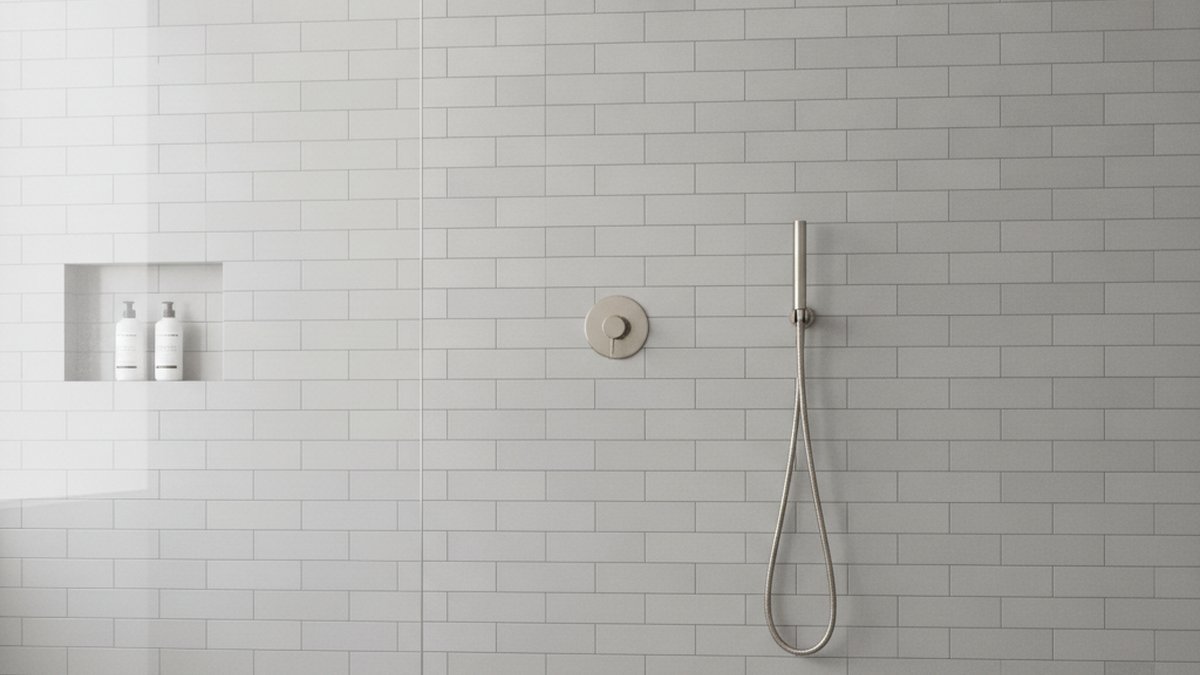
A brushed nickel faucet for shower use gives you the warm, low-glare, spot-hiding finish most homeowners actually want in a real bathroom — the one place where every drop of water, every bit of shampoo splash, and every hard-water mineral lands on your fixtures daily. Below, I’ll answer the questions people genuinely ask before they buy: whether brushed nickel holds up in a shower, how it compares to chrome and matte black, what it costs, how to match it to your other fixtures, and how to install and clean it so it looks new for a decade. Straight answers first, then the details.
Is brushed nickel actually a good finish for a shower?
Yes. Brushed nickel is one of the best-performing shower finishes because its lightly textured satin surface scatters light instead of reflecting it, so water spots, dried soap, toothpaste flecks, and fingerprints practically disappear between cleanings. In a shower — the wettest, most humid, highest-contact spot in your home — that “hides everything” quality is worth more than showroom shine.
The finish itself is nickel that has been brushed to a directional satin grain, then (on quality units) sealed with a PVD, or physical vapor deposition, layer. PVD bonds the color at a molecular level, which is why a good brushed nickel shower faucet resists the two things that kill cheap fixtures: corrosion from constant moisture and the dulling you get from mildly acidic bathroom cleaners. Polished chrome will show every water droplet by mid-morning; brushed nickel simply doesn’t.
The one honest caveat: “brushed nickel” isn’t perfectly standardized between brands. One company’s brushed nickel leans warm and slightly gold; another leans cool and gray, closer to brushed stainless. That matters when you’re mixing a faucet, shower head, valve trim, and drain — more on matching below.
Brushed nickel vs. chrome vs. matte black for a shower — which should I pick?
Pick brushed nickel if you want the easiest-to-maintain, most forgiving finish that flatters warm and neutral bathrooms; pick chrome if you want a bright, budget-friendly, high-shine look and don’t mind wiping spots; pick matte black for bold contrast in a modern space, knowing it shows soap film and mineral scale the most. Here’s the side-by-side so you can decide in ten seconds.
| Finish | Hides water spots & fingerprints | Best for | Maintenance level | Typical price range (trim) |
|---|---|---|---|---|
| Brushed nickel | Excellent | Warm, neutral, transitional & farmhouse baths | Low — wipe weekly | $90–$350 |
| Polished chrome | Poor | Bright, classic, budget builds | High — spots show fast | $60–$250 |
| Matte black | Fair (hides fingerprints, shows scale) | Modern, high-contrast baths | Medium–high in hard water | $110–$380 |
| Brushed gold / champagne bronze | Good | Warm luxe, statement bathrooms | Low–medium | $140–$450 |
The practical takeaway: if you have hard water or you simply don’t want to squeegee your shower valve, brushed nickel wins on livability. Matte black is stunning but demands more care — if that’s your leaning, read our guide on how to handle matte black faucet care so it doesn’t fade, spot, or scratch before committing. Chrome is fine, but you’ll wipe it constantly.
Does brushed nickel show hard water spots and stains in the shower?
Much less than any shiny finish, but no metal is completely immune to hard-water scale. Brushed nickel’s satin grain camouflages the calcium and magnesium deposits that leave chalky white rings on chrome, so you’ll go far longer between cleanings — but if your water is very hard (over ~120 mg/L, or roughly 7+ grains per gallon), you’ll still want a quick weekly wipe to keep buildup from ever setting.
The reason is simple physics: scale forms wherever water evaporates and leaves minerals behind. On a mirror-bright surface, that white film is glaringly visible. On brushed nickel’s diffused surface, small amounts blend in. To keep it pristine:
- Wipe the faucet and shower head dry with a microfiber cloth after your last shower of the day — 15 seconds, and it’s the single most effective habit.
- Once a week, clean with mild dish soap and warm water, then buff dry. Skip anything abrasive.
- For light scale, use a 1:1 white vinegar and water solution on a cloth (not a soak) — wipe, then rinse and dry. Never leave vinegar sitting on the finish.
- Avoid ammonia, bleach, and abrasive pads; they can dull the PVD layer over time.
- If your shower head’s nozzles clog, most brushed nickel rubber-tip heads clear with a gentle finger rub — no chemicals needed.
Hard water is also the enemy of flow. If your shower already feels weak, the fix is often mineral buildup, not the faucet itself — the same root cause we walk through in our piece on kitchen faucet low water pressure and how to restore the flow, and the diagnostic logic carries straight over to shower heads.
What should I look for when buying a brushed nickel shower faucet?
Prioritize four things in order: a solid brass valve body, a pressure-balancing or thermostatic cartridge, a genuine PVD brushed-nickel coating, and third-party certification. Everything else — style, spray patterns, handle shape — is preference. These four are what separate a fixture that lasts 15 years from one that leaks or discolors in two.
Here’s what each one actually does for you:
- Solid brass body: Brass resists corrosion in constant moisture and gives you clean, durable threads. Zinc-alloy or plastic bodies are cheaper and far more likely to crack or corrode. If the listing won’t say “solid brass,” assume it isn’t.
- Pressure-balancing valve (minimum) or thermostatic valve (better): A pressure-balancing cartridge stops the scald-and-freeze surprise when someone flushes a toilet elsewhere in the house. A thermostatic valve goes further, holding your exact set temperature. Look for ASSE 1016 compliance.
- Ceramic-disc cartridge: This is the drip-proof heart of the valve. Ceramic discs outlast old rubber-washer designs by years and are the reason a good faucet doesn’t develop that maddening midnight drip.
- Real PVD finish + certification: PVD keeps the color from flaking. Look for cUPC (North American plumbing code) and NSF/ANSI 61 for drinking-water safety. Our China faucet certifications guide covering cUPC, NSF 61, CE, and WRAS explains exactly what each mark means so you don’t overpay for a badge you don’t need.
One more buying tip: decide your system, not just the faucet. A “shower faucet” can mean a single valve trim, or a full set with a rain head, an arm, a handheld sprayer, and a diverter. If you want the spa experience, a complete matched set in one finish is far easier than piecing parts together — see our roundup of which shower system with rain head and handheld to buy in 2026.
Will brushed nickel match my other bathroom fixtures?
Almost always, yes — brushed nickel is the most flexible neutral finish in bathrooms, pairing cleanly with white, gray, beige, and wood-tone vanities, and it plays well next to both stainless and warm metals. The one rule: match your brushed nickel to itself. Buy the shower head, valve trim, handheld, drain, and towel bars in the same brand or finish family so the undertone (cool-gray vs. warm) stays consistent.
Because brushed nickel sits between cool and warm, you can even mix it with a second metal as an intentional accent — a warm brass mirror frame against brushed nickel plumbing reads as designed, not accidental. What you want to avoid is putting brushed nickel right next to brushed stainless of a slightly different grain, where the mismatch looks like a mistake. When in doubt, keep every water-contact fixture in one finish and let décor be the accent.
Arc and spout height matter for coordination too. If you’re also refreshing the vanity faucet, our breakdown of high arc vs. low arc bathroom faucet helps you keep proportions consistent between the sink and shower zones.
How much does a good brushed nickel shower faucet cost in 2026?
Expect $90–$180 for a solid single-function brushed nickel valve trim, $180–$350 for a quality set with a rain head and handheld, and $350–$600+ for a full thermostatic system with body sprays. Below about $70, you’re usually looking at zinc or plastic under the coating — fine for a rarely used guest bath, risky for a daily shower.
Where your money actually goes:
| Budget | What you typically get | Best for |
|---|---|---|
| $70–$130 | Single-function trim, pressure-balance valve, likely zinc body | Guest or low-use bathrooms |
| $130–$250 | Solid brass body, ceramic cartridge, rain head + handheld combo | Primary family shower — the sweet spot |
| $250–$450 | Thermostatic valve, larger rain head, matched accessories | Spa-style upgrade, hard-water homes |
| $450+ | Full system: ceiling rain head, body jets, digital or thermostatic control | Luxury remodels |
For most households, the $130–$250 tier is the honest sweet spot: you get the durable materials that actually matter without paying for body jets you’ll rarely use. If your current head is the weak link, comparing a smart budget option like a Xiaomi head against a quality brushed nickel upgrade is a useful reality check — we did exactly that in is a Xiaomi shower head worth it, and how does it compare to a Vigacc upgrade.
How do I install a brushed nickel shower faucet myself?
If you’re only swapping the visible trim (handle and shower head) and keeping the existing in-wall valve, most people can do it in under an hour with basic tools and no soldering. Replacing the actual valve inside the wall is a bigger job that usually means opening tile and is best left to a pro unless you’re experienced. Here’s the trim-swap version most buyers actually need:
- Shut off the water — either the bathroom shutoff or the main. Open the shower valve to drain residual pressure.
- Unscrew the old shower head and arm from the wall. Wrap the arm threads with fresh plumber’s tape (PTFE) before installing the new brushed nickel arm.
- Remove the old handle and trim plate (escutcheon). There’s usually a set screw under the handle and screws behind the plate.
- Install the new escutcheon and handle over the existing cartridge stem. Hand-tighten, then snug gently — don’t overtorque and mar the finish.
- Thread on the new shower head; tighten by hand plus a quarter-turn with a wrench padded by a cloth so you don’t scratch the nickel.
- Turn the water back on slowly and check for drips at every joint. Re-tape and reseat anything that weeps.
Want to reposition the head, not just replace it? That’s a different project involving the pipe behind the wall — our step-by-step on how to change a shower head location without ripping open the whole wall covers the least-destructive ways to do it.
Brushed nickel or brushed stainless — is there a difference for showers?
Yes, a subtle but real one: brushed nickel is typically a warmer, slightly darker satin tone applied as a coating (often PVD) over brass, while brushed stainless is cooler and grayer and usually refers to the base metal’s own finish. For a shower, both hide spots well; the choice is mostly about undertone and what your other fixtures already are.
Practically speaking, if your bathroom leans warm (beige tile, wood vanity, soft white walls), brushed nickel’s warmth flatters it. If your space leans cool and industrial (gray tile, black accents, glass), brushed stainless or a cooler brushed nickel reads cleaner. Neither is “better” — they’re just different temperatures of the same easy-care satin idea. What you should not do is buy one of each and hope they match; the grain and tone rarely align.
Who makes reliable brushed nickel shower faucets?
Look for a maker that manufactures the brass body in-house, coats with real PVD, and backs the finish and cartridge with a written warranty — that combination matters far more than a familiar logo. Vigacc builds brushed nickel shower fixtures on solid-brass bodies with ceramic-disc cartridges and pressure-balancing valves, and every finish is stress-tested against corrosion and abrasion before it ships.
When you’re comparing brands, the material and manufacturing story tells you more than the marketing. If you like to understand what you’re actually buying, our explainer on brass vs. stainless steel faucet manufacturing shows why the body metal underneath the finish is the real durability driver — the brushed nickel on top is only as good as the brass beneath it.
FAQ
Does a brushed nickel faucet for shower rust or corrode over time?
A quality brushed nickel shower faucet built on a solid brass body with a PVD finish resists rust and corrosion for many years, even in daily humidity. The finish is the shield and the brass underneath doesn’t rust; problems only tend to appear on cheap zinc-alloy fixtures where moisture reaches the base metal through a thin coating. Buy solid brass and you’ve essentially designed out the rust risk.
How do I clean a brushed nickel shower head without damaging it?
Use warm water and a drop of mild dish soap on a microfiber cloth, wipe with the grain, then buff dry. For hard-water scale, wipe with a 1:1 white vinegar solution, then rinse and dry immediately — never soak the finish or use abrasive pads, bleach, or ammonia, which can dull the PVD layer.
Is brushed nickel more expensive than chrome?
Usually a little — often $20–$60 more for a comparable trim — because the satin finishing and PVD sealing add a step. Most buyers consider it money well spent, since brushed nickel hides water spots and fingerprints that would have you constantly wiping a chrome fixture.
Can I mix a brushed nickel shower faucet with a matte black or gold accent?
Yes, intentional two-metal mixing looks designed as long as brushed nickel stays on all your water-contact fixtures and the second metal appears as an accent — a mirror frame, a light fixture, or a towel ring. Keep the plumbing consistent and let décor carry the contrast, and it reads deliberate rather than accidental.
What valve should a brushed nickel shower faucet have?
At minimum a pressure-balancing valve (ASSE 1016) to prevent scalding when water is used elsewhere in the house, and ideally a thermostatic valve if you want it to hold an exact temperature. Pair that with a ceramic-disc cartridge for drip-free operation, and confirm cUPC and NSF/ANSI 61 certification for code compliance and water safety.
Will a brushed nickel finish fade or discolor from bathroom cleaners?
A genuine PVD brushed-nickel finish resists fading from normal, mild cleaning, but harsh chemicals can dull it over time. Stick to mild soap and occasional diluted vinegar, avoid abrasives and ammonia-based sprays, and the finish will keep its tone for a decade or more.
The bottom line
For a real, daily-use shower, brushed nickel is the finish that respects your time: it hides the water spots and fingerprints chrome flaunts, it doesn’t demand the babying matte black sometimes needs, and it matches nearly any tile or vanity you already own. Buy one built on solid brass with a ceramic-disc, pressure-balancing (or thermostatic) valve and a real PVD coating, verify the cUPC and NSF/ANSI 61 marks, and match every fixture in the shower to the same finish family. Do that, and you’ll have a shower that looks freshly installed years after the remodel — with almost none of the upkeep.
Author note: This guide was written by the Vigacc fixtures team, drawing on hands-on testing of brushed nickel shower trims for corrosion, abrasion, and flow. Vigacc is a faucet and bathroom-fixture manufacturer producing cUPC and NSF/ANSI 61-certified fixtures on solid-brass bodies, each backed by a written finish-and-cartridge warranty. Always follow local plumbing code and the manufacturer’s installation instructions; when replacing an in-wall valve, consult a licensed plumber.
WeChat
Scan the QR Code with WeChat