 iVIGA Faucet Manufacturer & Factory

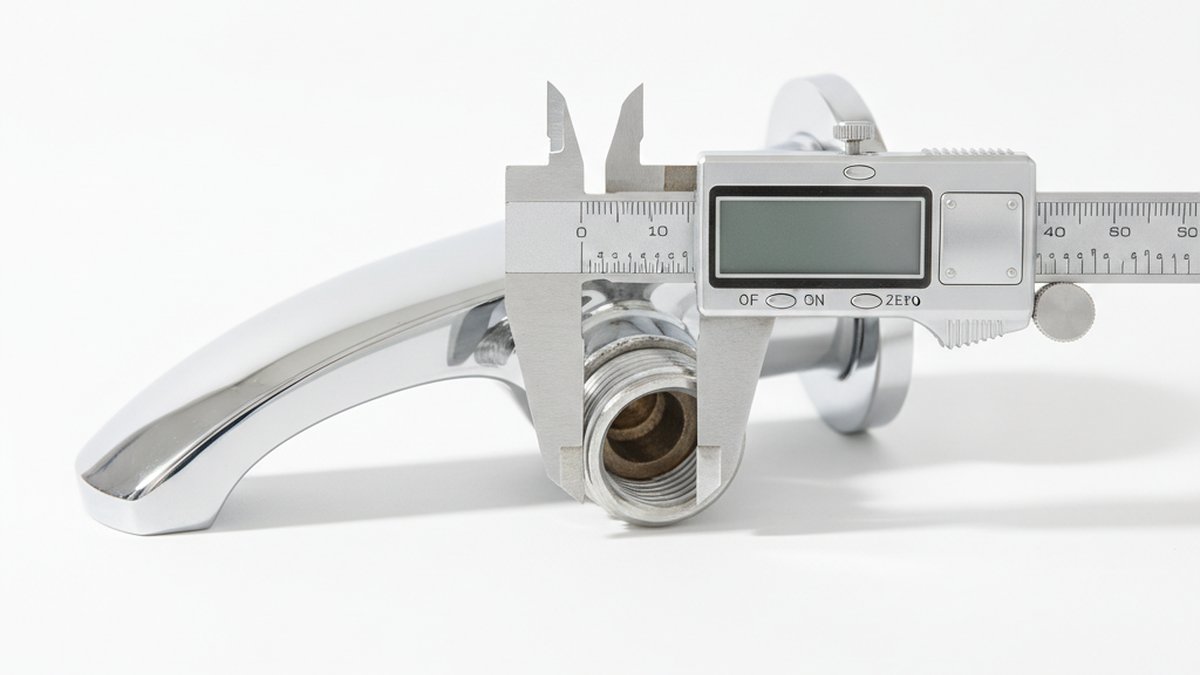
Getting the bathtub faucet thread size right is the single thing that decides whether your new tub spout screws on and seals in five minutes or leaks behind the wall and sends you back to the store. The confusing part is that “1/2 inch” doesn’t mean the thread is half an inch wide — pipe threads are named by their old nominal bore size, not the diameter you’ll measure with calipers. So this guide walks you through exactly what threads tub spouts and valves use, how to measure yours in under two minutes, and how to tell threaded from slip-fit before you spend a cent. At iVIGA we manufacture and test tub fixtures to these exact standards every day, so the numbers below are the ones we actually machine to.
What thread size do most bathtub faucets and tub spouts use?
The overwhelming majority of threaded tub spouts in the US and Canada use a 1/2-inch NPT (National Pipe Taper) female thread that screws onto a 1/2-inch male threaded nipple coming out of the wall. That thread has an actual outside diameter of roughly 0.840 inches (about 21.3 mm) and 14 threads per inch. So when you read “1/2-inch NPT,” ignore the 1/2 — that’s the historic pipe bore, not anything you’ll measure across the threads.
This matters because people put calipers on the threads, read 0.84″, and assume they need a 3/4-inch part. They don’t. Pipe thread naming is nominal. Here’s the quick reality for tub and shower plumbing:
- 1/2-inch NPT — measures ~0.84″ OD on the male thread. This is the standard for tub spouts, shower arms, and most valve outlets in North America.
- 3/4-inch NPT — measures ~1.05″ OD. Rare on tub spouts; you’ll mostly see it on some tub filler valves and hose bibbs.
- 1/2-inch slip-fit — no threads at all. The spout slides over bare 1/2-inch copper pipe and locks with a hex set screw underneath.
- G1/2 (BSP) — a parallel British/European thread, common on imported and some freestanding tub fillers. Same nominal size as NPT but not interchangeable — the thread angle and pitch differ.
If you’re in the US or Canada and pulled a spout off a wall nipple, assume 1/2-inch NPT until you prove otherwise. If your fixture came from Europe, Australia, or a boutique freestanding filler, check whether it’s G1/2 BSP, because forcing an NPT part into a BSP fitting cross-threads both.
How do I measure my bathtub faucet thread size at home?
You measure it by removing the spout, identifying threaded versus slip-fit, and then measuring the outside diameter of the male thread with a tape or caliper and matching it to the nominal chart. You do not need special tools — a $5 tape measure and this article are enough for 90% of tubs.
Here’s the exact process:
- Shut nothing off — the spout doesn’t hold pressure. Unlike a valve, the tub spout downstream of the diverter can be removed without touching your main water supply. (Do close the tub drain so screws don’t disappear.)
- Try to unscrew it counterclockwise. Wrap a cloth around the spout, turn by hand or with a pipe wrench padded by a rag. If it rotates off, it’s threaded. If it won’t rotate at all, look underneath.
- Look under the spout near the wall. A small hex/Allen set screw on the underside means it’s a slip-fit spout — loosen that screw and the spout pulls straight off the copper stub.
- For threaded: measure the wall nipple’s outside diameter. ~0.84″ across the threads = 1/2-inch NPT. ~1.05″ = 3/4-inch NPT.
- For slip-fit: measure the copper pipe OD. A bare copper stub about 5/8″ outside diameter is standard 1/2-inch nominal copper — buy a 1/2-inch slip-fit spout.
- Measure the length you need from the wall to where the spout should end, so the new spout covers the pipe and sits flush against the escutcheon or tile.
One tip from our QC bench: count threads if you can. NPT is 14 threads per inch and the fitting visibly tapers (gets slightly narrower toward the tip). BSP/G1/2 is 14 TPI but parallel — it doesn’t taper. That taper-versus-parallel difference is the fastest way to tell an American thread from a European one by eye.
Threaded vs slip-fit tub spout: which one do I actually have?
If your spout unscrews, it’s threaded; if it has a set screw underneath and slides off a smooth copper pipe, it’s slip-fit. This is the most important distinction to get right, because a threaded spout will not seal on a bare copper stub, and a slip-fit spout won’t clamp onto a threaded nipple. They are not interchangeable without changing the pipe or adding an adapter.
Here’s how the two compare so you can buy the correct style the first time:
| Feature | Threaded (1/2″ NPT) | Slip-Fit (1/2″ copper) |
|---|---|---|
| Connection to wall | Screws onto a threaded brass/galvanized nipple | Slides over bare copper pipe, locked by set screw |
| How to remove | Rotate counterclockwise | Loosen hex set screw underneath, pull straight off |
| Seal method | Thread tape (PTFE) or pipe dope on the threads | Rubber O-ring inside the spout against the pipe |
| Typical era / build | Older homes, remodels, most standard installs | Common in newer construction with copper stub-outs |
| Adjustable clocking | Limited — stops where threads bottom out | Freely rotatable before you tighten the set screw |
| Risk if mismatched | Won’t grip bare copper — leaks instantly | Set screw can’t seal on a threaded nipple — leaks |
If you have a threaded stub but want a slip-fit spout (or vice versa), you have two clean fixes: swap the wall pipe to match, or use an adapter. Many spouts today are sold as “universal” and ship with a threaded adapter you thread onto the copper — but that only works if the copper stub is cut to the right length. Measure twice.
Does the tub filler valve or diverter also affect thread size?
Yes — the valve body behind the wall sets the outlet thread the spout has to match, and it’s usually 1/2-inch NPT or 1/2-inch sweat (soldered copper). The spout is only half the equation; the rough-in valve and the drop-ear elbow or nipple feeding the spout define what you can thread on. If you’re replacing a whole tub-and-shower valve, this is when thread size, spacing, and outlet type all have to line up at once.
Common valve outlet connections you’ll meet:
- 1/2″ NPT female outlet — you thread a nipple in and the spout goes on the nipple. Most flexible for spout choice.
- 1/2″ sweat / copper — soldered copper drops down to a slip-fit or a threaded adapter at the wall.
- 1/2″ PEX — increasingly common; terminates at a drop-ear elbow with 1/2″ NPT threads for the spout.
If you’re mid-project on the valve itself — say you’re upgrading to a thermostatic or pressure-balance cartridge — get the valve sorted before you obsess over the spout thread, because the valve dictates the rest. Our walkthrough on how to change a shower thermostatic valve without flooding the bathroom covers the shut-off and outlet-matching steps that pair directly with this thread-size question. And if your spout keeps working loose after install, the fix in how to put a shower tap back on after it’s come loose usually traces back to a thread or set-screw issue exactly like the ones above.
What thread size do freestanding and wall-mount tub fillers use?
Freestanding tub fillers and many wall-mount fillers commonly use 1/2-inch NPT in North American models, but a large share of designer and imported fillers use G1/2 BSP — so always confirm which one before ordering supply lines or valves. This is the category where thread mismatches happen most, because these fillers are often sourced globally and the box doesn’t always say.
For a floor-mounted freestanding filler, the connection usually runs through a rough-in valve in the floor, and the supply risers thread with either 1/2″ NPT or G1/2 compression fittings. Two rules keep you out of trouble:
- Match the thread standard, not just the size. “1/2 inch” NPT and “1/2 inch” G1/2 look nearly identical but seal differently. NPT tapers and seals on the threads; BSP-parallel seals on a washer or O-ring face. Cross-threading them strips the softer brass.
- Buy the filler and its rough-in valve as a set when you can. A matched valve-and-filler kit removes the guesswork entirely, which is why we sell iVIGA tub fillers with their compatible rough-in valves specified.
Finish plays into this too — thread size is mechanical, but the finish is what you live with. If you’re leaning toward a warmer or cooler tone across your tub and shower, our breakdown of whether a brushed nickel faucet for the shower is really the best finish pairs well once the plumbing dimensions are settled.
What do I need to seal the threads once I’ve matched the size?
For a threaded tub spout you seal with PTFE thread tape (plumber’s tape) or pipe joint compound on the male threads — never on slip-fit, which seals with a rubber O-ring instead. Getting the sealant right is as important as the size; the correct thread with no tape still weeps, and tape on a slip-fit O-ring does nothing.
A reliable install kit and method:
- Threaded: wrap 3–4 turns of PTFE tape clockwise around the male nipple threads, then hand-thread the spout and snug it with a padded wrench until it points straight down. Don’t over-torque brass.
- Slip-fit: confirm the internal O-ring is intact and lightly silicone-greased, slide the spout fully onto the copper, then tighten the hex set screw just until snug.
- Both: run water and check the wall joint and underside for drips for a minute or two before you call it done.
The brass a spout is machined from matters for how those threads hold up over years of removal and reinstallation. We go deep on why in brass vs stainless steel faucet manufacturing — the short version is that lead-free brass threads cut cleaner and reseal better than thin cast alternatives, which is exactly what you want in a part you might unscrew again someday.
Author note, testing & warranty
About the author: This guide was written by the iVIGA product team, who spec, machine, and bench-test tub spouts and rough-in valves for a living. We measure thread pitch and outside diameter on production samples with calibrated gauges, not guesses.
Brand credibility: iVIGA (www.viga.cc) is a manufacturer of faucets, shower systems, and tub fixtures. Our threaded components are cut to standard 1/2-inch NPT and G1/2 tolerances and pressure-tested before shipping.
Standards & warranty: Our tub and shower fixtures are built to recognized plumbing standards and third-party certifications — the same ones we explain in our China faucet certifications guide (cUPC, NSF 61, CE, WRAS) — and are backed by an iVIGA finish and function warranty. Thread compatibility and pressure integrity are verified on the line, so a spout that says 1/2-inch NPT really lands within NPT tolerance.
FAQ
Is a bathtub faucet 1/2 inch or 3/4 inch?
Almost always 1/2-inch NPT for threaded tub spouts, which measures about 0.84 inches across the actual threads despite the “1/2 inch” name. Very few tub spouts use 3/4-inch; if your thread measures closer to 1.05 inches OD, then it’s 3/4-inch NPT — but confirm before buying, since that’s the exception, not the rule.
How do I know if my tub spout is threaded or slip-on?
Try to unscrew it counterclockwise — if it rotates off, it’s threaded. If it won’t turn, look on the underside near the wall for a small hex set screw; if there’s one, it’s a slip-fit spout that pulls straight off a bare copper pipe once you loosen that screw.
Are all bathtub spouts the same thread size?
No. In North America most threaded spouts share 1/2-inch NPT, but slip-fit spouts have no threads at all, and imported or designer fillers often use G1/2 BSP, which looks the same size but seals differently and won’t cross-thread safely. Always identify the connection type before assuming they’re interchangeable.
Can I use plumber’s tape on a slip-fit tub spout?
No — slip-fit spouts seal with an internal rubber O-ring against a smooth copper pipe, so thread tape does nothing there. Use tape only on threaded (NPT) connections. On slip-fit, make sure the O-ring is intact and lightly greased, then tighten the set screw.
What is G1/2 and is it the same as 1/2 inch NPT?
G1/2 is a British Standard Pipe (BSP) parallel thread, nominally the same 1/2-inch size as NPT but with a different profile and sealing method. They are not interchangeable — NPT tapers and seals on the threads, while G1/2 is parallel and seals on a washer. Forcing one into the other strips the brass, so match the standard, not just the number.
What length tub spout do I need with the right thread?
Measure from the wall (or from where the pipe exits) to where you want the spout tip to end, then match a spout whose inlet-to-back dimension covers that gap so it sits flush against the tile or escutcheon. Thread size determines if it connects; length determines whether it looks and seals right once it’s on.
WeChat
Scan the QR Code with WeChat