 iVIGA Faucet Manufacturer & Factory

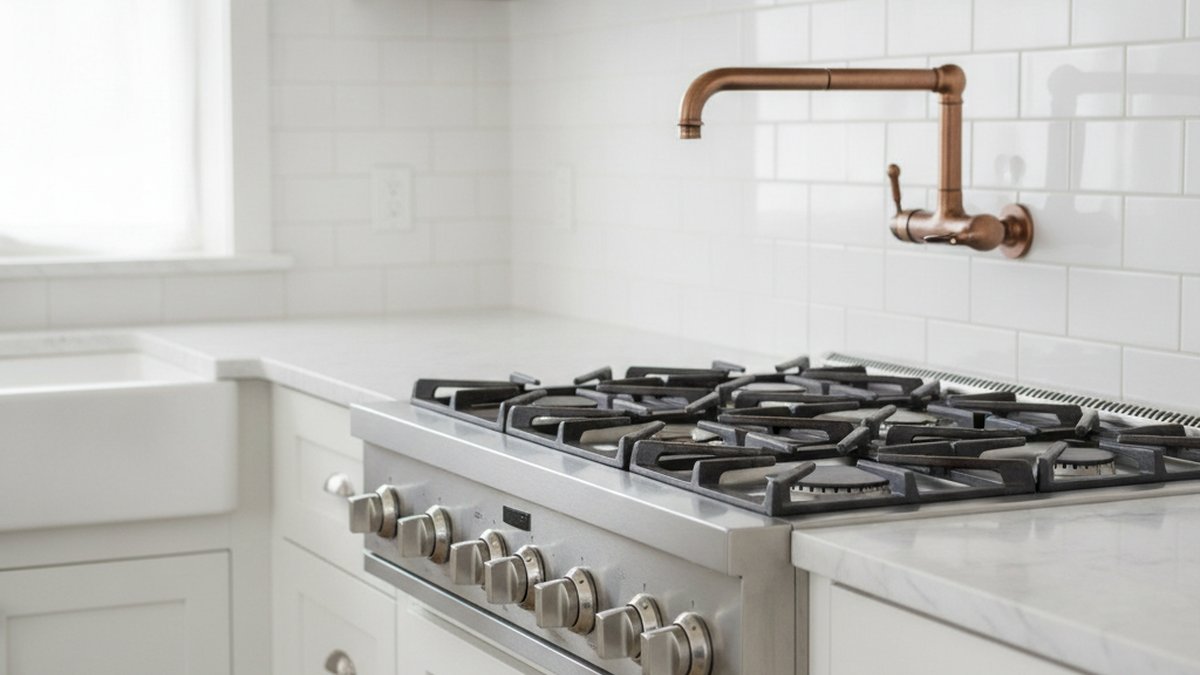
A pot filler faucet copper model is a wall-mounted (or deck-mounted) faucet installed right behind your cooktop, finished in warm copper or copper-tone metal, so you can fill big pots with water exactly where you cook them instead of hauling a full stockpot across the kitchen. If your kitchen leans farmhouse, rustic, transitional, or industrial, copper is the finish that makes a pot filler look intentional rather than utilitarian. Below, we’ll walk through whether it’s actually worth the money, how to pick a good one, what “copper” really means on a spec sheet, and how to install and maintain it so it looks great for years.
What exactly is a pot filler faucet, and why get one in copper?
A pot filler is a cold-water-only faucet mounted at your stove so you fill pots in place. You get it in copper when you want the fixture to read as a warm design accent — copper’s reddish-gold tone pairs beautifully with white or cream cabinets, butcher-block counters, and matte-black or brass hardware. Functionally, copper behaves like any other quality faucet finish; the reason to choose it is almost entirely aesthetic plus its natural resistance to corrosion and its (mild) antimicrobial properties.
Here’s the honest breakdown of who benefits most:
- Serious home cooks who regularly fill 8-quart-plus stockpots for pasta, canning, or stock — carrying a full pot from a distant sink is heavy and sloshy.
- Design-forward kitchens where an exposed copper arm over the range becomes a focal point, not an afterthought.
- Anyone with a range island where the main sink is on the opposite counter and walking wet pots around is a daily annoyance.
If you rarely cook with large pots or your sink is one step from your stove, a pot filler is a luxury, not a need. Copper simply raises the design ceiling of that luxury. For the practical question of exactly how high and where to mount it, we cover that in depth in our guide to the best pot filler faucet placement above your stove.
Does “copper” mean solid copper or just a copper finish?
Almost always, it means a copper-tone finish over a solid-brass body — not a faucet carved from raw copper. That’s a good thing, and here’s why: brass is the industry-standard material for durable faucets because it machines cleanly, threads reliably, and resists corrosion, while a copper or PVD copper finish gives you the look without the softness and denting of pure copper. When a listing says “copper,” check the material line carefully.
There are three things a “copper” faucet can actually be:
- Solid brass body with a living (unlacquered) copper finish — real copper plating that will patina and darken over time. Beautiful, but it changes color and needs occasional polishing if you want it bright.
- Solid brass body with PVD copper or “brushed copper” coating — a physical-vapor-deposition finish that’s extremely scratch- and tarnish-resistant and keeps a consistent color for years. This is the low-maintenance choice most people should buy.
- Genuine solid copper — rare in faucets, expensive, softer, and prone to dents. Gorgeous in hammered-copper artisan pieces but overkill for a working pot filler.
If you love the material debate, our comparison of brass vs stainless steel faucet manufacturing explains exactly why a solid-brass core is the smarter foundation under any finish, copper included.
How much does a copper pot filler cost, and is a $150 one any good?
Expect to pay roughly $120–$250 for a solid, well-built copper-finish pot filler; a $150 model can absolutely be good if it’s solid brass with ceramic-disc valves, but be skeptical of $40–$70 “copper” units, which are usually thin zinc-alloy or plastic with a sprayed coating that flakes. The price is driven mostly by the body material and the valve mechanism, not by the finish name.
| Price tier | Typical build | What to expect |
|---|---|---|
| $40–$80 | Zinc alloy / plastic, sprayed copper paint | Finish flakes, valves stiffen, arm sags. Skip it. |
| $120–$180 | Solid brass, ceramic-disc valves, PVD or plated copper | The sweet spot — durable, smooth, good warranty. |
| $200–$350 | Heavy solid brass, dual shut-off valves, premium PVD or living copper | Best longevity, thickest finish, boutique styling. |
| $400+ | Artisan hammered solid copper, handmade | Statement piece; pay for craft, not performance. |
The single most important spec at any price is dual shut-off valves — one at the wall and one at the spout head. That second valve means if the tip ever drips, water stays contained in the arm instead of running down your backsplash. Single-valve pot fillers are cheaper but a headache to service.
What features actually matter when buying a copper pot filler?
Focus on five things: a solid-brass body, dual shut-off valves, a double-jointed swing arm, adequate reach, and a matching mounting style. Everything else is styling. Let’s take them one at a time so you can read a product page like a pro.
Reach and swing
Measure from your wall (or deck mount point) to the center of your largest back burner, then add a few inches so the spout clears the pot rim. A double-jointed arm folds in two places, so it reaches out over a 16-inch stockpot on the far burner and then folds flat against the wall when you’re done. A single-joint arm is cheaper but often can’t reach the front burners. Look for 20+ inches of total extension for a standard 30-inch range.
Valve type
Ceramic-disc valves are the standard for a reason — they give you a crisp quarter-turn on/off and rarely drip. Avoid old rubber-washer designs, which wear out. Copper finish has nothing to do with valve quality, so read the valve line separately.
Mounting
Wall-mounted is the classic pot filler look and keeps your counter clear, but it requires a water line run inside the wall behind the range — best done during a remodel. Deck-mounted (counter-mounted) versions install into the countertop beside the cooktop and are easier to retrofit. Choose based on whether you can access the wall plumbing.
Copper vs other popular pot filler finishes — how do they compare?
Copper wins on warmth and character but demands slightly more upkeep than matte black or brushed nickel; if you want zero maintenance, brushed nickel is easier, and if you want maximum drama, matte black hides water spots best. Here’s how the common finishes stack up for a pot filler specifically.
| Finish | Look | Maintenance | Best kitchen style |
|---|---|---|---|
| Copper (PVD) | Warm, reddish-gold, inviting | Low — wipe dry occasionally | Farmhouse, rustic, transitional |
| Living (unlacquered) copper | Ages to a rich patina | Medium — polish to keep bright | Vintage, eclectic, artisan |
| Matte black | Bold, modern, hides spots | Low | Modern, industrial |
| Brushed nickel | Neutral, silvery-warm | Very low | Almost anything |
| Brushed brass / gold | Warm like copper but yellower | Low (PVD) | Transitional, glam |
One design tip: copper looks its absolute best against a contrasting backdrop — white subway tile, a dark navy range hood, or a crisp white apron sink. If you’re leaning into the copper-on-white look throughout the kitchen, our piece on whether a copper faucet on a white sink is worth it is a helpful companion read for coordinating your main faucet with the pot filler.
How do you install a copper pot filler, and can you DIY it?
A deck-mounted copper pot filler is a confident DIY job if you have a nearby cold-water line; a wall-mounted one is best planned during a remodel because it needs an in-wall supply line and blocking behind the drywall. Either way, the finish doesn’t change the plumbing — copper installs exactly like any other pot filler.
- Shut off the water to the kitchen and open a faucet to relieve pressure.
- Run or locate the cold line. Wall-mount: tap into a cold line and run ½-inch pipe to a rough-in valve behind the range, anchored to blocking. Deck-mount: connect to the cold supply under the counter.
- Mount the valve/base and thread the faucet body on, using PTFE tape on threaded connections. Confirm the arm folds toward the wall, not away.
- Turn the water back on slowly and check every joint for drips before you cook a single pot of pasta.
- Test both shut-off valves — open the wall valve and use the spout valve for daily on/off.
Because a pot filler lives over an open flame and hot pans, make sure the arm folds fully out of the way of your tallest burner. If you’re doing your own plumbing and worry about leaks or corroded threads down the line, it’s worth having the right kitchen faucet tightening tool on hand so you can snug connections properly without rounding off the fittings.
How do you keep a copper pot filler looking good over the stove?
Wipe it dry after cooking and clean it with mild dish soap and a soft cloth — never use abrasive pads or acidic cleaners, which strip copper finishes fast. Grease and steam from the cooktop are copper’s real enemies over the stove, so a quick weekly wipe matters more here than on a bathroom faucet.
- PVD/brushed copper: soap, water, soft cloth. That’s it. The finish is bonded and won’t tarnish.
- Living (unlacquered) copper: either embrace the darkening patina, or polish occasionally with a copper cleaner (or a cut lemon and salt) to keep it bright. Whichever you choose, be consistent — patchy patina looks accidental.
- Both: avoid bleach, ammonia, and scouring powders. Splatter from cooking oils should come off same-day before it bakes on.
Because it sits in a splatter zone, a durable finish and quality valves pay off here more than anywhere else in the kitchen — the same durability principles we lay out in our guide to the best kitchen faucet for durable everyday use apply directly to a hard-working pot filler.
Where should you buy a copper pot filler, and what about iVIGA’s?
Buy from a manufacturer that specs solid brass, ceramic-disc valves, and PVD-grade copper finishing and backs it with a real warranty — that’s exactly the bracket iVIGA builds to. As a dedicated faucet and bathroom-fixture manufacturer, iVIGA produces pot fillers with lead-safe solid-brass bodies, dual shut-off valves, and consistent PVD copper finishing, then tests them against standard pressure and durability cycles before they ship.
What to confirm on any product page before you check out: material (solid brass, not zinc), valve type (ceramic disc), number of shut-off valves (two), arm reach for your range width, and certification. On certifications specifically, a compliant faucet should meet drinking-water safety and pressure standards — if you want to understand what those marks actually guarantee, our China faucet certifications guide covering cUPC, NSF 61, CE, and WRAS breaks it down in plain English so you can shop with confidence.
FAQ
Is a copper pot filler safe for drinking water?
Yes, when it’s a solid-brass body with a proper copper finish and meets a drinking-water safety standard like NSF/ANSI 61 or a lead-free (cUPC) rating. Copper itself is naturally safe and mildly antimicrobial. The thing to avoid is a cheap zinc-alloy fixture with a sprayed coating, which can degrade — always check for the lead-free and drinking-water certifications on the listing.
Do copper pot fillers have hot water too?
No — pot fillers are cold-water-only by design. That’s not a downside: you fill the pot with cold water and heat it on the burner directly below. Running a single cold line is also why pot fillers are simpler to install than a two-line kitchen faucet. If you ever see a “hot and cold” pot filler, it’s really a specialty bar-style faucet, not a true pot filler.
Will an unlacquered copper pot filler turn green or dark over the stove?
Living copper will darken and develop a warm brown patina over time, and in a humid, greasy stove environment that happens a little faster. It won’t turn green (verdigris) unless it’s exposed to constant moisture and acids for a long time, which a wiped-down kitchen fixture won’t be. If you want zero color change, choose a PVD or lacquered copper finish instead of living copper.
How high above the stove should a copper pot filler go?
Mount it so the folded arm clears your tallest stockpot — generally with the spout about 3–6 inches above the rim of a large pot sitting on the burner, which usually lands the mount around 18–24 inches above the cooktop surface. Exact height depends on your pots and range, so measure your biggest pot first. We cover the measurements and common mistakes in our dedicated pot filler placement guide linked above.
Can I retrofit a copper pot filler without opening the wall?
Yes — choose a deck-mounted (countertop) copper pot filler that connects to the cold supply under your counter, rather than a wall-mounted one that needs an in-wall line. Deck-mount versions are the go-to for retrofits and rentals where you can’t open the backsplash. If you’re mid-remodel with the wall open, go wall-mounted for the cleanest look.
Is copper harder to keep clean than other finishes on a pot filler?
Slightly, but only because it lives in a splatter zone. A PVD copper finish is about as easy as brushed nickel — just wipe it dry. Living copper is the only version that needs occasional polishing, and even then only if you want it bright rather than patinated. Avoid abrasive and acidic cleaners on any copper finish.
Author’s note: This guide was written by the iVIGA product content team, drawing on our experience manufacturing and testing kitchen and bathroom faucets. iVIGA is a specialist faucet and bathroom-fixture maker; our pot fillers use solid-brass bodies, ceramic-disc and dual shut-off valves, and PVD copper finishing, and are pressure- and durability-tested and backed by warranty. Always confirm certification marks for your region before purchase.
WeChat
Scan the QR Code with WeChat