 iVIGA Faucet Manufacturer & Factory

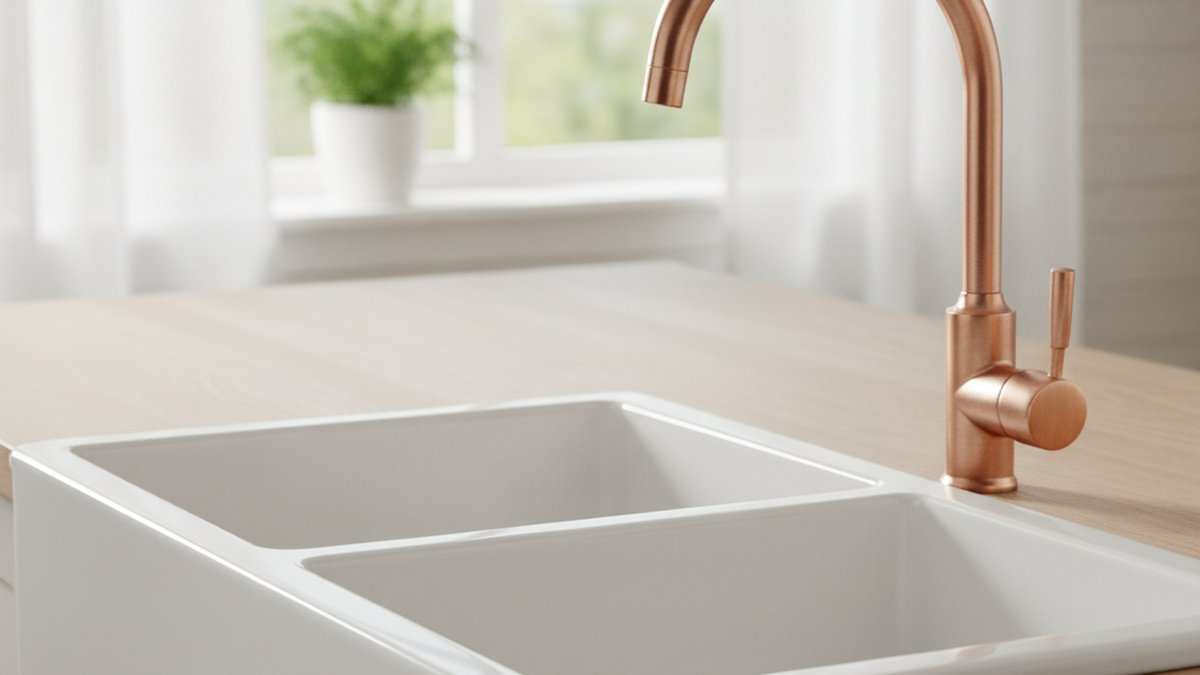
If you’ve been staring at product photos wondering whether a copper faucet white sink combo looks as good in a real kitchen or bathroom as it does on Pinterest, here’s the honest answer: it usually looks better, because your eye is drawn straight to the warm faucet the moment you walk in. White is the most forgiving backdrop in fixtures — it doesn’t compete for attention, it doesn’t clash with copper’s orange-pink undertones, and it makes even a mid-priced faucet look intentional. Below I’ll walk through the real questions people ask before buying this exact pairing, the two very different types of “copper” finish you’ll run into, what it costs, and how to keep it looking right for a decade.
Why does copper look so good against a white sink specifically?
Copper looks good against white because white is a neutral, high-value backdrop with no undertone of its own, so it lets copper’s warm orange-pink tone become the single point of contrast in the space. There’s no color fighting for dominance — the sink recedes, the faucet steps forward. Designers call this a “high-contrast warm-on-neutral” pairing, and it’s one of the safest bets in fixture selection because it works in almost any style room.
Practically, this matters in three ways. First, a white sink hides nothing about your faucet, so a well-made copper piece gets rewarded and a cheap plated one gets exposed — buy accordingly. Second, white sinks come in porcelain, fireclay, cast iron with enamel, and solid-surface, and copper flatters all of them because it’s a color relationship, not a material one. Third, copper is warm, and warm metals soften the slightly clinical feel that a big white basin can have on its own. If your countertop is white or gray quartz, warm wood, or marble, copper ties the whole scene together instead of floating.
What’s the difference between “real copper,” PVD copper, and rose gold?
The difference is huge and it’s the single most important thing to understand before buying: “copper” on a spec sheet can mean three completely different things. Only one of them actually changes color over time, and the other two are stable finishes engineered to look like copper permanently.
- Living / unlacquered copper (real copper surface): Genuine copper with no protective coating. It’s beautiful and develops a patina — darkening and mottling over months as it reacts with air, water, and your hands. If you love that “aged, lived-in” look, this is the real thing. If you want it to stay bright, you’ll be polishing it constantly.
- PVD copper / rose gold (sealed finish over brass): A physical-vapor-deposition coating bonded to a solid brass body at the molecular level. It gives you the copper color with essentially none of the maintenance and it will not patina, tarnish, or corrode under normal use. This is what most people actually want when they picture a “copper faucet.”
- Lacquered copper: Real copper sealed under a clear lacquer to freeze its current color. It looks like fresh copper indefinitely — until the lacquer eventually wears or chips near the spout, after which it patinas unevenly. Good middle ground, but the coating is the weak point.
For a busy kitchen or a shared bathroom, a PVD copper finish over a solid-brass body is the pairing I recommend for a copper faucet white sink setup. You get the warm color that pops against white, plus a surface that shrugs off water spots and fingerprints. Living copper is a wonderful choice for a low-traffic powder room where you actually want the patina to tell a story.
Copper faucet finish types compared — which is right for your sink?
Here’s a side-by-side of the finishes you’ll realistically be choosing between when you shop a copper faucet for a white sink, so you can match the finish to how much upkeep you’re willing to do.
| Finish type | Changes color over time? | Maintenance level | Best for | Typical price (single faucet) |
|---|---|---|---|---|
| PVD copper / rose gold (over brass) | No — stays put for years | Very low — wipe with damp cloth | Kitchens, family baths, anyone who wants it to just stay copper | $120–$320 |
| Living / unlacquered copper | Yes — patinas noticeably | High if you want it bright; none if you embrace patina | Powder rooms, rustic/farmhouse, patina lovers | $150–$400 |
| Lacquered copper | No, until lacquer wears | Medium — protect the coating | Décor-forward baths, medium traffic | $130–$350 |
| Copper-plated (thin electroplate) | Wears through to reveal base metal | Low but short-lived | Budget/temporary only — avoid for daily use | $40–$90 |
The one line in that table to avoid is thin copper electroplate. It’s cheap for a reason: the copper layer is measured in microns, and on a faucet you touch dozens of times a day it wears through at the handle and spout tip, leaving a dull silver patch that no polish will fix. A white sink will make that worn spot glaringly obvious.
Will a copper faucet stain, spot, or turn green on a white sink?
A sealed PVD copper faucet will not stain your white sink, spot easily, or turn green — the coating is inert and doesn’t react with water. Living (unlacquered) copper is the only version that can leave marks, and even then it’s rare with normal use. The green you’re picturing is verdigris, which forms on bare copper exposed to moisture and salts over long periods; it takes real neglect on an uncoated surface to get there indoors, and a quick wipe-down prevents it entirely.
Water spotting is a bigger day-to-day concern than staining, and again it depends on finish. Polished/bright copper shows water droplets and fingerprints more than a satin or brushed copper. If your home has hard water, lean toward a brushed or satin PVD copper — it diffuses light and hides mineral spotting far better against a white basin. And if your aerator starts spitting or the flow weakens, that’s usually mineral buildup rather than anything to do with the finish; our guide on why a faucet aerator still clogs even with soft water walks through the quick fix. For finish upkeep in general, the same discipline that keeps a dark finish flawless applies here — the principles in our matte black faucet care guide (soft cloth, no abrasives, no ammonia) translate directly to protecting a copper coating.
Which sink shape and mounting works best with a copper faucet?
For maximum impact, pair a copper faucet with a clean, simple white sink and match the faucet’s arc height to how you use the basin. A single-basin white fireclay farmhouse (apron-front) sink is the classic showcase for kitchen copper because the flat white front acts like a gallery wall for the faucet. For bathrooms, a white vessel sink or a crisp undermount both let the copper stand alone.
- Kitchen: A high-arc pull-down copper faucet over a deep single white basin gives you clearance for pots and a strong vertical line of warm metal. If you cook a lot, prioritize spout reach and a magnetic docking spray head.
- Bathroom vessel sink: Because a vessel sits on top of the counter, you need a taller single-hole faucet to clear the rim — a common sizing mistake. If you’re going the vessel route, our breakdown of the Kraus Ramus vessel sink faucet shows exactly the height relationship to look for.
- Standard bathroom vanity: Here the high-arc vs low-arc decision changes both look and splashing behavior; our high arc vs low arc bathroom faucet guide covers which suits a shallow white basin without splashing the counter.
One measurement people forget: hole configuration. Copper faucets come as single-hole, centerset (4″), and widespread (8″). Check how many pre-drilled holes your white sink or vanity has before you fall in love with a specific model — a widespread copper set won’t mount cleanly on a single-hole vessel.
How much should a good copper faucet cost, and where’s the sweet spot?
A quality copper faucet for a white sink lands between roughly $120 and $320, and the sweet spot for most homes is around $150–$220 for a solid-brass body with a sealed PVD copper finish. Below about $90 you’re almost always buying zinc-alloy or thin electroplate that won’t last; above $350 you’re paying for designer branding or genuine living-copper craftsmanship, which is worth it only if that’s specifically what you want.
What you’re actually paying for at the sweet spot is threefold: a solid brass body (heavier, corrosion-resistant, doesn’t crack like zinc), a ceramic-disc cartridge (smooth control, drip-free for years), and a real PVD finish rather than electroplate. The cartridge matters more than buyers expect — it’s the part that determines whether your faucet drips in year three. If you want to understand why, our comparison of ceramic disc vs ball valve cartridges explains why ceramic-disc is the standard to insist on.
- Confirm the body is solid brass, not zinc alloy or stainless — brass is the industry benchmark for durability and it’s what a copper PVD coating bonds to best.
- Confirm the finish is PVD (or that “living copper” is exactly what you want) — not “copper-plated.”
- Confirm a ceramic-disc cartridge for drip-free control.
- Check certifications — cUPC / NSF 61 for lead-safe drinking water contact, and a solid manufacturer warranty on both mechanism and finish.
How do you keep a copper faucet looking new against white porcelain?
To keep a copper faucet looking new, wipe it down with a soft damp cloth after use and dry it — that single habit prevents 90% of spotting, especially on a white sink where every water mark is visible. Never use abrasive pads, scouring powders, ammonia-based glass cleaners, or bleach; these strip or dull both PVD and lacquered copper finishes.
For a sealed PVD or lacquered copper faucet, that’s genuinely the whole routine — mild soap and water, dry cloth, done. For living (unlacquered) copper, you have a choice: let it patina naturally, or restore the bright color periodically with a dedicated copper polish (a little Bar Keepers Friend or a lemon-and-salt paste works, then rinse and dry thoroughly). Whatever you do, keep polishing compounds off a PVD finish — you don’t need them, and aggressive polishing can micro-scratch the coating over time.
Copper vs other warm and dark finishes on a white sink
Copper is the warmest, most attention-grabbing finish for a white sink, while champagne bronze reads softer and more neutral and matte black gives high graphic contrast without warmth. If you want the faucet to be the obvious hero, copper wins. If you want warmth that blends more quietly, champagne bronze or brushed brass is the safer pick. Here’s how they stack up on a white basin:
| Finish | Contrast against white | Warmth | Hides water spots? | Vibe |
|---|---|---|---|---|
| Copper / rose gold | High | Very warm | Better in brushed/satin | Statement, characterful |
| Champagne bronze / brushed brass | Medium | Warm | Good (satin) | Soft, versatile |
| Matte black | Very high | Neutral/cool | Excellent | Modern, graphic |
| Chrome / polished nickel | Low–medium | Cool | Poor (chrome) | Classic, safe |
The takeaway: if your goal is impact and warmth on a white sink, copper is the strongest single move you can make. If you share the home with someone who wants “subtle,” champagne bronze delivers a similar warmth with less drama.
Author note, brand credibility & standards
This guide was written by the vigacc fixtures team — engineers and product specialists who design, test, and manufacture faucets for both retail buyers and global OEM/ODM clients. We’ve spent years in the factory watching what actually fails in the field, which is why we’re blunt about zinc bodies and thin electroplate. Every vigacc copper faucet is built on a solid-brass body with a ceramic-disc cartridge, finished with PVD coating tested for wear and salt-spray corrosion, and manufactured to internationally recognized standards including cUPC and NSF 61 for safe drinking-water contact, backed by our finish and mechanism warranty. If you’re a trade buyer rather than a homeowner, our overview of the key faucet certifications (cUPC, NSF 61, CE, WRAS) explains exactly what those marks guarantee. We recommend finishes and configurations based on how fixtures perform over a decade of daily use — not on what photographs best for a single listing.
FAQ
Does a copper faucet go with any white sink material?
Yes. Copper is a color relationship with white, so it flatters porcelain, fireclay, enameled cast iron, and solid-surface white sinks equally. The sink’s material affects durability and cost, not how well copper pairs with it.
Choose your white sink material for how it wears and your faucet finish separately — they don’t need to “match” beyond both being quality builds.
Will a copper faucet turn green like an old penny?
A sealed PVD or lacquered copper faucet will not turn green — the coating prevents the reaction that causes verdigris. Only bare, unlacquered “living” copper can develop green over long exposure to moisture, and indoors with normal wipe-downs even that is very unlikely.
Is copper more expensive than a chrome or black faucet?
Slightly, but not dramatically. A comparable-quality PVD copper faucet typically runs 10–25% more than the same model in chrome, because copper and rose-gold PVD coatings are a specialty finish. The sweet spot for a good copper faucet is roughly $150–$220.
Should I pick brushed/satin copper or polished copper for a white sink?
Pick brushed or satin copper if you have hard water or want low maintenance, because it hides water spots and fingerprints far better against white. Choose polished copper only if you love the bright mirror-like shine and don’t mind wiping it dry after use.
Can I put a copper faucet in a bathroom with a white vessel sink?
Absolutely — it’s one of the best-looking combos there is, but you must buy a tall enough single-hole faucet to clear the raised vessel rim. Measure your vessel height and confirm the faucet’s spout height and reach before ordering so the water lands in the basin, not on the rim.
WeChat
Scan the QR Code with WeChat