 iVIGA Faucet Manufacturer & Factory

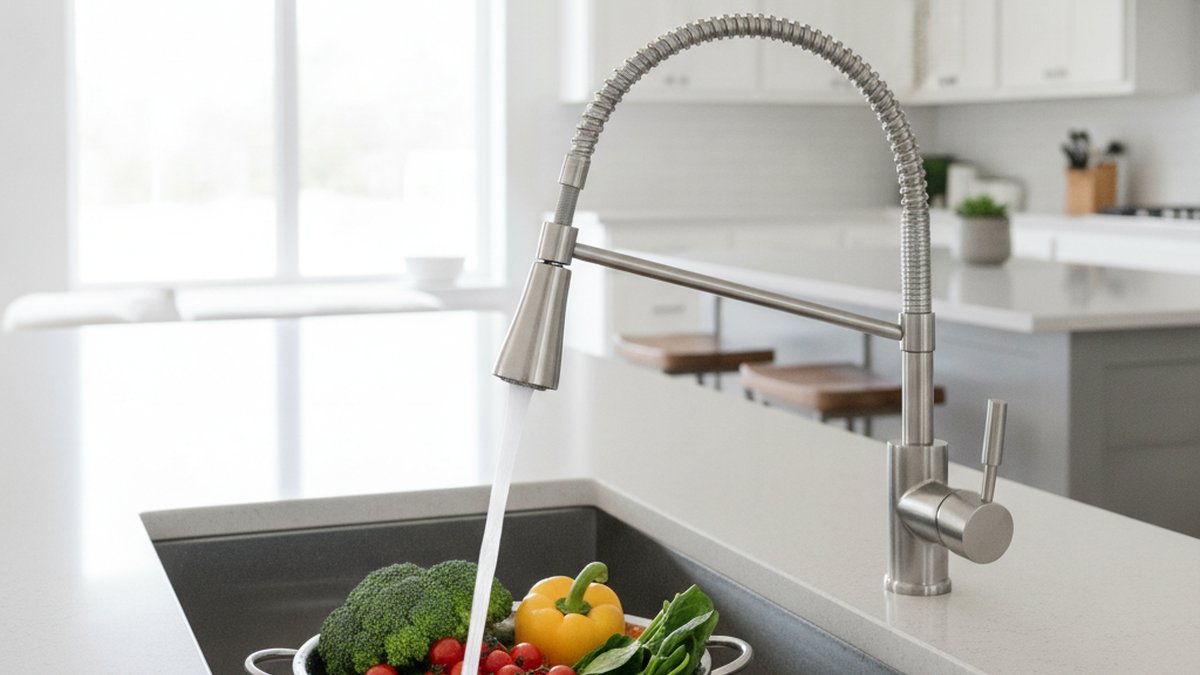
A pull out kitchen sink faucet is a single-handle (sometimes two-handle) faucet whose spout head detaches and extends on a flexible hose, pulling horizontally out and toward you rather than arcing down like a pull-down model. That small difference in direction is the whole point: it lets you aim water exactly where you need it, drag the wand to the edge of the counter to fill a stockpot, and rinse a sink full of dishes without splashing. If you’ve ever wrestled a fixed spout to clean a roasting pan, you already understand the appeal.
Below, I’ll walk through who actually benefits from a pull out design, how it compares to pull-down and standard faucets, what specs genuinely matter (and which are marketing noise), real installation and maintenance realities, and the exact questions buyers ask before clicking “add to cart.” I’ve installed and tested dozens of these across standard 8-inch-deep sinks, shallow bar sinks, and deep workstation basins, so this is written from the sink, not the spec sheet.
What exactly is a pull out kitchen sink faucet, and how is it different from pull-down?
A pull out faucet has a lower, more compact spout, and the wand pulls out horizontally; a pull-down faucet has a tall, gooseneck spout, and the wand pulls down vertically into the basin. Both use a retractable hose and a magnetic or weighted docking system, but the ergonomics are genuinely different depending on your sink and your height.
Here’s the practical breakdown. A pull out faucet sits lower (usually 6–9 inches of spout height), which makes it ideal under a window, inside a cabinet, or over a shallow sink where a tall gooseneck won’t fit. Because the wand comes toward you, it’s easier to drag over to fill a pot sitting on the counter — a real advantage in small kitchens without a pot filler. A pull-down faucet, by contrast, gives you more clearance over the basin for washing tall items and tends to look more “statement,” but it needs headroom and can splash more in a shallow sink.
If you want the deeper material tradeoff — why a brass body outlasts a cheaper zinc one on a wand that gets yanked thousands of times — our breakdown of whether a pull out kitchen faucet brass model is worth buying goes component by component. It’s the companion piece to this article and worth five minutes before you buy.
Who should actually buy a pull out faucet instead of a standard one?
You should buy a pull out faucet if you have a window behind your sink, a shallow or bar-depth sink, low cabinets above, or you simply fill pots and rinse large cookware often. If none of that applies and you never move the spout, a fixed-spout faucet will cost less and leak in fewer places.
The honest truth is that the retractable hose is the one part that eventually wears, so you’re trading a little long-term simplicity for a lot of daily convenience. For the vast majority of home cooks, that trade is worth it. The scenarios where a pull out faucet clearly wins:
- Window over the sink: a tall pull-down spout can block the view or hit the sash when raised; a low pull out spout clears it.
- Deep single-basin or workstation sinks: you can direct the spray into every corner instead of reaching in.
- Small kitchens with no pot filler: drag the wand to a pot on the counter or stove-adjacent landing area.
- Households that cook daily: rinsing produce, cleaning sheet pans, and filling the coffee kettle all get faster.
- Accessibility needs: a lower spout and a wand you pull toward you is easier for shorter users or anyone with limited shoulder mobility.
If your water comes out weak no matter what faucet you own, the faucet style isn’t your problem — mineral buildup or a pressure issue usually is. The Reddit-sourced fixes in our guide to kitchen faucet low water pressure solve most weak-flow complaints in under 20 minutes, and it’s worth ruling those out before you blame a new faucet.
Pull out vs. pull-down vs. standard faucet — which is right for your setup?
For a shallow sink, under a window, or a compact kitchen, choose pull out; for a deep basin with headroom and a desire for a bolder look, choose pull-down; for a rarely-used prep or laundry sink where you never move the spout, a standard fixed faucet is cheapest and most reliable. Here’s the full comparison:
| Feature | Pull Out Faucet | Pull-Down Faucet | Standard Fixed Faucet |
|---|---|---|---|
| Spout height | Low (6–9 in) | Tall (12–18 in) | Varies, no wand |
| Wand direction | Horizontal, toward you | Vertical, into basin | None |
| Fits under a window | Yes, easily | Often no | Yes |
| Best sink depth | Shallow to medium | Deep basins | Any |
| Fill pots on counter | Excellent | Good | Poor |
| Typical price | $90–$250 | $120–$350 | $40–$150 |
| Long-term reliability | Good (hose wears) | Good (hose wears) | Excellent (fewer parts) |
Notice the price overlap — a good pull out faucet from a direct manufacturer like iVIGA often costs less than a mid-tier pull-down from a big-box brand, because you’re not paying for the gooseneck’s extra brass and marketing. If you’re weighing finishes and spout shapes more broadly, the overview in our best kitchen tap design guide pairs well with this comparison.
What specs actually matter when buying a pull out kitchen sink faucet?
Four specs decide whether a pull out faucet lasts a decade or dies in two years: the body material (solid brass), the hose material (nylon-braided, not plastic), the valve cartridge (ceramic disc), and the spray head (dual-function with a self-cleaning nozzle). Everything else — finish, handle style, light-up LEDs — is preference, not durability.
Let me translate each into plain terms:
- Body material — solid brass. Zinc-alloy bodies are cheaper and heavier-feeling in the showroom but corrode and crack at threaded joints over years of hot water. Lead-free solid brass is the standard you want; it’s what quality manufacturers machine the body from.
- Hose — nylon-braided over PEX. The retractable hose is the one moving part under constant stress. A braided nylon sheath resists kinking and abrasion far better than bare plastic tubing, which is where cheap faucets fail first.
- Cartridge — ceramic disc. This is the valve that controls flow and mixes hot/cold. Ceramic disc cartridges are rated for 500,000+ cycles and are the reason a good faucet doesn’t drip. Avoid rubber-washer or ball valves on a modern kitchen faucet.
- Spray head — dual function + self-cleaning. You want at least a stream/spray toggle, and rubber nozzle tips (silicone “nubs”) you can wipe to clear hard-water scale by hand.
- Flow rate — 1.5–1.8 GPM. Enough pressure to rinse fast; many regions cap at 1.8 GPM, and California caps kitchen faucets at 1.8 GPM by law.
A quick word on finish, since it’s the question everyone asks: brushed/stainless and matte black hide water spots and fingerprints best, while polished chrome shows every droplet but is the easiest to wipe shiny. All reputable finishes today are PVD-coated, which bonds the color to the metal and resists scratching far better than old electroplating.
How hard is it to install a pull out faucet yourself?
Most homeowners can install a pull out kitchen sink faucet in 45–90 minutes with a basin wrench, an adjustable wrench, and plumber’s tape — no plumber required, as long as your existing shutoff valves work. The hose and weight assembly are the only parts that differ from a standard faucet install.
Here’s the realistic sequence so you know what you’re signing up for:
- Turn off the water at the two shutoff valves under the sink and open the old faucet to release pressure.
- Disconnect and remove the old faucet — this is where a basin wrench earns its keep, reaching the mounting nuts up behind the basin.
- Drop the new faucet through the deck hole, feeding the pull-out hose and supply lines down first, then tighten the mounting nut from below.
- Connect the supply lines to the shutoffs, wrapping threads with plumber’s tape, and snug — don’t overtighten.
- Attach the pull-out hose to the quick-connector and clip on the counterweight (it’s what retracts the wand). Make sure it can swing freely without catching the drain or garbage disposal.
- Turn the water back on slowly, run both temperatures, and check every joint for drips. Pull the wand out and let it retract a few times to confirm the weight seats it.
If, after the swap, the faucet feels loose at the base or wobbles when you pull the wand, you likely just need to re-tighten the mounting nut — our guide to the right kitchen faucet tightening tool shows exactly which wrench fits the cramped space under the deck. And if you’re shopping for a faucet built specifically to survive daily yanking, see what we recommend for the best kitchen faucet for durable everyday use.
How do you keep a pull out faucet working and leak-free for years?
Three habits keep a pull out faucet healthy: wipe the spray nozzle monthly to clear hard-water scale, check that the counterweight still retracts the wand fully, and descale the aerator twice a year by soaking it in white vinegar. Do those and the hose and cartridge are the only parts likely to ever need replacing.
Hard water is the number one killer of spray performance. The mineral tips on a self-cleaning head help, but if your water is genuinely hard, you’ll notice a weak, split, or sideways spray within months. A 30-minute vinegar soak of the removable spray head restores it. If the wand stops retracting, the counterweight has usually slipped off the hose or is snagging on a pipe — a 2-minute fix underneath. If the faucet starts dripping from the spout itself, that’s the ceramic cartridge, and on a quality faucet it’s a cheap, warranty-covered part you can swap in 15 minutes.
One more durability note from testing: don’t let the wand slam back into the dock. A good magnetic dock seats it gently; on weighted systems, guide it the last inch. Years of hard snapping is what loosens hose connections over time.
Why buy a pull out faucet from iVIGA?
iVIGA is a direct faucet manufacturer (not a reseller), which means the solid-brass bodies, ceramic cartridges, and nylon-braided hoses you’d normally pay a premium for come at factory pricing. Every iVIGA kitchen faucet is pressure-tested before shipping, meets lead-free (NSF/ANSI 372) material standards, and is backed by a warranty on the cartridge and finish. Because we control manufacturing end to end, the same faucet that would carry a big-brand markup lands in the $90–$250 range here at www.viga.cc.
Author note: This guide was written by the iVIGA product team — the same people who spec the cartridges and run the pressure tests — drawing on hands-on installation and long-term use across dozens of pull out and pull-down models in real kitchens, from shallow bar sinks to deep workstation basins. We update it as standards and our own test results change.
FAQ
Is a pull out or pull-down faucet better for a small kitchen?
Pull out, in almost every case. The lower spout fits under windows and low cabinets, and the horizontal wand makes it easy to drag water over to a pot on the counter — both bigger wins in a compact kitchen than the extra basin clearance a pull-down offers.
How long does a pull out kitchen sink faucet last?
A solid-brass pull out faucet with a ceramic cartridge typically lasts 10–15 years. The hose is the first part to wear, usually around year 7–10 with heavy use, and it’s an inexpensive, replaceable component rather than a reason to buy a whole new faucet.
Do pull out faucets leak more than regular faucets?
They have one extra potential leak point — the hose-to-spout connection — so in theory yes, but in practice a quality quick-connector and nylon-braided hose rarely fail. Most “leaks” people report are actually the cartridge (same as any faucet) or a loose supply line, not the pull-out hose.
What size sink hole does a pull out faucet need?
A standard single-hole pull out faucet fits a 1.375-inch (35 mm) deck hole, the US standard. Many models include an optional base plate (escutcheon) to cover the extra holes of an old three-hole sink, so you can usually install one without replacing the sink.
Can I replace a pull-down faucet with a pull out faucet in the same hole?
Yes. Both use the same single-hole mount and the same ½-inch supply connections, so it’s a direct swap — no new plumbing or extra holes needed. Just confirm your new faucet’s reach and spout height suit your basin before ordering.
What’s a good price for a quality pull out kitchen sink faucet?
Expect $90–$250 for one with a solid-brass body, ceramic cartridge, and braided hose. Below about $80 you’re usually getting a zinc body or plastic hose that won’t last; above $250 you’re mostly paying for brand name and designer finishes, not better function.
WeChat
Scan the QR Code with WeChat