 iVIGA Faucet Manufacturer & Factory

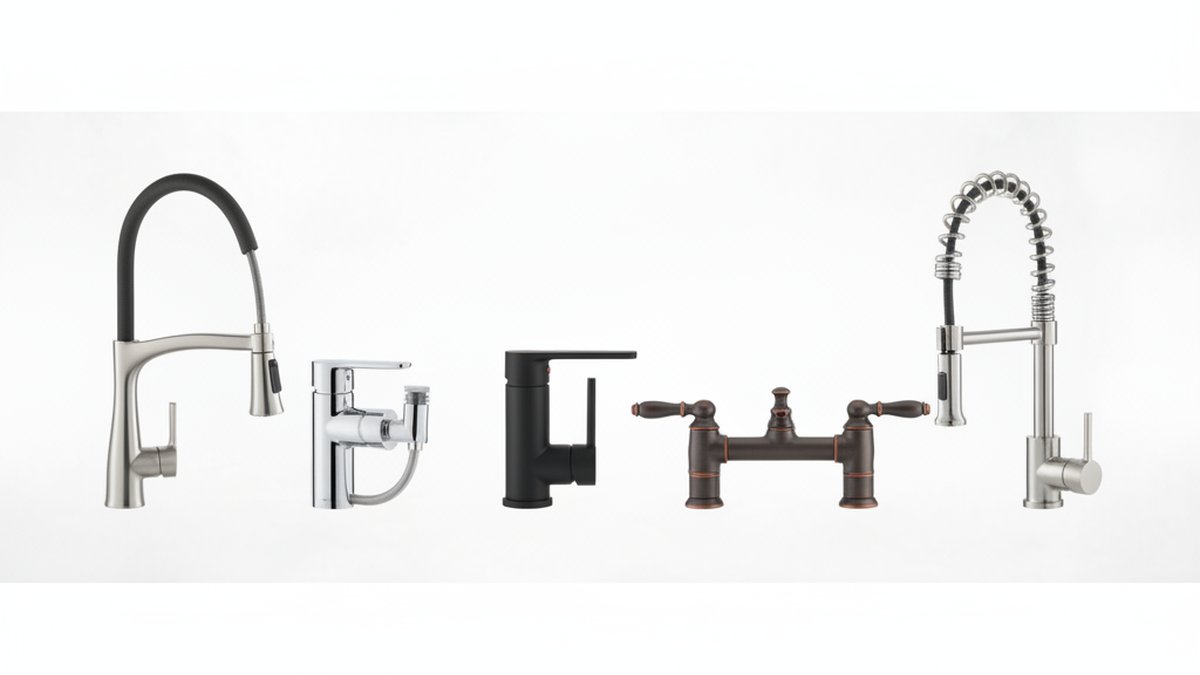
Choosing the best kitchen tap design comes down to three things almost nobody thinks about until it’s too late: how tall your pots are, how much room sits above and behind your sink, and how you actually use water day to day. A gorgeous gooseneck tap is useless if it sprays over the rim of a shallow bar sink, and a sleek low-profile spout is frustrating if you fill stockpots twice a day. So before you fall in love with a finish or a photo, this guide walks through the real design decisions — spout height, handle type, spray function, mounting, and finish — with concrete specs and scenarios so you can pick the shape that fits your kitchen, not just your Pinterest board.
At iVIGA we manufacture and test kitchen faucets to cUPC and NSF/ANSI 61 standards, and we’ve shipped OEM/ODM taps to brands on four continents. That means we look at tap “design” the way a factory does — as a set of engineering choices you live with for a decade — not just as a styling exercise. Here’s how to choose.
Which kitchen tap design is best for a normal-size kitchen sink?
For a standard 22–33 inch kitchen sink with average cabinet depth, the best kitchen tap design is a high-arc single-handle pull-down faucet. The tall spout gives you clearance to wash sheet pans and fill tall pitchers, the single lever lets you adjust temperature one-handed (or with a wrist when your hands are messy), and the pull-down spray head does the reaching for you instead of you leaning over the basin.
The reason this design wins for most people is geometry. A high-arc spout typically rises 8–10 inches above the deck, which clears the pots that actually live in a home kitchen. Pair that with a spray head that pulls straight down into the bowl, and you get the widest usable working zone of any design. Pull-down heads (which retract vertically) suit deep sinks; pull-out heads (which extend horizontally on a hose) suit shallow sinks and windowsill installations where a tall arc won’t fit.
If you’re specifically after something built to survive years of daily abuse, it’s worth reading our deep dive on the best kitchen faucet for durable everyday use — the design that looks best and the design that lasts longest usually overlap, but not always.
High-arc vs low-arc kitchen tap: which spout height should you choose?
Choose a high-arc (gooseneck) tap if you have open space above your sink and wash bulky items; choose a low-arc tap if you have a window, upper cabinet, or shelf close behind the sink, or if you have a small/second sink. Height is the single most common design mistake buyers make.
High-arc spouts look dramatic and give great clearance, but they also splash more in a shallow sink because the water falls farther, and they can block a window or hit a cabinet when the handle lifts. Low-arc spouts are calmer, splash less, and fit tight spaces, but they force you to angle big pots to fit underneath. The physics of arc height applies across the whole house — we break the trade-off down in detail in our guide to high-arc vs low-arc faucets, and the same logic maps directly onto kitchen taps.
A quick real-world rule: measure from your deck (or sink rim) to the nearest obstruction above and behind it. If you have less than 12 inches of clearance, or a window that opens inward, skip the tall gooseneck and go low-arc or pull-out.
Single-handle or two-handle kitchen tap — what’s the real difference?
A single-handle (single-lever) tap is the more practical everyday design: one motion sets both flow and temperature, it’s easier to operate with dirty or full hands, and it needs only one deck hole. A two-handle (widespread or bridge) tap gives you finer separate control of hot and cold and a more traditional, symmetrical look — but it’s slower to adjust and needs three holes.
Here’s how that plays out design-by-design in practice:
- Single-handle pull-down/pull-out: best all-rounder; modern, fast, minimal holes.
- Two-handle bridge faucet: farmhouse and classic kitchens; beautiful, but slower and more to clean.
- Touch / touchless (motion-sensor) single-handle: best for cooks who handle raw meat — tap or wave to start flow without smearing the handle.
- Pot filler (wall-mounted, folding): a supplemental design mounted over the range, not a replacement for your main tap.
One design detail people overlook: handle placement. A rear-mounted lever can crash into a backsplash or window when raised, while a side-mounted lever needs clear elbow room to the side. Check both before you commit to a shape.
How do different kitchen tap designs compare?
The short answer: pull-down suits deep single-bowl sinks, pull-out suits small or under-window sinks, single-hole modern designs suit minimalist kitchens, and bridge designs suit traditional ones. Here’s a side-by-side so you can match a design to your situation and budget at a glance.
| Tap Design | Best For | Typical Spout Height | Deck Holes | Price Range (USD) |
|---|---|---|---|---|
| High-arc pull-down | Deep single-bowl sinks, tall pots | 8–10 in | 1 (or 1 + cover plate) | $120–$400 |
| Low-arc pull-out | Small sinks, under-window installs | 4–7 in | 1 | $90–$300 |
| Single-hole modern lever | Minimalist / apartment kitchens | 6–9 in | 1 | $80–$250 |
| Two-handle bridge | Farmhouse & classic kitchens | 7–9 in | 2–3 | $180–$600 |
| Touchless single-handle | Busy cooks, hygiene-focused homes | 8–10 in | 1 (+ power/battery) | $200–$550 |
| Commercial spring-coil | Open-plan, statement kitchens | 18–28 in | 1 | $250–$700 |
Notice that “design” and “price” don’t track as tightly as you’d expect. A well-engineered $150 pull-down with a solid brass body and a ceramic-disc cartridge will out-live a $400 tap with a zinc body and a plastic valve. Design you can see (the arc, the finish) matters far less to longevity than design you can’t (the cartridge, the body material, the hose weight system).
What finish makes the best-looking and most practical kitchen tap?
For the best balance of looks and low maintenance, brushed/stainless nickel is the safest kitchen tap finish — it hides water spots and fingerprints and matches almost every appliance. Matte black is the boldest modern statement and hides limescale well, but it needs gentle care to avoid fading and scratching. Chrome is the cheapest and shiniest but shows every drip and smudge.
Finish is where design meets daily reality. A mirror-chrome tap looks stunning in a showroom and spotted-up by breakfast. A matte black tap looks architectural but reacts badly to abrasive cleaners — so if you go black, follow proper matte black faucet care to keep it from dulling. Here’s how the popular finishes stack up on real-world upkeep:
- Brushed nickel / stainless: hides spots and prints; easiest to live with; near-universal match.
- Matte black: hides limescale, high design impact; needs pH-neutral cleaning, no scouring pads.
- Chrome: cheapest, brightest, most durable coating; shows every water spot.
- Brushed gold / champagne bronze: warm, on-trend; check it’s PVD-coated for wear resistance.
- Copper / bronze: characterful and warm; some living finishes patina over time by design.
Whatever finish you pick, ask whether the coating is PVD (physical vapor deposition). PVD finishes are bonded at a molecular level and resist scratching, tarnishing, and corrosion far better than sprayed or electroplated coatings — it’s one of the clearest quality signals in a spec sheet.
How do I make sure the tap design actually fits and performs?
Match the design to your sink and plumbing before you buy: confirm deck holes, spout reach, spout height clearance, and your home’s water pressure. A tap that fits on paper but overshoots a small bowl or starves for pressure will disappoint no matter how good it looks.
- Count your deck holes. 1-hole modern designs won’t cover a 3-hole cutout without a deck/escutcheon plate — check the tap includes one, or plan to add it.
- Check spout reach. The spout should deliver water near the sink’s center drain, roughly 8–10 inches of reach for most single bowls, so you’re not washing against the back wall.
- Verify clearance above and behind. Measure to windows, cabinets, and shelves as covered above.
- Confirm your water pressure. High-arc and spray designs feel weak on low-pressure supply lines. If your current tap already dribbles, read our fix guide on kitchen faucet low water pressure before blaming the new tap’s design.
- Check the aerator flow rate. 1.5–1.8 GPM is efficient and standard; 2.2 GPM feels more powerful for filling pots. Many taps let you swap the aerator.
If you’re replacing an existing tap, it also pays to get the old one out cleanly — our walkthrough on how to remove an old kitchen faucet saves you the classic seized-nut nightmare and lets you inspect your hole layout before the new design arrives.
Is a budget kitchen tap design worth it, or should you spend more?
A budget tap design is worth it if the fundamentals are right — solid body material, a ceramic-disc cartridge, and a legitimate certification — regardless of price. You don’t need to spend $400 to get a great design; you need to avoid the cheap details that fail. Plenty of sub-$150 pull-downs perform like premium units, as our hands-on Lava Odoro budget pull-down review shows.
Where extra money genuinely buys better design: heavier braided hoses, magnetic dock systems that snap the spray head back firmly, smoother spray-to-stream diverters, and better-bonded PVD finishes. Where it often doesn’t: brand name, decorative flourishes, and “smart” features you’ll never use. Spend on the parts you touch every day and the parts you can’t replace; save on styling you could live without.
iVIGA’s take: how we design and test kitchen taps
The best kitchen tap design, from a manufacturer’s chair, is the one that passes a 500,000-cycle valve test, holds pressure without weeping at the connections, and still looks new after years of cleaning. At iVIGA we build kitchen faucets with solid brass bodies, ceramic-disc cartridges, and PVD or premium electroplated finishes, and we certify to cUPC and NSF/ANSI 61 for safe drinking water. Our taps carry a multi-year finish and cartridge warranty, because a design isn’t finished when it looks good — it’s finished when it survives a decade of real use.
Author note: This guide was written by the iVIGA product content team and reviewed by our in-house faucet engineers, who spec, sample-test, and QC kitchen taps for OEM/ODM clients worldwide. Our recommendations reflect factory-level testing data and thousands of shipped units, not a single afternoon’s opinion.
FAQ
What is the most popular kitchen tap design right now?
The single-handle high-arc pull-down faucet is the most popular kitchen tap design in 2026. It combines a tall clearance spout, one-handed control, and a retractable spray head — the mix of looks and function that fits the widest range of kitchens.
Is a pull-down or pull-out kitchen tap better?
Pull-down is better for deep single-bowl sinks because the head retracts vertically into the basin; pull-out is better for shallow sinks and installations under a window, because the head extends horizontally and doesn’t need a tall arc. Match the design to your sink depth and clearance.
What kitchen tap finish is easiest to keep clean?
Brushed nickel and stainless are the easiest kitchen tap finishes to keep clean because their satin texture hides water spots and fingerprints. Matte black also hides limescale well but needs gentle, pH-neutral cleaning; chrome shows every drip and smudge.
How tall should a kitchen tap be over the sink?
Most kitchen taps sit 8–10 inches of spout height above the deck, which clears typical pots and pitchers. If you have a window, cabinet, or shelf within about 12 inches of clearance behind or above the sink, choose a lower-arc or pull-out design instead.
Does an expensive kitchen tap design last longer than a cheap one?
Not necessarily — longevity depends on the body material, cartridge, and finish coating, not the price tag. A well-built budget tap with a solid brass body, ceramic-disc cartridge, and PVD finish can outlast a pricier tap with a zinc body and plastic valve. Check the specs, not just the cost.
How many holes does my sink need for a modern single-lever tap?
Most modern single-lever kitchen taps need just one deck hole. If your sink or countertop is pre-cut with three holes, use a deck plate (escutcheon) to cover the extra openings — many single-hole taps include one in the box.
WeChat
Scan the QR Code with WeChat