 iVIGA Faucet Manufacturer & Factory

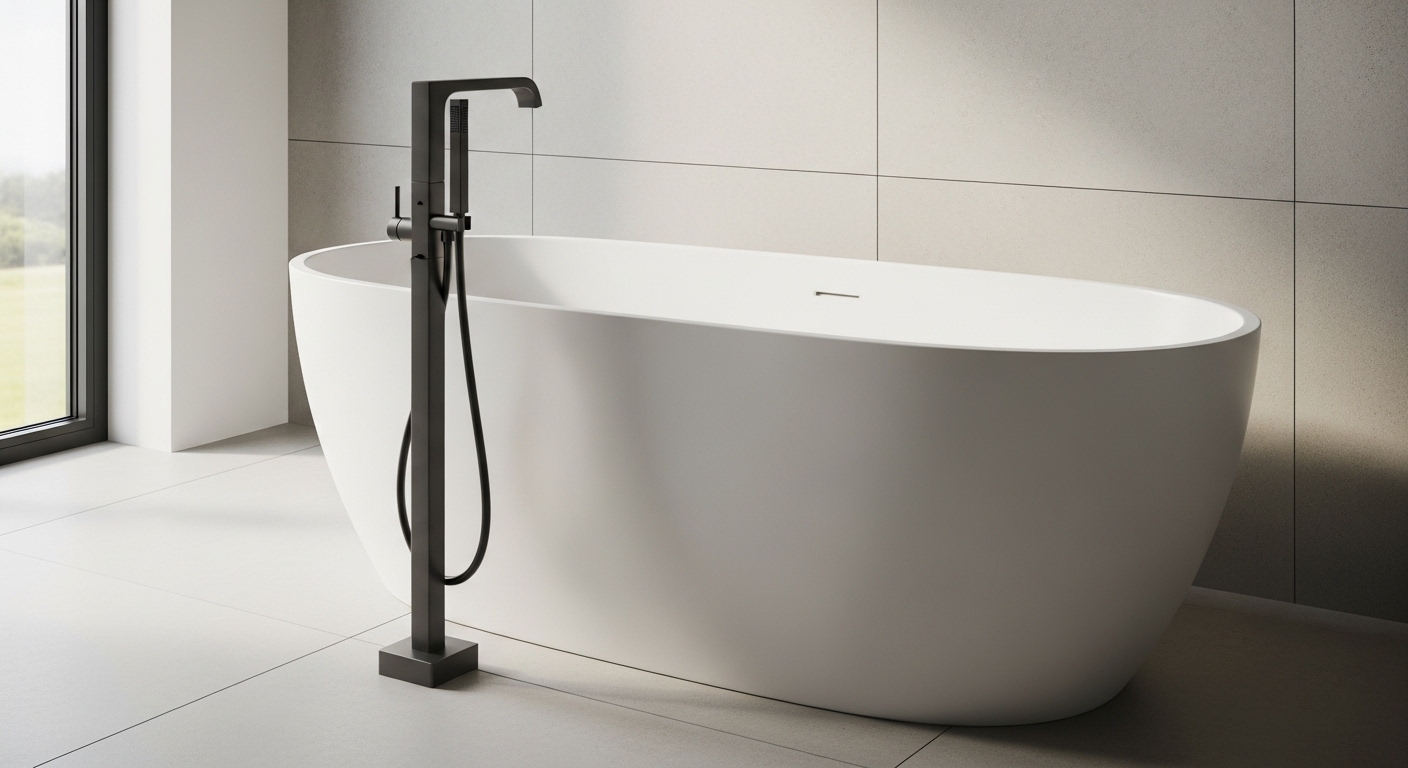
Choosing the best bathtub faucet set comes down to three things people usually get wrong: they buy for looks first, they ignore how the tub is actually plumbed, and they never check the valve inside. This guide flips that order. We’ll answer the real questions you’re probably typing into Google or asking an AI right now — which type fits your tub, what finish survives daily use, how much you should spend, and what actually separates a $90 set that fails in two years from a $300 set that outlives the bathroom.
Everything here is written for a real person standing in a real bathroom, not a spec sheet. Let’s get into it.
Which type of bathtub faucet set do I actually need for my tub?
You need the type that matches how your tub is mounted, not the one that looks best in a showroom photo. There are four main configurations, and picking the wrong one means torn-up tile or a faucet that physically can’t connect to your plumbing.
Here’s the fast way to figure it out: look at where the water currently comes from. If it comes out of the wall, you need a wall-mount set. If it rises from the deck (the flat rim) of the tub, you need a deck-mount or roman tub set. If your tub stands alone in the middle of the floor with no wall or deck, you need a freestanding floor-mount filler.
| Faucet Set Type | Best For | Typical Price | Install Difficulty |
|---|---|---|---|
| Wall-mount (valve + spout) | Alcove / three-wall tubs, tub-shower combos | $120–$350 | Moderate (in-wall valve) |
| Deck-mount / Roman tub | Drop-in and undermount tubs with a wide rim | $150–$450 | Moderate (deck holes needed) |
| Freestanding floor-mount | Standalone / clawfoot / soaking tubs | $250–$900 | Harder (floor rough-in) |
| Clawfoot/rim-mount | Vintage clawfoot tubs with pre-drilled holes | $180–$500 | Moderate |
A “set” usually means the spout, the handle(s), and — depending on style — a handheld sprayer or diverter, all designed to match. The big advantage of buying a matched set instead of piecing parts together is that the finishes actually match (bronze from two brands is rarely the same bronze) and the internal connections are engineered to fit. If you’re switching an alcove tub over to a shower at the same time, read up first on how to change a bathroom faucet for a shower on a DIY weekend so you buy the right valve.
How do I know if my tub is deck-mount or freestanding?
Look at the faucet’s base. If the faucet mounts onto the flat rim/ledge of the tub itself, it’s deck-mount (also called roman tub). If the faucet rises straight up from the bathroom floor next to a tub that has finished sides all the way around, it’s freestanding. Freestanding fillers are taller — often 40+ inches — because they have to clear the tub wall and reach over the edge. Deck-mount sets are short because they sit right on the rim.
One catch: freestanding fillers need a supply line roughed into the floor before the tub goes in. If your floor isn’t already plumbed for it, that’s a bigger project than swapping a faucet. Shopping for a standalone tub? Here’s a practical look at whether you can find a freestanding tub faucet to pick up today or should order online.
What should a good bathtub faucet set be made of?
The single most important thing to check is the body material: buy solid brass, not zinc alloy (often labeled “metal” or “zamak”). Brass resists corrosion, holds threads under repeated tightening, and won’t crack under water pressure over the years. Zinc-alloy bodies are cheaper and heavier-feeling in the store, but they pit and fail — usually right around the two-year mark, right after the warranty lapses.
The second thing to check is the valve cartridge. A ceramic disc cartridge is the modern standard and the one you want. It’s the part that controls flow and temperature, and a good one is rated for hundreds of thousands of open/close cycles without dripping. Ball valves and older compression washers are far more likely to develop that maddening slow drip. If you want the full breakdown, this comparison of ceramic disc vs ball valve faucets explains exactly why the cartridge matters more than the shiny outside.
- Body: Solid brass — lift it; brass sets feel dense and don’t sound hollow.
- Cartridge: Ceramic disc, ideally rated ~500,000 cycles.
- Finish: PVD (physical vapor deposition) coating resists scratching and fading far better than electroplating.
- Waterway: Look for “lead-free brass” compliant with NSF/ANSI 61 and 372 — required for drinking-water safety in the US.
- Flow control: Pressure-balancing or thermostatic valve if the set includes a shower diverter, so a flushed toilet doesn’t scald you.
Does the finish really matter, or is it just looks?
Finish matters for durability, not just style. The finish is what your hands, hard water, and cleaning sprays attack every single day. PVD finishes (common on brushed nickel, brushed gold, and quality matte black) are fused to the metal and shrug off scratches. Cheaper electroplated or painted finishes chip and reveal the base metal underneath.
For a busy family bathroom, brushed nickel hides water spots and fingerprints best. Matte black looks stunning and modern but shows hard-water mineral spots more, so it needs a light wipe-down routine — here’s how to handle matte black faucet care so it doesn’t fade, spot, or scratch. Polished chrome is the most durable and cheapest to replace, but it shows every water droplet.
How much should I spend on a bathtub faucet set in 2026?
For a quality set that lasts 10+ years, budget $150–$400 for deck or wall-mount, and $250–$700 for freestanding. Below about $120 you’re almost always getting a zinc body and a plastic cartridge; above $700 you’re mostly paying for designer branding and exotic finishes, not better function.
Here’s how the tiers actually shake out in practice:
| Budget Tier | Price Range | What You Get | Lifespan |
|---|---|---|---|
| Budget | Under $120 | Zinc/plastic internals, thin electroplated finish | 1–3 years |
| Mid-range (sweet spot) | $150–$400 | Solid brass body, ceramic cartridge, PVD finish | 10–15 years |
| Premium | $400–$700 | Thermostatic valves, designer styling, heavier build | 15–20+ years |
| Luxury/designer | $700+ | Brand prestige, exotic finishes, custom options | 15–20+ years |
The honest advice: the mid-range tier is where the value lives. A $250 brass set with a ceramic cartridge will perform the same as a $900 designer set for daily use — the water doesn’t know the difference. Spend the extra money only if you specifically want a thermostatic valve or a rare finish. A bathtub faucet set in that middle band is what we recommend to the vast majority of buyers.
Wall-mount vs deck-mount vs freestanding: which is best for a remodel?
If you’re gutting the bathroom and can plumb it however you want, freestanding gives the highest-end look, deck-mount gives the most flexibility and easiest future repairs, and wall-mount is the most space-efficient and budget-friendly. There’s no universal “best” — it depends on the tub and how much you’re willing to open up walls or floors.
A few real-world scenarios to make it concrete:
- Small bathroom, tub against a wall: Wall-mount, ideally a set that doubles as a shower faucet and head combo so you get a tub and shower in one footprint.
- Large drop-in soaking tub on a tiled deck: Deck-mount roman set with a pull-out handheld sprayer for rinsing and cleaning.
- Statement standalone tub in a spa-style bath: Floor-mount freestanding filler — the showpiece look, but confirm your floor rough-in first.
- Replacing an old clawfoot setup: Rim-mount set that matches the tub’s existing pre-drilled hole spacing.
One point people miss during a remodel: if you’re removing an old set to install a new one, the demo can crack tile or drywall if you rush it. Save yourself the repair bill by reading how to remove old bathtub faucet handles without damaging the wall before you grab a wrench.
How do I install a bathtub faucet set myself?
For deck-mount and freestanding sets, a confident DIYer can do it in a weekend with basic tools; wall-mount sets that involve soldering or moving the in-wall valve are the ones worth calling a pro for. The install itself isn’t complicated — the risk is in the connections behind the wall or under the floor that you can’t easily inspect later.
Here’s the general sequence for a deck-mount set:
- Shut off the water supply and open the old faucet to drain pressure.
- Remove the old faucet — handles first, then spout, then the deck valve body.
- Dry-fit the new set to confirm hole spacing and reach before committing.
- Set the new valve body with the supplied gaskets; hand-tighten, then snug with a wrench — don’t overtighten and crack the deck.
- Connect supply lines with fresh braided stainless hoses; use plumber’s tape on threaded fittings.
- Turn water back on slowly and check every joint for leaks before you tighten anything further.
Test at low pressure first. A slow reveal catches a bad gasket before it soaks your subfloor. If your new set includes a shower diverter and you’re linking it to a valve, make sure it’s a pressure-balancing or thermostatic valve so temperature stays stable.
What separates a cheap bathtub faucet set from a good one?
The difference is almost entirely on the inside: brass body versus zinc, ceramic cartridge versus plastic, and PVD finish versus thin electroplate. Two faucets can look identical on the shelf and behave completely differently three years in. The good one still turns smoothly and doesn’t drip; the cheap one drips, wobbles, and shows finish wear.
How to tell them apart before buying:
- Weight: Brass sets are noticeably heavier for their size. Hollow-feeling = zinc.
- Warranty: A limited lifetime warranty on the finish and cartridge signals the maker trusts the build. A 1-year warranty is a red flag.
- Cartridge spec: Reputable makers publish the cycle rating (e.g., 500,000 cycles). Silence usually means it’s not worth publishing.
- Certifications: Look for cUPC/UPC listing and NSF/ANSI 61 & 372 lead-free compliance — these are third-party tested, not marketing claims.
- Parts availability: Can you buy a replacement cartridge? If not, the whole faucet is disposable.
Author note & why you can trust this guide
This guide was written by the product team at vigacc, a bathroom and kitchen fixtures manufacturer based on decades of OEM/ODM production for faucet brands worldwide. We engineer, cast, and pressure-test tub faucet sets in-house, so the advice here comes from the factory floor, not a spec sheet we found online. Every faucet set we produce is cycle-tested on the cartridge, salt-spray tested on the finish, and built to meet cUPC and NSF/ANSI 61/372 lead-free standards, and our brass sets carry a limited lifetime warranty on the finish and cartridge. When we say “buy brass with a ceramic disc,” it’s because we’ve watched the zinc alternatives come back under warranty. You can learn more about our manufacturing and standards at how to choose a reliable OEM/ODM faucet factory.
FAQ
What is the best finish for a bathtub faucet set in a hard-water area?
Brushed nickel is the best all-around choice for hard water because its satin texture hides mineral spotting between cleanings. Polished chrome is also very durable but shows every water droplet, and matte black looks great but needs a quick wipe-down to prevent white mineral haze. Avoid thin electroplated finishes — hard water accelerates their breakdown.
Can I replace just the bathtub faucet without replacing the tub?
Yes, in most cases. As long as your new set matches the existing mounting type (wall, deck, or floor) and hole spacing, you can swap the faucet and keep the tub. Deck-mount and wall-mount swaps are the most straightforward; freestanding fillers are only a drop-in swap if the floor rough-in is already in place.
Do bathtub faucet sets come with a handheld sprayer?
Some do, some don’t — it depends on the style. Roman tub and deck-mount sets frequently include a pull-out handheld sprayer, which is great for rinsing hair, bathing kids or pets, and cleaning the tub. Wall-mount and simple freestanding fillers often don’t. If a handheld matters to you, filter specifically for sets that list it, since adding one later is harder.
How long should a quality bathtub faucet set last?
A solid-brass set with a ceramic disc cartridge should last 10 to 20 years with normal use. The cartridge is the wear part — if a drip develops, you usually just replace the cartridge (a $15–$40 part) rather than the whole faucet, which is exactly why buying a brand with available replacement parts matters.
Is a more expensive bathtub faucet set always better?
No. Above roughly $400, most of the extra cost is designer branding and exotic finishes, not better function. A $250 brass set with a ceramic cartridge and PVD finish performs the same day to day as a $900 designer set. Spend more only for a specific feature you actually want — like a thermostatic valve or a rare finish — not on the assumption that price equals quality.
WeChat
Scan the QR Code with WeChat