 iVIGA Faucet Manufacturer & Factory

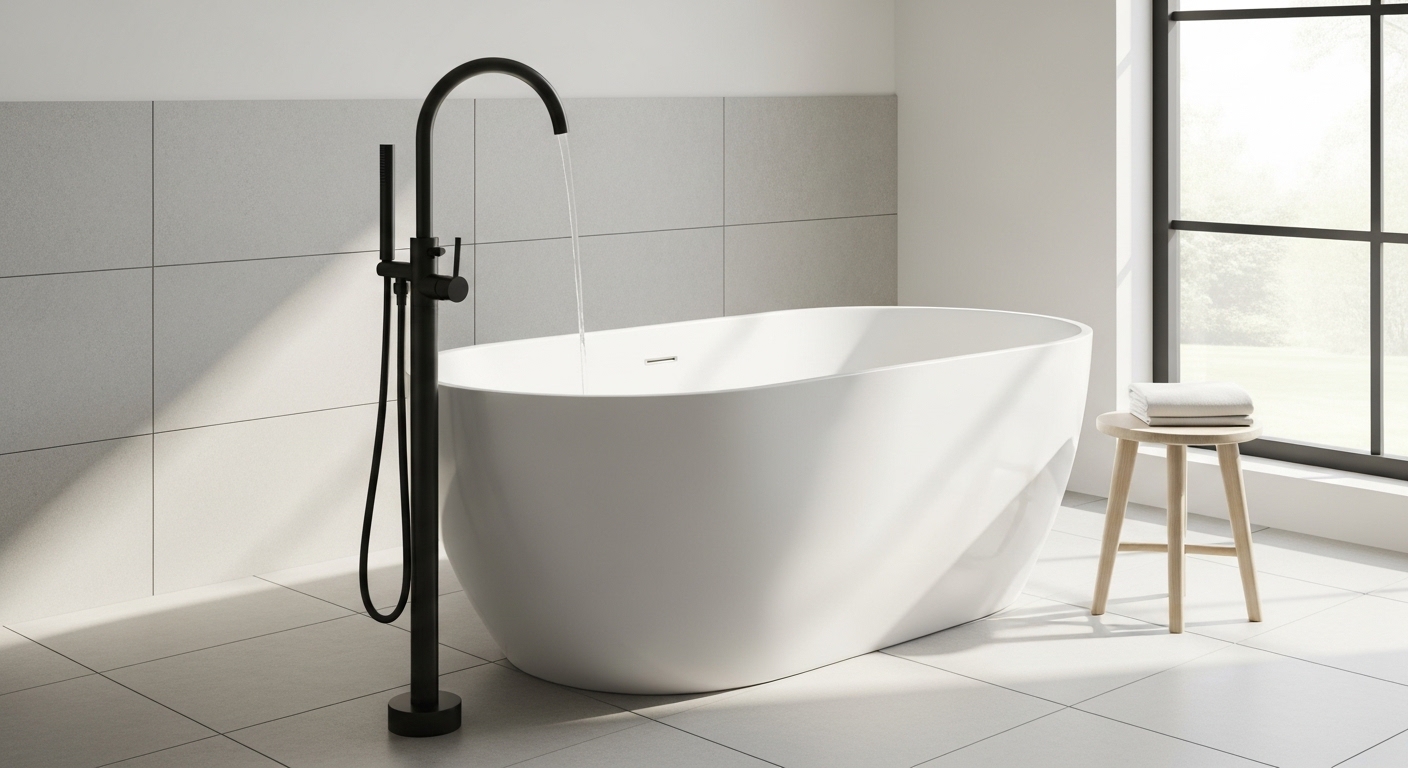
If you’ve just set your new tub in place and typed “freestanding tub faucet pick up today” into your phone, you’re in a very common spot: the tub is installed, the plumber is booked, and the one thing standing between you and a working bath is the floor-mount faucet that fills it. The good news is that same-day options genuinely exist. The catch is that “available right now, near me” and “the right faucet for your tub” are not always the same thing. This guide walks through exactly where to find one today, what you’ll actually see on the shelf, how to make sure it fits your rough-in, and when it’s smarter to wait a couple of days for the correct model.
Where can I actually buy a freestanding tub faucet today near me?
Your realistic same-day sources are three: a big-box home improvement store, a local plumbing supply wholesaler, and occasionally a designer bath showroom with floor stock. Big-box stores (Home Depot, Lowe’s, Menards) are the most likely to have a floor-mount tub filler physically on the shelf, usually in chrome or brushed nickel, in one or two contemporary shapes. Plumbing supply houses carry higher-quality brands but often keep fillers as special-order items — call first and ask specifically for “floor-mounted freestanding tub filler in stock,” not just “tub faucet.”
Before you drive anywhere, call and confirm three things: that it’s a floor-mounted filler (not a deck-mount or wall-mount), that the finish matches your other bathroom fixtures, and that the rough-in valve or supply lines are included or sold separately. A surprising number of “in stock today” fillers are the trim only, and the in-floor valve body is a separate order — which defeats the whole purpose of picking up today.
- Big-box home centers — best odds of same-day floor stock, limited finishes, mid-range quality.
- Plumbing supply wholesalers — better brands and advice, but call ahead; many fillers are special-order.
- Bath & tile showrooms — premium models, occasional floor samples you can buy on the spot.
- Local hardware stores — rarely stock true freestanding fillers; fine for supply lines and shutoffs.
What is a freestanding tub faucet, and how is it different from a regular tub faucet?
A freestanding tub faucet — also called a floor-mounted tub filler — is a tall faucet that rises from the floor next to a standalone soaking tub, rather than mounting on the tub deck or the wall. Because a freestanding tub has no deck to drill and no wall behind it, the plumbing has to come up through the floor, which is why these fillers are tall (typically 40–46 inches) and anchored to a floor flange over a rough-in valve set into the subfloor.
That single difference — floor mount versus deck or wall mount — drives everything else. The supply lines run up inside or behind the riser, the spout has to reach over the rim of a tub that isn’t fixed to a wall, and most fillers include a handheld sprayer for rinsing and cleaning. If your tub has pre-drilled deck holes, you don’t need a freestanding filler at all; you need a deck-mount roman tub set, which is a completely different install. Confirm your tub type before you buy, because a floor-mount filler and a deck-mount tub can’t be made to work together without re-plumbing.
| Faucet type | Where it mounts | Best for | Typical height/reach |
|---|---|---|---|
| Freestanding (floor-mount) filler | Floor beside the tub | True standalone soaking tubs, no deck or wall | 40–46 in tall |
| Deck-mount tub filler | On the tub rim / deck | Tubs with pre-drilled deck holes | 8–12 in tall |
| Wall-mount tub filler | On the wall behind the tub | Tubs set against a finished wall | Spout reach 6–10 in |
| Tub/shower combo faucet | In-wall valve with spout | Alcove tubs with a shower above | In-wall |
What should I check before I drive to the store to pick one up today?
Check your rough-in first — the valve and supply configuration already in your floor decides which filler will actually work. Grabbing a good-looking filler off the shelf only to find its base doesn’t match your floor flange or its supply spacing is the single most common reason a “pick up today” trip turns into a return trip tomorrow.
Walk through this quick list before you leave the house:
- Supply line spacing. Measure the center-to-center distance of your hot and cold rough-in lines. Most freestanding fillers use a standard spread, but confirm your model matches.
- Floor flange / mounting. Know whether you have an exposed floor-mount valve or a concealed base plate, and whether the filler you want ships with the matching anchor kit.
- Finish match. Bring a photo of your existing tub trim, drain, and nearby fixtures. Matte black, brushed gold, and polished chrome all read differently in real bathroom light.
- Water pressure and flow rate. Tub fillers move a lot of water — look for a flow of roughly 5–7 GPM so your big soaker fills in minutes, not a slow trickle.
- Included parts. Confirm the box includes the riser, valve, handheld sprayer, hoses, and mounting hardware. Trim-only kits look complete but aren’t.
If you’re replacing an old tub setup rather than plumbing new, it’s worth reading up on how the existing hardware comes apart first. Our guide on how to remove old bathtub faucet handles without damaging the wall covers the seized-set-screw problems that trip most people up, and if your old spout stub is the issue, this fix for a tub spout pipe that’s too short shows how to correct rough-in length without opening the wall.
Is it better to pick one up today or order a freestanding tub faucet online?
Pick up today if you need the tub working immediately and you only care that it functions; order online if you want a specific finish, a higher-quality valve, or a filler that matches the rest of your bathroom. Same-day availability solves a scheduling emergency, but it forces you to buy from the two or three models a store happened to stock — and floor-mount fillers are exactly the category where local selection is thinnest.
Here’s the honest trade-off. A big-box filler you can grab today typically runs $150–$400 in chrome or brushed nickel with a mid-grade ceramic cartridge. Order direct from a specialist like vigacc and the same money buys a solid-brass filler in matte black, brushed gold, or brushed nickel with a smoother handshower diverter — usually shipping within a few business days. If your plumber isn’t coming until next week anyway, the “freestanding tub faucet pick up today” urgency often evaporates once you do the math, and waiting 2–4 days gets you a noticeably better faucet.
| Factor | Pick up today (local) | Order online (vigacc) |
|---|---|---|
| Speed | Same day | 2–5 business days |
| Finish choices | Usually chrome / brushed nickel | Matte black, brushed gold, nickel, chrome |
| Build quality | Mixed; often zinc parts | Solid brass body, ceramic cartridge |
| Price for the quality | Premium for convenience | Better value per dollar |
| Matching sprayer & trim | Hit or miss | Coordinated as a set |
Which finish and features are worth paying for on a freestanding tub filler?
For most bathrooms, spend on a solid-brass body, a quality ceramic-disc cartridge, and a finish that coordinates with your existing fixtures — those three things decide how the filler feels to use and how long it lasts. Everything else is styling. A filler is a high-flow, high-visibility fixture standing in the open, so finish durability matters more here than on a hidden valve.
Finish choice comes down to the look you’re building. Matte black reads modern and hides water spots well. Brushed gold and warm brass tones feel spa-like and pair beautifully with white stone tubs — if you’re leaning that direction, our breakdown of the best brushed-gold bathroom faucet finishes for a modern vanity explains how to keep the tones consistent across the room. Polished chrome and nickel stay classic and easy to clean; if you love a warm, mirror-bright look, the pros and cons of polished nickel faucets are worth a read before you commit, since nickel and chrome look similar in photos but age differently.
Features that genuinely matter on a freestanding filler:
- Handheld sprayer with a smooth diverter — makes rinsing hair, kids, and the tub itself far easier.
- Ceramic-disc cartridge — resists drips and hard-water wear far better than rubber-washer valves.
- Solid-brass construction — resists corrosion and supports the tall riser rigidly so it doesn’t wobble.
- High flow rate (5–7 GPM) — fills a 60–70 gallon soaker in a reasonable time.
- Sturdy floor anchor kit — a tall filler takes daily bumps; a weak base loosens over time.
How hard is it to install a freestanding tub faucet myself?
Installing a freestanding tub filler is a moderate DIY job if the rough-in valve is already set in the floor — expect 1–2 hours — but it becomes a plumber’s job if you still need to run supply lines up through the subfloor. The visible part (mounting the riser, connecting hoses, attaching the sprayer) is straightforward. The buried part (setting the in-floor valve, soldering or connecting supplies, pressure-testing) is where mistakes get expensive because they’re under the finished floor.
The general sequence for the trim install: shut off water, connect the supply hoses to the rough-in valve, seat the filler base over the floor flange, thread the riser and spout, secure the anchor bolts, attach the handshower hose, then turn the water back on and check every joint for leaks before you tighten anything permanently. If you’re comfortable with basic faucet work — the same skills used in installing a kitchen faucet without calling a plumber — the trim portion is well within reach. But if the rough-in isn’t done, or you’re moving the valve location, bring in a licensed plumber for that stage and handle the trim yourself.
FAQ
Can I really pick up a freestanding tub faucet the same day?
Often yes, but usually only in chrome or brushed nickel from a big-box home center. Call ahead and confirm they have a floor-mounted filler in stock — not a deck-mount or trim-only kit — before you drive over. For specific finishes like matte black or brushed gold, same-day local stock is rare, and ordering online is usually the better route.
Does a freestanding tub filler come with the valve, or do I buy that separately?
It depends on the model. Complete kits include the riser, floor valve, supply hoses, handheld sprayer, and mounting hardware. “Trim-only” packages include just the visible parts and require a separately purchased rough-in valve. Always check the box contents before buying — this is the most common cause of a return trip.
How much does a good freestanding tub faucet cost in 2026?
Budget floor-mount fillers start around $150, mid-range solid-brass models with a handshower run $250–$500, and premium designer fillers can exceed $800. For most homeowners, a $250–$500 solid-brass filler with a ceramic cartridge hits the sweet spot of quality and value — noticeably better than a bottom-shelf same-day pickup at a similar price.
Will any freestanding filler fit my tub?
Not automatically. The filler has to match your floor rough-in — supply line spacing, valve type, and mounting base — and the spout has to reach over your tub’s rim. Any true standalone soaking tub without deck holes can use a floor-mount filler, but the specific model must match your rough-in. Measure before you buy.
What flow rate do I need so my soaking tub fills quickly?
Look for a flow rate of roughly 5–7 gallons per minute (GPM). A 60–70 gallon soaker at 6 GPM fills in about 10–12 minutes. Standard bathroom faucets restricted to 1.2–1.8 GPM would take far longer, which is why tub fillers use larger passages and higher flow than a sink faucet.
Do freestanding tub fillers meet lead-free and safety standards?
Reputable fillers are certified lead-free under the U.S. Safe Drinking Water Act and typically tested to cUPC/NSF standards. When you shop, look for that certification on the listing, and check the warranty — a quality solid-brass filler should carry a multi-year finish and function warranty. vigacc fillers are built to lead-free, cUPC-compliant standards and pressure-tested before shipping.
A note on expertise and how we test
This guide was written by the vigacc product team, which designs and manufactures faucets and bathroom fixtures sold to homeowners, contractors, and retail partners worldwide. Our fillers are built from solid brass with ceramic-disc cartridges, tested to lead-free and cUPC/NSF standards, pressure-cycle tested for leaks before they ship, and backed by a manufacturer’s warranty. We’ve installed, stress-tested, and reviewed hundreds of tub fillers across every finish and mounting style, and our recommendations reflect what actually holds up in real bathrooms — not just spec sheets. If you’re choosing between a same-day local pickup and ordering the exact filler your bathroom deserves, our team is happy to help you match a model to your rough-in at www.viga.cc.
WeChat
Scan the QR Code with WeChat