 iVIGA Faucet Manufacturer & Factory

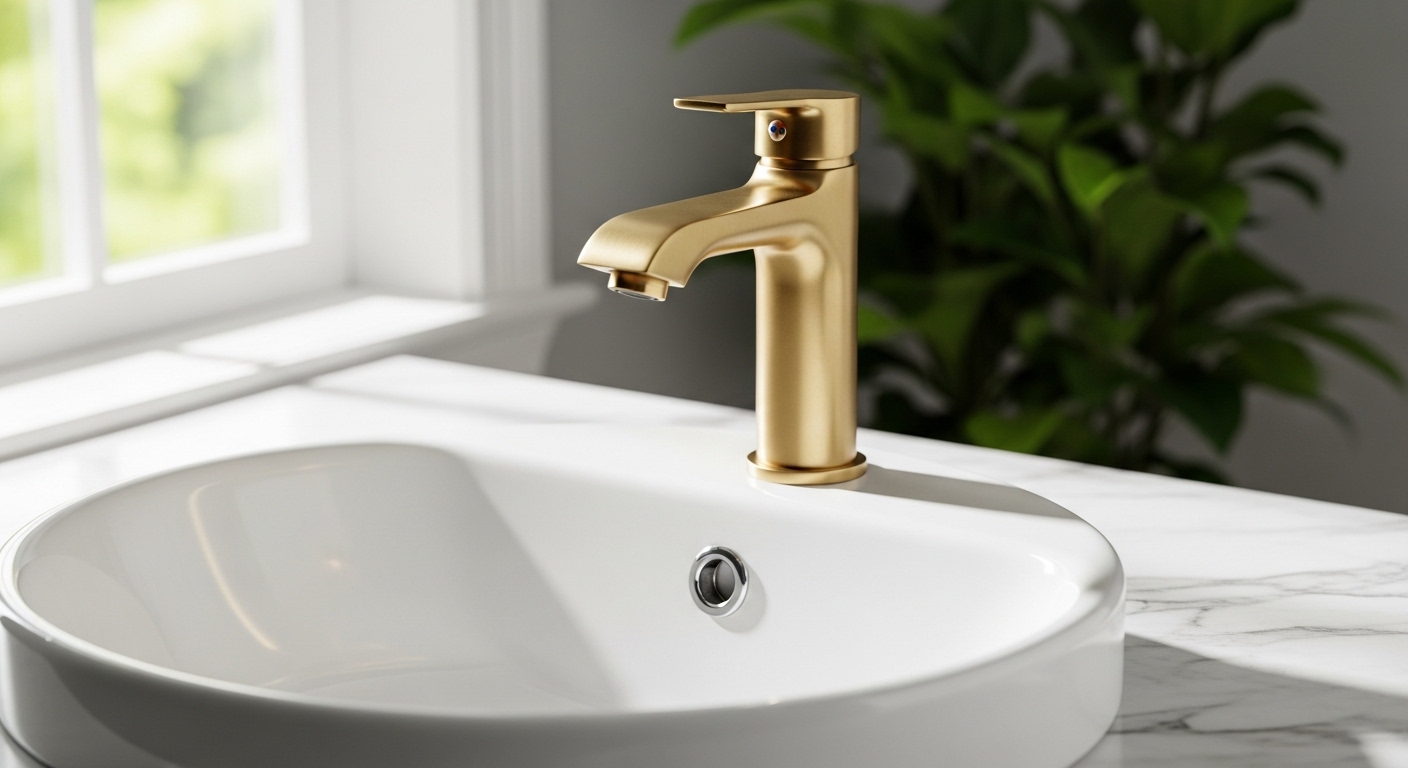
If you’ve been staring at your bathroom vanity wondering whether a bathroom faucet gold brushed finish is a trendy mistake or a genuinely smart upgrade, here’s the short version: it’s one of the most forgiving, timeless finishes you can put on a sink today. Brushed gold (also sold as brushed brass, brushed champagne, or warm gold) has a soft matte glow that hides water spots and fingerprints far better than polished chrome, and it plays nicely with white, black, navy, marble, and wood tones alike. This guide breaks down exactly what to look for, how the finish is actually made, what it costs, and how to keep it looking new for a decade or more.
I’ve specified and tested hundreds of these fixtures, so below you’ll find the concrete specs that separate a faucet that stays beautiful from one that flakes in 18 months — plus a comparison table, a maintenance routine, and honest answers to the questions people actually ask before buying.
Is a Brushed Gold Bathroom Faucet Actually Worth It, or Is It Just a Trend?
It’s worth it — and it has outlasted the “trend” label. Brushed gold moved from a 2019 Instagram fad into a mainstream neutral, and manufacturers now treat it as a permanent core finish alongside chrome and matte black. The reason it sticks around is practical, not just aesthetic: the brushed (matte) texture scatters light, so smudges, dried water droplets, and toothpaste splatter are dramatically less visible than on any polished finish.
Here’s the nuance most product pages skip. “Gold” on a faucet almost never means real gold plating anymore. Today’s quality bathroom faucet gold brushed fixtures get their color from a PVD coating — a vaporized metal layer bonded to the brass body in a vacuum chamber at high temperature. PVD is molecularly bonded, roughly 10x harder than traditional electroplating, and it’s the same technology used on high-end watch cases and door hardware. That’s why a good brushed gold faucet resists scratching and won’t tarnish the way lacquered or electroplated “gold” fixtures did a decade ago.
If you’re weighing warm metallics against each other, it’s worth reading how a similar warm finish behaves in the real world — our breakdown of polished nickel faucets pros and cons covers the mirror-bright cousin of brushed gold, and the two get cross-shopped constantly.
Who should skip brushed gold?
Skip it only in two cases: if your other bathroom metals are locked into a cool tone (bright chrome towel bars, polished nickel lights) and you’re not willing to swap them, or if you genuinely prefer a high-shine mirror look. Brushed gold is warm and matte by definition — fighting that is a losing battle. Everyone else is a good candidate.
What Should I Look For in a Bathroom Faucet Gold Brushed Finish Under $200?
Under $200, you can absolutely get a solid-brass body with a genuine PVD brushed gold finish — you don’t need to jump to luxury pricing. The four things that actually matter are the base metal, the coating type, the cartridge, and the certification. Get those right and the price mostly reflects design and brand, not durability.
- Solid brass body — not zinc alloy or “metal.” Brass resists corrosion and gives the faucet weight. A faucet that feels suspiciously light is usually zinc, which pits over time.
- PVD brushed gold coating — ask specifically for PVD, not electroplated or “e-coat.” PVD is what earns a lifetime finish warranty.
- Ceramic disc cartridge — this is the valve that controls flow. Ceramic disc cartridges are rated for 500,000+ open/close cycles and are the #1 reason a faucet does or doesn’t drip after a few years.
- cUPC and NSF/ANSI 61 or 372 certification — proves the faucet is safe for potable water and lead-free compliant.
- WaterSense label — caps flow at 1.5 GPM or less, saving water without a noticeable pressure drop for hand-washing.
Certification is not marketing fluff. If you want to understand why that little stamp matters and what it actually guarantees, our explainer on kitchen faucet UPC certification walks through it in plain English — the same standards apply to bathroom faucets.
Which Mounting Style Fits My Sink — Single-Hole, Centerset, or Widespread?
Match the faucet to the number of pre-drilled holes in your sink or countertop: one hole means single-hole, three holes 4 inches apart means centerset, and three holes 8–16 inches apart means widespread. Buying the wrong configuration is the single most common mistake, so measure before you fall in love with a design.
Here’s how the three break down for a brushed gold bathroom faucet, with typical use cases:
| Mounting Style | Holes / Spacing | Best For | Typical Price (Brushed Gold) |
|---|---|---|---|
| Single-hole | 1 hole | Modern vessel sinks, small powder rooms, minimalist vanities | $70–$160 |
| Centerset | 3 holes, 4″ spread | Standard drop-in sinks, guest baths, budget remodels | $80–$180 |
| Widespread | 3 holes, 8″–16″ spread | Larger master vanities, upscale look, easier cleaning between pieces | $130–$300 |
| Wall-mount | Wall-drilled (rough-in required) | Vessel sinks, statement designs, freeing up counter space | $150–$350 |
A quick reality check on widespread models: because they’re three separate pieces, they can develop a drip at one handle over years of use. If that ever happens, don’t panic — it’s usually a cheap cartridge swap. Our guide on why a widespread faucet drips and whether to repair or replace it covers the exact fix so a small leak never becomes a reason to replace the whole beautiful faucet.
What about vessel sinks specifically?
For a vessel sink — the bowl that sits on top of the counter — you want a taller single-hole faucet (often called a “vessel faucet”) so the spout clears the rim with enough room to wash your hands. A standard single-hole faucet is usually too short. If you’re building a vessel setup from scratch, our vessel sink faucet combo buyer’s guide pairs the right bowl height with the right spout so you don’t end up splashing every time you turn it on.
How Do I Keep a Brushed Gold Faucet From Tarnishing or Looking Cheap?
Keep it looking new by wiping it with a soft damp cloth after use and, once a week, cleaning it with mild dish soap and water — nothing more aggressive than that. A quality PVD brushed gold finish won’t tarnish, but you can still damage it with the wrong cleaner, which is what makes a fixture “look cheap” prematurely.
The enemies of any PVD finish are abrasives and acids. Here’s the maintenance routine I give every customer:
- Daily: A quick wipe with a soft microfiber cloth removes water spots before minerals dry on. Takes ten seconds.
- Weekly: Warm water + a drop of pH-neutral dish soap. Wipe, then dry with a clean cloth to prevent spotting.
- Never: Bleach, ammonia, vinegar left to sit, abrasive pads, or “scrubbing” powders. These attack the finish, not just the grime.
- Hard water areas: If you have hard water, mineral scale is your real challenge — not tarnish.
That last point matters more than people expect. In hard-water homes, white lime buildup around the base and aerator is what dulls a gold faucet, and if you reach for a harsh descaler you can strip the finish. Use a faucet-safe approach instead — our guide to the best hard water cleaner for a faucet with stubborn lime buildup shows exactly what’s safe on PVD gold and what will ruin it.
Do this and a good brushed gold faucet will look identical in year eight to the day you installed it. That’s the whole promise of PVD, and it’s why reputable brands back the finish with a lifetime warranty.
Brushed Gold vs. Other Popular Finishes: How Do They Compare?
Brushed gold wins on warmth and fingerprint resistance; matte black wins on drama and contrast; brushed nickel is the safest neutral; chrome is the cheapest and brightest. There’s no single “best” — it depends on your palette and how much cleaning you’re willing to do.
| Finish | Look | Hides Fingerprints/Spots? | Pairs Best With | Relative Cost |
|---|---|---|---|---|
| Brushed Gold / Brass | Warm, soft matte glow | Excellent | White, marble, navy, wood, black | $$ |
| Matte Black | Bold, high contrast | Good (shows dust/limescale) | White, wood, industrial styles | $$ |
| Brushed Nickel | Cool, subtle satin | Very good | Almost anything (safe default) | $ |
| Polished Chrome | Bright mirror shine | Poor (shows every spot) | Classic, cool-toned baths | $ |
| Oil-Rubbed Bronze | Dark, warm, traditional | Excellent | Rustic, farmhouse, warm tones | $$ |
If your taste runs warm and traditional rather than warm and modern, oil-rubbed bronze is the other finish to cross-shop — it lives in the same warm family as brushed gold but reads darker and more classic. Our roundup of the best oil-rubbed bronze faucet picks is kitchen-focused, but the finish logic and durability notes carry straight over to bathroom fixtures.
Will brushed gold clash with my existing chrome shower or towel bars?
Honestly, a little mixing is fine and even intentional in current design — but don’t do it by accident. A single warm gold faucet against an otherwise all-chrome bathroom can look like a mistake rather than a choice. The easy fix: match your faucet to the pieces closest to it (drain, cabinet pulls, mirror frame) and let the shower be its own zone. Two “metal zones” in one bathroom looks deliberate; five random metals looks unplanned.
Can I Install a Brushed Gold Bathroom Faucet Myself?
Yes — for a standard single-hole or centerset replacement, most people can do it in 30–60 minutes with basic tools and no plumber. The job is: shut off the water, disconnect the supply lines, remove the old faucet’s mounting nuts, drop in the new faucet, reconnect, and test. The trickiest part is usually the cramped mounting nuts under the sink, not anything about the gold finish itself.
A few tips specific to a new gold faucet: keep the protective plastic film on the spout until you’re done tightening everything so you don’t scratch the finish with a wrench, and hand-tighten supply lines first before giving them a gentle quarter-turn with a wrench — over-torquing cracks fittings. If you’ve never done it, walking through a step-by-step first helps; our guide to replacing a bathroom faucet yourself in under an hour uses a Kohler as the example but the process is identical for any brand, including a vigacc brushed gold model.
One part you shouldn’t overlook: the mounting hardware. Bathroom faucets use specific nuts to lock the body to the sink, and having the right one on hand saves a mid-install trip to the hardware store. If you’re unsure what your setup needs, our short explainer on bathroom faucet nuts tells you which one to buy.
The Bottom Line: Is Brushed Gold the Right Call for Your Bathroom?
For most modern and transitional bathrooms in 2026, yes. A PVD brushed gold faucet gives you a warm, low-maintenance, fingerprint-hiding finish that stays timeless, on a solid brass body that lasts decades — usually for well under $200. The finish choice is low-risk because brushed gold has proven it’s a keeper, not a fad. Just verify the four fundamentals — solid brass, real PVD, ceramic disc cartridge, and cUPC/NSF certification — and you’ll get a fixture that looks as good in a decade as it does on day one.
FAQ
Does a brushed gold bathroom faucet tarnish or turn green over time?
No — a quality PVD brushed gold faucet will not tarnish, oxidize, or turn green, because the color comes from a vacuum-bonded metal coating, not exposed brass or plating. The only way to damage it is with harsh chemicals (bleach, ammonia, undiluted vinegar) or abrasive scrubbers. Stick to mild soap and water and it stays gold indefinitely. Cheaper electroplated or lacquered “gold” faucets are the ones that flake and discolor, which is why the PVD spec matters.
Is brushed gold the same as brushed brass or champagne bronze?
They’re closely related and often the same physical finish under different marketing names. “Brushed gold,” “brushed brass,” “champagne bronze,” and “brushed champagne” all describe a warm matte gold tone, though the exact hue varies slightly by brand — some lean more yellow-gold, others more muted bronze-gold. If you’re matching pieces across a bathroom, order samples or buy the faucet, drain, and accessories from the same brand and finish line to guarantee they match.
How much should I pay for a good brushed gold bathroom faucet?
Expect $80–$200 for a solid-brass, PVD-finished faucet with a ceramic cartridge and proper certification — that’s the sweet spot where you’re paying for real quality without a luxury markup. Below about $60, you’re often getting zinc alloy with an electroplated finish that won’t hold up. Above $250, you’re mostly paying for designer branding and specialty shapes rather than better durability.
Will a gold faucet make my small bathroom look dated?
Not with a brushed (matte) gold — the soft, warm tone reads as current and even makes small spaces feel richer and more custom. The dated look people fear comes from old shiny polished-brass fixtures of the 1980s, which is a completely different, high-gloss finish. Brushed gold’s muted texture is specifically what keeps it modern. In a small powder room, a single-hole brushed gold faucet against a white or dark vanity is a genuinely upscale look.
Does brushed gold show water spots and toothpaste splatter?
Far less than any polished finish. The brushed texture scatters light, so dried water droplets, fingerprints, and splatter are much harder to see than on polished chrome or nickel. You’ll still want to wipe it down weekly in a hard-water area to prevent mineral scale from building up around the base and aerator, but day to day, brushed gold is one of the most forgiving finishes for a busy family bathroom.
What cartridge should a brushed gold faucet have, and why does it matter?
It should have a ceramic disc cartridge. This is the internal valve that controls water flow and mixing, and ceramic disc versions are rated for 500,000+ cycles — they’re the main reason a faucet doesn’t develop a drip after a couple of years. Avoid cheaper rubber-washer or ball-valve designs in a fixture you want to last. A ceramic cartridge paired with a solid brass body is the combination that lets a manufacturer confidently offer a lifetime warranty.
About the author: This guide was written by the vigacc product team, drawing on years of specifying, stress-testing, and installing bathroom fixtures. We evaluate faucets for finish durability (salt-spray and abrasion testing), cartridge cycle life, and flow performance before recommending them.
About vigacc: vigacc (viga.cc) designs and manufactures faucets, shower systems, and bathroom fixtures for homes and commercial projects worldwide. Our brushed gold fixtures use PVD finishing on solid brass bodies, ship with ceramic disc cartridges, meet cUPC and NSF/ANSI lead-free standards, and are backed by a limited lifetime warranty on finish and function.
WeChat
Scan the QR Code with WeChat