 iVIGA Faucet Manufacturer & Factory

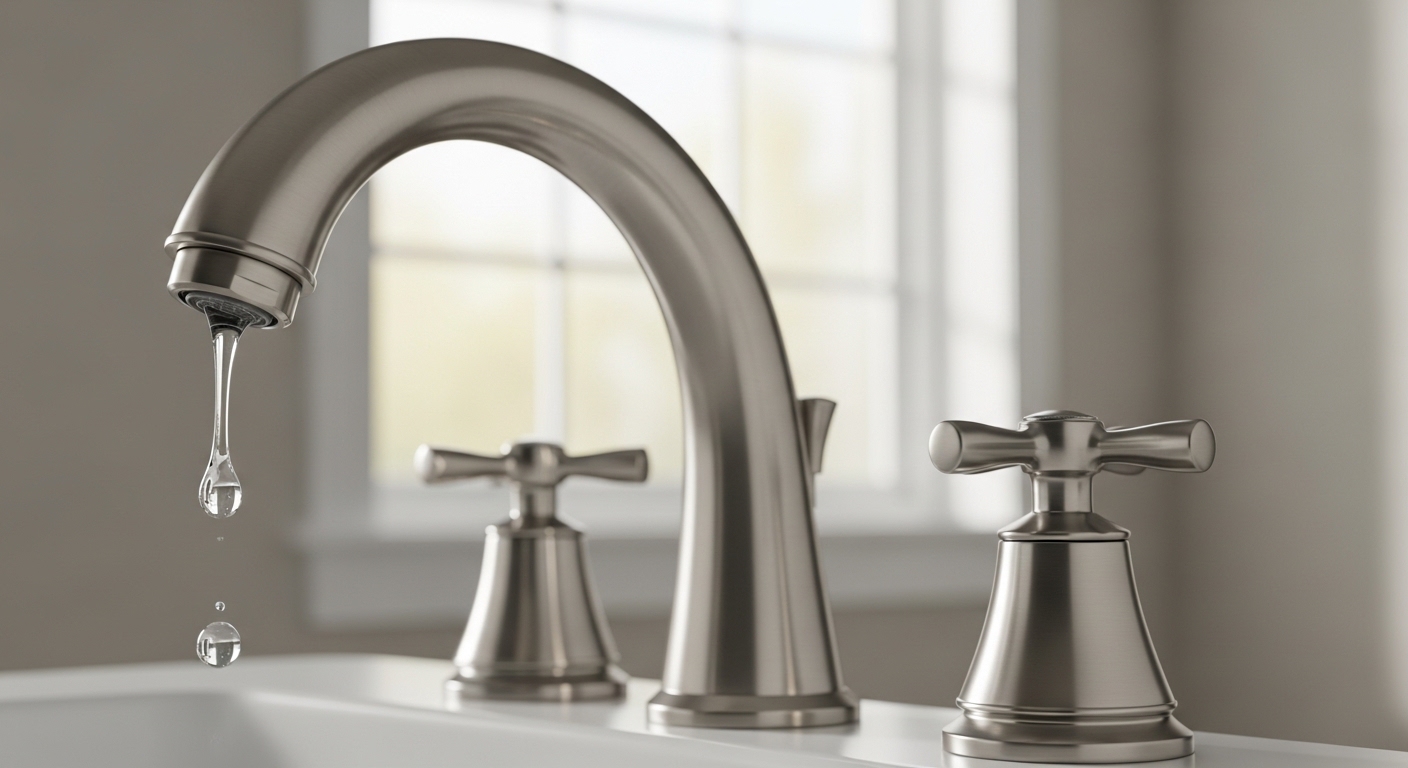
If you’re dealing with a widespread faucet dripping from the spout or leaking around the handles, you’re not looking at a mysterious plumbing emergency — you’re looking at one of three worn parts that fail on a predictable schedule. A widespread faucet (the three-piece kind with two handles spread 8 to 16 inches apart and a separate spout) has more seals and connection points than a single-hole or centerset faucet, which means more places for a slow drip to start. The good news: once you know which part is failing, the fix is cheap, fast, and doesn’t require a plumber for most homeowners.
Below, we’ll walk through exactly why widespread faucets drip, how to diagnose the source in about five minutes, when a repair makes sense versus a full replacement, and what to look for if you decide to upgrade. This is written for real bathrooms and real budgets — not showroom ideals.
What actually causes a widespread faucet to drip from the spout?
A drip from the spout means water is getting past a valve that’s supposed to be fully closed — and in a widespread faucet, that’s the cartridge, the rubber seals (O-rings and seats), or the valve seat inside the faucet body. When any one of these wears down, the “off” position stops being fully off, and gravity pushes a slow drip out the spout even when both handles are shut tight.
Here’s what’s happening inside, in plain terms. Each handle on a widespread faucet controls its own valve — one for hot, one for cold — and each valve has a cartridge that opens and closes when you turn the handle. Most modern widespread faucets use ceramic disc cartridges, which are two polished ceramic plates that slide against each other. Older or budget faucets use rubber-and-spring compression valves or ball valves. Every one of these relies on a soft seal somewhere, and soft seals wear out.
- Worn ceramic cartridge: The most common cause on faucets 5–10 years old. The ceramic discs get micro-scratched by grit or mineral deposits and no longer seat perfectly. You’ll usually see a steady drip that gets worse over weeks.
- Hardened or torn O-rings: Rubber O-rings around the cartridge and spout base dry out and crack. This shows up as dripping at the base of the handle or spout, not just the tip.
- Corroded valve seat: In compression-style faucets, the brass seat the washer presses against gets pitted by hard water. Even a new washer won’t seal against a rough seat.
- Loose or worn washer/seat assembly: On older two-handle compression faucets, a flattened rubber washer is the classic culprit — cheap to replace but a sign the faucet is aging.
- Mineral buildup: If you have hard water, lime scale can hold a valve slightly open. Sometimes a deep clean fixes a “drip” with no part replacement at all.
If mineral buildup is your suspect, it’s worth cleaning the whole faucet properly before you buy any parts — our guide to the best hard water cleaner for a faucet with stubborn lime buildup walks through what actually dissolves scale without damaging the finish.
How do I tell which part is causing the leak (before buying anything)?
Look at where the water appears — the location tells you the failing part almost every time. A drip from the spout tip means a cartridge or valve seat problem; water pooling around a handle base means an O-ring; water under the sink means a supply-line or mounting-nut issue, not the valve at all.
Do this five-minute diagnosis before you spend a dollar:
- Dry everything and watch. Wipe the faucet completely dry, wait 10 minutes, and note the first place water reappears. That’s your source.
- Isolate hot vs. cold. Shut off the cold supply valve under the sink only. If the drip stops, your cold cartridge is bad; if it keeps dripping, it’s the hot side. This tells you which cartridge to replace — you may only need one.
- Wiggle the handle. If water seeps out when you jiggle a handle, the handle O-ring or packing nut is the problem, not the spout valve.
- Check under the sink. Water under the cabinet usually means a loose mounting or supply nut — not a valve at all. Snugging the right nut can end a “leak” that looked like a faucet failure.
This matters because a lot of people replace the wrong thing. Buying a whole faucet when you needed a $12 cartridge — or wrenching on a cartridge when the real leak was a loose supply nut — is the most common mistake we see.
Can I fix a dripping widespread faucet myself, and how long does it take?
Yes — for the vast majority of drips, a cartridge or seal swap takes 30–60 minutes with basic tools and no plumbing experience. You’ll need an adjustable wrench, a Phillips and flathead screwdriver, plumber’s grease, and the correct replacement cartridge or seal kit for your faucet’s brand and model.
Here’s the general process for a cartridge-based widespread faucet:
- Shut off the water. Close both supply valves under the sink and open the faucet to release pressure. Plug the drain so you don’t lose small parts.
- Remove the handle. Pop off the decorative cap, remove the set screw, and lift the handle straight up.
- Pull the cartridge. Unscrew the retaining nut or clip, then pull the cartridge straight out. Take it to the hardware store or match the model number — cartridges are not universal.
- Replace seals and cartridge. Swap in the new cartridge, lightly coat new O-rings with plumber’s grease, and reassemble in reverse order.
- Turn the water back on slowly and test both handles for drips and smooth operation.
Two honest cautions. First, cartridges are brand- and often model-specific — a Moen cartridge won’t fit a Delta or a VIGA body, so identify your faucet before ordering. Second, if the retaining nut is corroded solid or the valve seat is visibly pitted, you’ve crossed from “quick repair” into “this faucet is at the end of its life.” If you’re comfortable with basic install work, the same skills transfer directly to a full swap — our step-by-step centerset and widespread faucet installation walkthrough covers the full replacement in under an hour.
When should I just replace the whole widespread faucet instead of repairing it?
Replace it — don’t repair it — when the faucet is over 10 years old, when the body or internals are pot metal (zinc alloy), when it drips from multiple points at once, or when replacement cartridges are discontinued. At that point you’re pouring money into a fixture that will fail again in a season.
Use this quick decision framework:
| Situation | Repair or Replace? | Why |
|---|---|---|
| One handle drips, faucet under 8 years old, solid brass body | Repair | A $10–$25 cartridge restores it fully |
| Both handles drip + spout leaks at base | Replace | Multiple worn seals = whole faucet is aging out |
| Valve seat is pitted/corroded | Replace | New washers won’t seal against rough brass |
| Cartridge model discontinued | Replace | No reliable parts supply going forward |
| Finish is flaking + drip | Replace | Flaking signals cheap plating; internals likely failing too |
| Leak is just a loose supply nut | Neither — tighten it | Not a faucet failure at all |
The material point is the big one. A solid-brass faucet body with a ceramic-disc cartridge is worth repairing again and again for 15–20 years. A zinc pot-metal faucet with rubber-seal valves is a throwaway — once it starts dripping, replacement parts often cost more than a whole new budget faucet, and the body itself corrodes from the inside. If you’re not sure what you have, weigh a magnet against the spout: solid brass is only faintly magnetic and feels heavy; light, strongly magnetic metal is usually plated zinc.
What should I look for in a replacement widespread faucet that won’t drip again?
Buy a widespread faucet with a solid-brass body, a ceramic-disc cartridge rated to 500,000+ cycles, and a finish backed by a lifetime or limited-lifetime warranty. Those three specs are the difference between a faucet that drips again in two years and one that runs leak-free for a decade or more.
Here’s what each spec buys you, in real terms:
- Ceramic-disc cartridge: The single biggest predictor of drip resistance. Ceramic discs are far harder than rubber and tolerate grit and hard water dramatically better. Look for a cycle rating — quality cartridges are tested to 500,000+ open/close cycles.
- Solid-brass body: Resists internal corrosion and gives cartridges and seats a stable, machinable surface. It’s heavier and pricier, and worth it.
- PVD or quality-plated finish: A physical-vapor-deposition finish resists scratching and won’t flake — flaking plating is both cosmetic and a corrosion warning sign.
- Certification: Look for cUPC/UPC and NSF/ANSI 61 compliance, which cover lead-free waterways and pressure/durability testing. Our explainer on what UPC certification means before you buy breaks down why this label actually matters.
- Standard 8-inch spread + 3-hole mount: Most widespread faucets fit a standard 3-hole, 8-inch configuration, but always measure your deck holes (widespread ranges from 6 to 16 inches) before ordering.
If you’re comparing widespread options and configurations, it’s worth understanding why the 8-inch three-hole layout became the standard for full-size bathrooms — we cover the ergonomics and install advantages in our breakdown of why we choose 8-inch faucets. And if you’re still deciding between a compact and a full-spread layout entirely, the 4-inch centerset vs. 8-inch widespread comparison lays out which fits which sink.
How much does it cost to fix versus replace a dripping widespread faucet?
A DIY repair runs $10–$40 in parts; a plumber’s repair visit runs $100–$250; a mid-range replacement widespread faucet runs $80–$300 plus install. For most solid-brass faucets under 8 years old, the DIY cartridge fix is the clear winner — but once you’re paying a plumber for a repair on an aging faucet, replacement often costs the same and resets the clock.
| Option | Typical Cost | Best When |
|---|---|---|
| DIY cartridge/seal repair | $10–$40 | Solid-brass faucet, single failing part, you’re comfortable with basic tools |
| Plumber repair visit | $100–$250 | Corroded parts, no DIY comfort, faucet still worth saving |
| Mid-range replacement faucet | $80–$300 | Faucet 10+ years old, pot-metal body, or discontinued parts |
| Replacement + plumber install | $250–$550 | Full upgrade, want it done right with warranty coverage |
One overlooked cost: a slow drip wastes water. A faucet leaking one drip per second wastes roughly 3,000+ gallons a year — enough to notice on a water bill and enough that a $15 repair pays for itself quickly. Don’t let a “minor” drip run for months.
FAQ
Why does my widespread faucet drip only when I turn the handle a certain way?
That’s a classic sign of a worn ceramic cartridge or a cracked O-ring — the seal holds in some positions but not others. As the cartridge wears unevenly, certain handle angles leave a tiny gap. Replacing that side’s cartridge fixes it; there’s no reliable way to “adjust” a worn cartridge back to sealing.
Is a dripping widespread faucet an emergency?
No — a spout drip is a wear issue you can schedule around, not a burst-pipe emergency. That said, don’t ignore it for months: it wastes thousands of gallons a year and a leak under the sink (versus the spout) can quietly damage your cabinet. Fix spout drips within a few weeks; fix under-sink leaks right away.
Can hard water cause my widespread faucet to drip?
Yes. Mineral scale can scratch ceramic discs and hold a valve slightly open, and it corrodes brass valve seats over time. In hard-water homes, a thorough descale sometimes stops a drip with no part replacement — and installing scale-resistant ceramic cartridges makes future drips far less likely.
Are widespread faucet cartridges universal?
No — cartridges are specific to the brand and often the exact model. A Moen, Delta, Kohler, or VIGA cartridge won’t interchange. Always identify your faucet’s make and model (check the underside, the box, or the original receipt) before ordering, or bring the old cartridge to the store to match it.
How long should a good widespread faucet last before it starts dripping?
A quality solid-brass faucet with a ceramic-disc cartridge typically runs 10–15 years before its first cartridge replacement, and the body itself can last 20+ years. Budget zinc/pot-metal faucets with rubber-seal valves often start dripping in 3–5 years and aren’t worth repeatedly repairing.
Should I replace both cartridges even if only one side drips?
It’s optional but smart if the faucet is older. Both cartridges have the same age and water exposure, so if one has failed, the other is usually close behind. Replacing both while you have the faucet apart saves you a second teardown in a few months — for the price of one extra cartridge.
The bottom line on a dripping widespread faucet
A widespread faucet dripping is rarely serious and almost always cheap to fix: diagnose by where the water shows up, swap the failing cartridge or seal, and you’re done in under an hour. The only time to skip the repair and replace outright is when the faucet is old, made of pot metal, dripping from several points, or out of parts — in which case a solid-brass, ceramic-disc widespread faucet with a lifetime finish warranty is the buy that ends the cycle for good.
Author note: This guide was written by the VIGA product and technical team, drawing on hands-on testing of widespread faucet cartridges, seals, and valve bodies across hard- and soft-water conditions. VIGA is a Kaiping-based faucet manufacturer with over two decades of experience producing solid-brass, cUPC/UPC-certified bathroom and kitchen fixtures for global markets. Every VIGA widespread faucet is pressure- and cycle-tested to industry durability standards and backed by a limited warranty — because a faucet that doesn’t drip is the whole point.
WeChat
Scan the QR Code with WeChat