 iVIGA Faucet Manufacturer & Factory

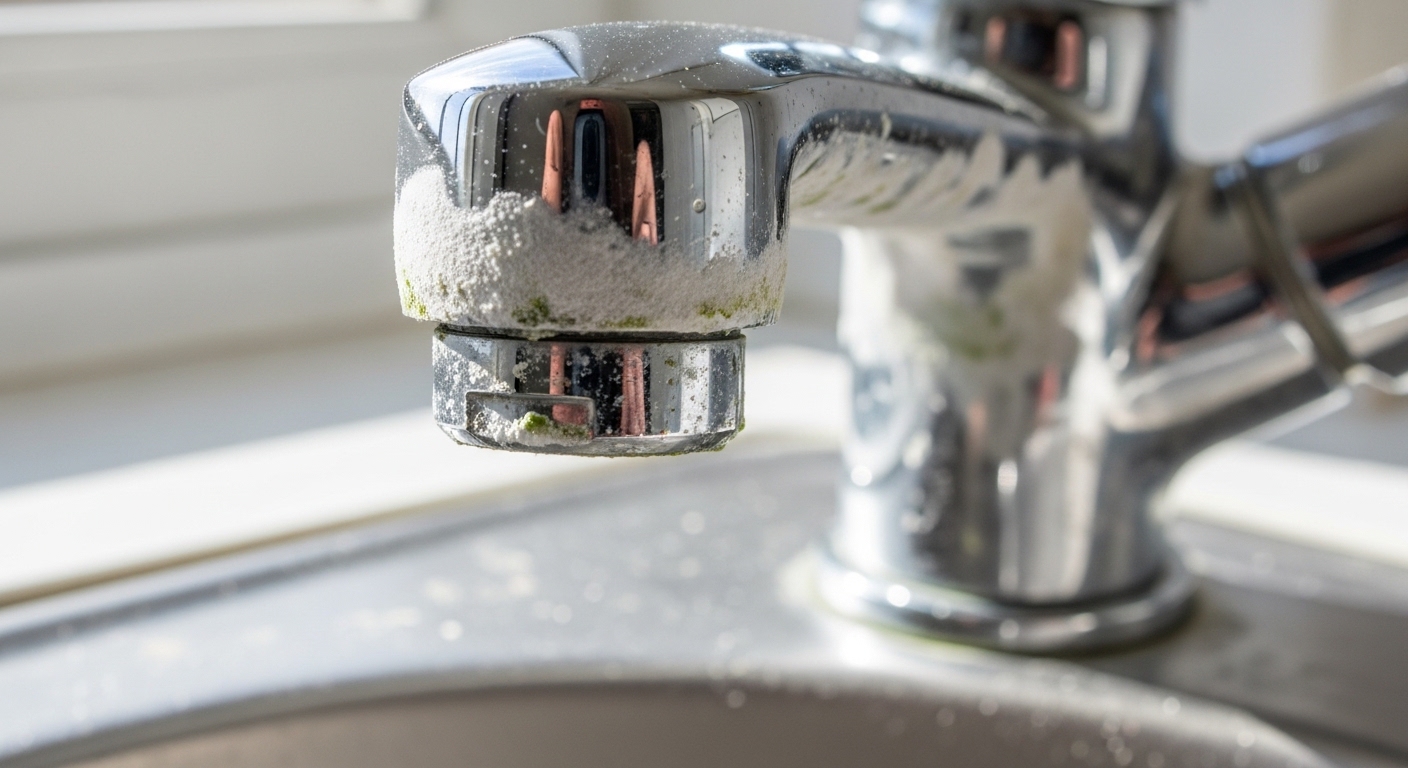
If your faucet is crusted with chalky white spots, a clogged aerator, or a spray head that fans out sideways, you’re fighting limescale — and the right hard water cleaner for faucet jobs is usually sitting in your pantry. Hard water is simply water with a high mineral load, mostly calcium carbonate and magnesium. Every time a drop dries on the spout, the water evaporates and the minerals stay behind. Layer after layer, that turns into the cloudy film and crusty buildup that dulls your finish and chokes water flow. The good news: this is a repair you can do yourself in under an hour, with no plumber and no replacement parts.
Below, I’ll walk through exactly what to use, what to avoid (some “obvious” cleaners will wreck certain finishes), and how to keep the scale from coming back.
What actually is hard water buildup, and why does it keep coming back on my faucet?
Hard water buildup is dried mineral residue — mainly calcium and magnesium carbonate — left behind when hard tap water evaporates on the metal. It keeps coming back because the cause is in your water supply, not the faucet, so unless you soften the water or wipe the fixture dry, new scale forms every single day.
Here’s why it matters beyond looks. Those minerals are slightly alkaline and they bond to metal and rubber. On the outside, they leave the cloudy “water spots” that make a brand-new faucet look tired. On the inside, they collect in the narrowest passages — the aerator screen, the pull-down spray holes, the cartridge — and slowly strangle your flow rate. A faucet rated for 1.8 GPM can drop to a trickle once the aerator is half-blocked. So a good hard water cleaner is doing two jobs: cosmetic restoration and flow repair.
The hardness of your water decides how aggressive you need to be. Water is measured in grains per gallon (GPG):
- 0–3 GPG (soft): light spotting, a quick vinegar wipe once a week.
- 3–7 GPG (moderately hard): visible film, plan a vinegar soak monthly.
- 7–10 GPG (hard): crusty buildup, citric acid or CLR may be needed.
- 10+ GPG (very hard): heavy scale; consider a whole-home softener long term.
What’s the best hard water cleaner for a faucet — vinegar, CLR, or a commercial descaler?
For everyday limescale on chrome, brushed nickel, or stainless faucets, white vinegar is the best first choice — it’s cheap, safe on most finishes, and dissolves calcium carbonate well. Move up to citric acid or a CLR-style cleaner only when vinegar can’t cut through thick, hardened scale. Reserve strong commercial descalers for the worst cases, and always check finish compatibility first.
Here’s how the common options actually compare:
| Cleaner | Best for | Strength | Safe on chrome/nickel? | Avoid on |
|---|---|---|---|---|
| White vinegar (5%) | Light–moderate spots, aerators | Mild | Yes | Unlacquered brass, stone, ORB (limit contact) |
| Citric acid powder | Moderate scale, soaking parts | Mild–medium | Yes | Natural stone, prolonged contact on bronze |
| CLR / Lime-Away | Heavy, hardened limescale | Strong | Chrome yes; nickel briefly only | Oil-rubbed bronze, brass, stone, colored finishes |
| Baking soda paste | Gentle scrubbing, polish | Very mild (abrasive) | Yes | Nothing major; don’t scrub hard on PVD |
| Bar Keepers Friend | Stainless, tough spots | Medium (abrasive) | Chrome/stainless yes | Brushed/satin finishes (can dull) |
My honest advice: start mild and only escalate if you have to. Acidic and abrasive cleaners both remove scale, but they can also micro-etch a finish if you overdo it. With protective finishes like polished nickel or any PVD-coated faucet, gentler is genuinely better — the coating that makes those finishes durable is also what you don’t want to sand or acid-burn off.
How do I clean hard water buildup off a faucet with vinegar (step by step)?
The most effective home method is the “bag soak”: fill a plastic bag with white vinegar, fasten it over the spout so the crusty parts stay submerged, and let it sit 30–60 minutes. The acid dissolves the minerals so they wipe away instead of needing aggressive scrubbing. Here’s the full routine:
- Wipe the faucet down with dish soap and water first to remove grease so the vinegar can reach the scale.
- Bag the spout: pour white vinegar into a sandwich bag, slip it over the spout, and secure with a rubber band so the aerator is submerged.
- For the handles and base, lay vinegar-soaked paper towels or a cloth over the spots and leave them.
- Wait 30–60 minutes. For heavy buildup, refresh the vinegar and give it another 30.
- Scrub gently with an old soft toothbrush. The loosened scale should come off easily. A wooden toothpick clears spray-head holes.
- Rinse thoroughly with clean water — never leave acid sitting on metal.
- Dry and buff with a microfiber cloth. Drying is what removes the spots entirely.
One important caution: warm vinegar works faster than cold, but never use boiling vinegar on a faucet — heat can damage internal seals and cartridges. Lukewarm is plenty.
How do I clean a clogged faucet aerator full of mineral grit?
Unscrew the aerator from the spout tip (turn clockwise as you face up at it, or use cloth-wrapped pliers if it’s stuck) and soak the parts in a bowl of vinegar for 30 minutes. Most aerators come apart into a screen, a flow restrictor, and a couple of rubber washers — lay them out in order so you can reassemble them. Brush each screen, poke any blocked holes with a toothpick, rinse, and screw it back on hand-tight. This single step restores flow on the majority of “my faucet pressure dropped” complaints, and it’s the same fix whether you have a basic bath spout or a fancy pull-down. If buildup keeps clogging it fast, that’s a strong sign it’s time to look at a faucet water filter head or a softener to treat the water itself.
Will vinegar or CLR damage my faucet finish? (brushed nickel, bronze, brass)
Vinegar is safe for short contact on chrome, stainless, and brushed/polished nickel, but you should limit it on oil-rubbed bronze and never leave any acid on unlacquered (living finish) brass or natural stone. Strong cleaners like CLR are fine on chrome but risky on nickel and outright damaging to bronze, brass, and colored PVD finishes.
Finish matters more than people realize, because the cleaner that rescues one faucet can ruin another:
- Chrome: the toughest, most chemical-resistant finish. Vinegar, citric acid, even CLR for short stints are all fine. If you’re weighing finishes partly on cleaning ease, that’s one reason chrome stays popular — see our brushed nickel vs chrome comparison.
- Brushed/satin nickel: handles vinegar well; avoid long CLR contact and harsh abrasives that can shine up the brushed grain unevenly.
- Oil-rubbed bronze (ORB): often a coated or “living” finish. Acids can lighten or blotch it. Use only mild soap and water, and dab vinegar very briefly on spots if you must, then rinse fast.
- Unlacquered/living brass and copper: these develop a patina on purpose. Acid strips it and creates bright raw blotches. Stick to soap and water — the same care logic we cover for a vintage copper faucet that you don’t want turning green or going splotchy.
- Matte black and colored PVD: generally durable but don’t love abrasives. Vinegar briefly, no scouring powders.
The golden rule: always test any new cleaner on a hidden spot first — the underside of the spout or behind the base — wait a few minutes, rinse, and check for dulling or discoloration before you commit to the whole fixture.
How do I stop hard water buildup from coming back on my faucet?
The only permanent fix is treating the water — a whole-home or under-sink water softener — but if that’s not in the budget, the simplest daily habit is to wipe the faucet dry after use. Minerals can’t deposit from water that isn’t left to evaporate on the surface.
Realistic options, from cheapest to most thorough:
- Dry it after use: a microfiber cloth by the sink, a quick wipe — this alone prevents most spotting.
- Weekly vinegar wipe: 10 seconds with a damp cloth stops scale from hardening into something that needs a soak.
- Point-of-use filtration: a faucet-mounted filter reduces what’s deposited at the tap.
- Water softener: the real cure for 7+ GPG water. It removes calcium and magnesium before they ever reach the faucet, and your appliances, glassware, and skin benefit too.
One more thing for anyone shopping for a new fixture: build quality affects how well a faucet resists scale damage long term. Solid-brass bodies and quality ceramic-disc cartridges hold up to repeated cleaning far better than cheap zinc-alloy fixtures, where aggressive descaling can eventually expose pitting. If you’re cleaning a faucet that’s already failing internally, sometimes the smarter repair is a replacement — and choosing one certified to real plumbing standards saves you this headache down the road.
When is it cleaning vs. when do I need to replace the faucet?
Clean it if the problem is cosmetic spotting or a clogged aerator — those are 100% fixable. Replace it if the faucet drips constantly after a cartridge swap, the handle is seized with internal corrosion, or the body itself is pitted and leaking, because scale that’s gotten inside a worn valve usually means the seals are done.
A quick decision guide: if descaling restores your flow and shine, you’re finished — keep up the maintenance. If you’ve cleaned the aerator and cartridge and still have dripping, grinding handles, or weeping at the base, the internal parts have worn past cleaning, and a new faucet is the better value than chasing parts. Quality fixtures from a manufacturer that tests to durability and water-efficiency standards will simply survive hard water longer.
Author note & why you can trust this
This guide was written by the product team at vigacc, a faucet and bathroom-fixture manufacturer based in Kaiping, China — one of the country’s main faucet-production hubs. We’ve been designing, casting, and pressure-testing faucets for the global market for years, which means we see firsthand how different finishes and cartridges respond to hard water and cleaning chemicals. Our fixtures are built with solid-brass bodies and ceramic-disc cartridges and are produced to recognized plumbing certifications (such as UPC/cUPC), with valves cycle-tested for long-term durability and finishes salt-spray and abrasion tested. The cleaning methods here are the same ones we’d use on our own products — and the finish cautions come from real test-bench results, not guesswork. As always, check your specific faucet’s care guide and warranty terms before using any acidic or abrasive cleaner, since misusing the wrong product can void finish warranties.
FAQ
Can I use any vinegar, or does it have to be white vinegar?
Use plain distilled white vinegar at the standard 5% acidity. It’s clear, so it won’t stain, and it’s strong enough to dissolve limescale. Avoid darker vinegars like apple cider or balsamic — they can leave residue and tint light finishes. “Cleaning vinegar” at 6% works a little faster and is also fine on chrome and nickel.
How long should I let vinegar sit on faucet hard water stains?
For light spots, 10–15 minutes is enough. For moderate buildup, soak 30–60 minutes. For heavy, crusty scale, refresh the vinegar and repeat up to a couple of times — but don’t leave acid on the finish overnight, especially on nickel or bronze, and always rinse thoroughly when you’re done.
What’s the fastest way to clean a faucet without soaking it for an hour?
For quick spotting, spray on a vinegar-water mix (1:1), let it dwell 5 minutes, scrub with a soft brush, rinse, and dry. It won’t beat a full soak on hardened scale, but for routine maintenance it takes about two minutes and prevents buildup from ever getting bad enough to need the long soak.
Is CLR safe for a brushed nickel or matte black faucet?
Be cautious. CLR is fine on chrome but the manufacturer advises against prolonged contact with nickel, and you should avoid it entirely on oil-rubbed bronze, brass, and natural stone. On matte black or colored PVD, skip strong descalers and abrasives — stick to vinegar applied briefly, then rinse. When in doubt, test on a hidden area first.
Why does my faucet still have low pressure after I cleaned the outside?
Because the buildup is inside the aerator, not on the spout surface. Unscrew the aerator, soak it in vinegar for 30 minutes, brush the screen, clear the holes with a toothpick, and reassemble. If the aerator clogs again within weeks, your water is hard enough that a softener or filter is the real fix.
Will hard water permanently damage my faucet?
Cosmetically, no — spots and scale always clean off. But long-term, mineral buildup inside the valve and cartridge causes wear, sticking handles, and eventual leaks. Regular descaling plus drying the faucet after use prevents that internal damage and easily adds years to the fixture’s life.
WeChat
Scan the QR Code with WeChat