 iVIGA Faucet Manufacturer & Factory

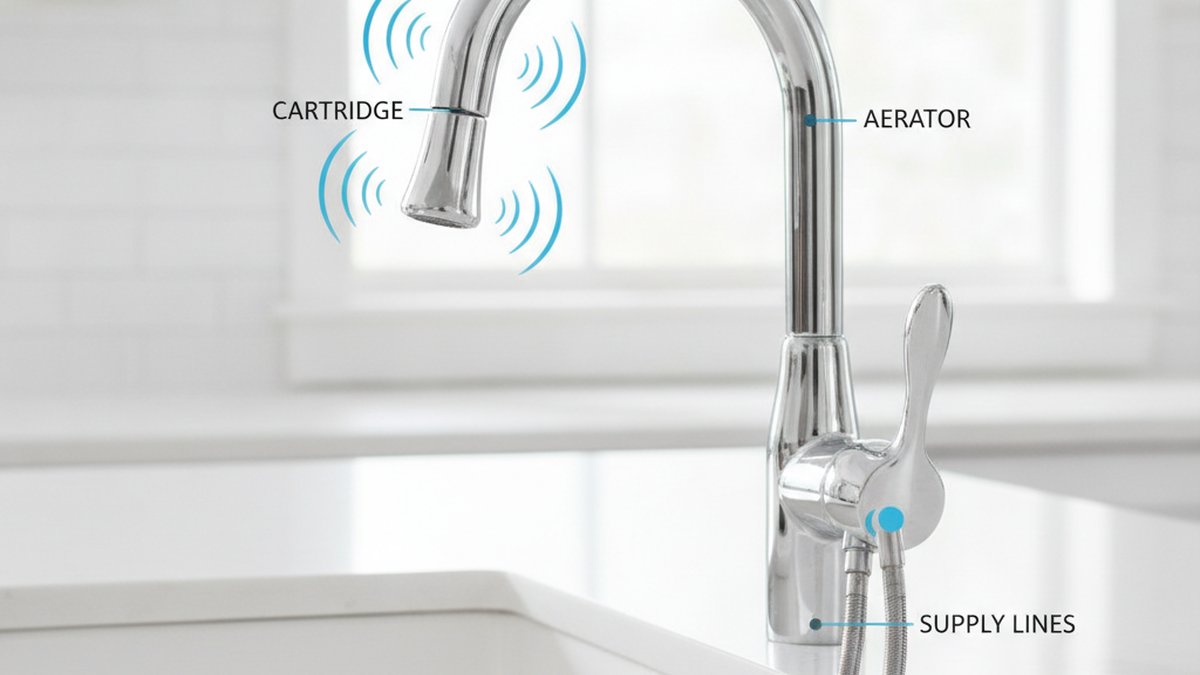
If you’ve got a noisy chili tap house — taps that bang, whistle, hum, or screech every time you turn the water on or off — the good news is that noise is a symptom, not a disaster. Faucets don’t make sound at random; each type of noise points to one specific mechanical cause, and once you can name the sound, the fix is usually cheap and fast. Below I’ll walk you through diagnosing your tap noise by ear, the tools you actually need, step-by-step repairs, and when it’s genuinely worth calling in help. This is a repair guide written for real bathrooms and kitchens, not a theory lecture.
What Is Actually Making My Tap Noisy?
Your tap is noisy because of one of five things: trapped air in the lines, a worn washer or cartridge, a clogged or loose aerator, water pressure that’s too high, or water hammer (a shockwave when water stops suddenly). The single most useful diagnostic step is to notice when the noise happens — while water runs, or only when you shut it off.
Here’s the quick logic. Noise while water is flowing almost always lives inside the faucet itself — the aerator, the valve seat, or the cartridge. Noise only at the moment you close the tap is a plumbing-system problem — water hammer or a failing washer slamming against its seat. Getting this one distinction right saves you from disassembling a faucet when the real issue is a pressure spike three feet down the pipe.
| Sound you hear | Most likely cause | Typical fix | Difficulty |
|---|---|---|---|
| Loud bang when you shut the tap | Water hammer / no air cushion | Install arrestor, secure pipes | Easy–Moderate |
| High whistle or squeal while running | Worn washer or partially closed valve | Replace washer/cartridge | Easy |
| Low hum or vibration | Loose washer or high pressure | Tighten/replace washer, add PRV | Easy–Moderate |
| Screech or chatter on opening | Stem threads or worn cartridge | Grease or replace cartridge | Easy |
| Sputtering / spitting flow | Trapped air or clogged aerator | Bleed lines, clean aerator | Very easy |
Why Does My Tap Bang or “Hammer” When I Turn It Off?
That loud bang the instant you close a fast-acting tap is water hammer — a pressure shockwave created when moving water is stopped abruptly and has nowhere to go. It’s the number-one complaint in a noisy chili tap house, and it’s usually the easiest to understand once you picture it: water is heavy and moving fast, so slamming a valve shut is like stopping a train with a brick wall.
Older homes had small air chambers built into the pipes to absorb this shock. Over the years those chambers fill with water and lose their cushion. Modern single-lever and quarter-turn ceramic-disc taps make it worse because they close so quickly. The fixes, in order of effort:
- Recharge the air chambers (free): Shut off your main water supply, then open the highest and lowest faucets in the house to drain the pipes completely. Close them and turn the main back on. This refills the air pockets and often eliminates the bang instantly.
- Install a water hammer arrestor ($15–$40): A small sealed shock absorber that screws onto the supply line under the sink or at the washing machine. It’s the permanent fix and takes about 15 minutes.
- Secure loose pipes: If pipes rattle inside walls or under floors, add pipe clamps or foam padding where they contact framing. Loose pipes turn a small shock into a house-wide bang.
- Check your pressure: Water pressure above 80 psi dramatically worsens hammer. A $10 gauge that screws onto a hose bib tells you in seconds.
Why Is My Faucet Whistling or Squealing While the Water Runs?
A whistle or squeal while water is flowing means water is being forced through a gap that’s too small or an edge that’s worn — nearly always a deteriorated rubber washer, a scaled-up valve seat, or a partly-closed shut-off valve. The pitch is high because water is accelerating through a restriction and vibrating the part it passes.
Start with the easiest suspect: make sure the shut-off valves under the sink are fully open. A half-open valve is a classic whistle source. If they’re fully open and the whistle continues, the culprit is inside the tap. On a traditional compression faucet, the washer at the bottom of the stem has hardened, cracked, or shrunk, so water screams past it. On a ceramic-disc or cartridge tap, the cartridge itself is worn.
Replacing a washer is genuinely a five-minute job: shut off the water, unscrew the handle, remove the stem, swap the old washer for an identical size, and reassemble. If your tap uses a cartridge, take the old one to the hardware store or match the model number — cartridges are faucet-specific. This is the same category of quick internal fix as stopping a leak; if you also have drips, our guide on how to fix a kitchen faucet drip yourself covers the exact washer-and-cartridge steps that also cure most whistles.
Why Does My Tap Sputter, Spit, or Sound Airy?
Sputtering — where water bursts out in coughs mixed with air — means there’s trapped air in the line or a clogged aerator, not a broken faucet. This is extremely common right after the water company does maintenance, after you’ve had the supply shut off, or when a clogged aerator disrupts the smooth flow.
Two fixes cover almost every case:
- Bleed the air out: Open the affected tap fully and let it run for 2–3 minutes. Air in the lines works its way out and the sputtering stops on its own. If several taps sputter, open the lowest tap in the house first.
- Clean or replace the aerator: Unscrew the aerator from the spout tip (by hand, or with tape-wrapped pliers), rinse out the mineral debris and screen, and reinstall. Hard-water scale is the usual blockage. If yours is corroded, a fresh aerator costs a few dollars and can also fix an uneven, noisy spray.
A clogged aerator often shows up as both noise and weak flow. If your stream has gone thin as well as loud, the aerator is the first thing to check — and upgrading to a better one solves both at once. Our breakdown of the one-touch tap aerator explains how to choose the right thread size and flow rate. If the pressure problem is bigger than the aerator, the community-sourced fixes in our kitchen faucet low water pressure guide walk through the whole supply chain from the valve to the spout.
Is High Water Pressure Behind My Noisy Chili Tap House?
Yes — if multiple taps are noisy, vibrate, or hammer throughout the house, high water pressure is very often the shared root cause. Residential plumbing is designed for 40–60 psi. Many municipal supplies deliver 80 psi or more, and anything above 80 psi both accelerates wear on washers and turns ordinary valve closures into loud shocks.
Measure it. A pressure gauge that threads onto an outdoor hose bib or the washing-machine tap costs about $10 and reads instantly. If you’re above 80 psi:
- Install or adjust a pressure-reducing valve (PRV) on your main line — the definitive whole-house fix, usually a plumber job but a permanent one.
- If you already have a PRV and pressure is still high, it may have failed and need replacing.
- Combine the PRV with hammer arrestors for a completely silent system.
Which Tools Do I Actually Need to Fix a Noisy Tap Myself?
For 90% of noisy-tap repairs you need only a handful of basic tools — no specialist plumbing kit. Here’s the realistic list:
- Adjustable wrench and slip-joint pliers (wrap the jaws in tape to avoid scratching finishes).
- Flathead and Phillips screwdrivers, plus a set of Allen/hex keys for handle set-screws.
- Replacement washers, O-rings, or a matching cartridge.
- Plumber’s grease (silicone) for cartridges and stems, and PTFE thread tape.
- A pressure gauge and, if needed, a hammer arrestor.
The one place people go wrong is over-tightening to “stop the noise,” which cracks fittings and strips threads. If your tap is loose or wobbling as well as noisy, snug it correctly with the right tool — our guide to the kitchen faucet tightening tool you actually need shows the basin wrench and torque approach that fixes wobble without over-cranking. And if any handle has come off during your repair, here’s how to put a shower tap back on the right way.
Step-by-Step: How Do I Fix a Whistling or Humming Tap in Under 20 Minutes?
The most common noisy-tap repair — a worn washer or cartridge causing a whistle or hum — follows one reliable sequence. Do it in this order and you won’t flood anything:
- Shut off the water at the under-sink stop valves (turn clockwise). Open the tap to release residual pressure and confirm the water is off.
- Plug the drain so no small screws disappear, and lay a towel in the basin.
- Remove the handle: pop off the decorative cap, undo the screw underneath, and lift the handle free.
- Pull the stem or cartridge: loosen the retaining nut with your wrench and withdraw the internal assembly. Note its orientation.
- Inspect and replace: a flattened, cracked, or grooved washer/O-ring — or a scored cartridge — is your noise source. Fit an exact match. Apply a thin film of silicone grease to O-rings and cartridge seals.
- Reassemble and test: reverse the steps, turn the water back on slowly, and run the tap. The noise should be gone.
If the noise persists after a fresh washer and clean aerator, the issue is systemic — pressure or hammer — and you move to the arrestor/PRV path above rather than taking the faucet apart again.
When Should I Stop DIY and Call a Plumber?
Call a professional when the noise is tied to your whole system rather than one fixture: banging that shakes multiple walls, a suspected failed pressure-reducing valve, noise combined with rusty or discolored water, or any situation where you can’t locate a working shut-off valve. Those point to main-line pressure, pipe-support, or supply issues that need proper equipment.
Everything at the fixture level — washers, cartridges, aerators, handle set-screws, and a screw-on hammer arrestor — is firmly in DIY territory. If you’ve replaced the internal parts and cleaned the aerator and a single tap is still loud, it may simply be a low-quality valve that’s cheaper to replace than to keep fighting. In that case, choosing a faucet with a solid ceramic-disc cartridge and a brass body is the long-term cure for noise.
How Do I Prevent My Taps From Getting Noisy Again?
Prevention comes down to three habits: keep pressure in the 40–60 psi range, close taps smoothly instead of snapping them shut, and descale aerators every few months if you have hard water. A quality faucet with a ceramic-disc cartridge closes cleanly and resists the wear that causes whistling and humming in the first place.
- Test house pressure once a year with your gauge.
- Flush and clean aerators quarterly in hard-water areas.
- Add a whole-house sediment filter if grit is scoring your valves.
- Choose fixtures rated for your pressure and certified to recognized standards.
FAQ
Why does only one tap in my house make noise?
A single noisy tap is almost always an internal fault — a worn washer, a scaled cartridge, or a clogged aerator on that specific fixture. If the noise were system-wide (pressure or hammer), you’d hear it at several taps. Start by cleaning that tap’s aerator, then replace its washer or cartridge.
Is a noisy tap dangerous or just annoying?
The noise itself is harmless, but repeated water hammer can loosen joints and, over years, cause leaks or pipe damage. Whistling from a worn washer also signals the seal is failing, which leads to dripping. So it’s worth fixing promptly — not an emergency, but not something to ignore for months either.
Can a clogged aerator really make a tap noisy?
Yes. When mineral scale partially blocks the aerator screen, water is forced through a smaller opening and sprays unevenly, producing sputtering, hissing, or a whistling sound. Unscrewing and cleaning the aerator — or replacing a corroded one — is often the entire fix and takes under five minutes.
Will a water hammer arrestor stop the banging for good?
In most homes, yes. A properly installed arrestor absorbs the pressure shock that causes banging and, unlike recharging air chambers, doesn’t lose its cushion over time. Pair it with correctly clamped pipes and pressure under 80 psi and the bang should be gone permanently.
My tap hums only when it’s half-open — why?
A hum at partial flow is typically a loose or worn washer vibrating in the water stream, or a cartridge seal that’s degraded. Tightening won’t cure it because the part is worn — replace the washer or cartridge with an exact match and apply a little silicone grease on reassembly.
Do more expensive faucets stay quiet longer?
Generally, yes — the difference is the internals. A brass body with a genuine ceramic-disc cartridge closes smoothly and resists the wear that causes whistling and humming, while cheap plastic valves and thin washers fail fast. Look for certified fixtures rather than judging by finish alone.
Author Note & Brand Credibility
This guide was written by the iVIGA product and technical team, who design, pressure-test, and service faucets across kitchen, bath, and shower lines. Every iVIGA faucet is built on a solid brass body with a ceramic-disc cartridge and is bench-tested through hundreds of thousands of open-close cycles to certified flow and durability standards, and backed by our manufacturer’s warranty. We’ve handled thousands of real customer noise complaints, and the diagnostics above reflect what actually solves them in the field — not theory. For a quieter, longer-lasting upgrade, iVIGA fixtures at www.viga.cc are engineered specifically to eliminate the wear-and-shock problems that make taps noisy in the first place.
WeChat
Scan the QR Code with WeChat