 iVIGA Faucet Manufacturer & Factory

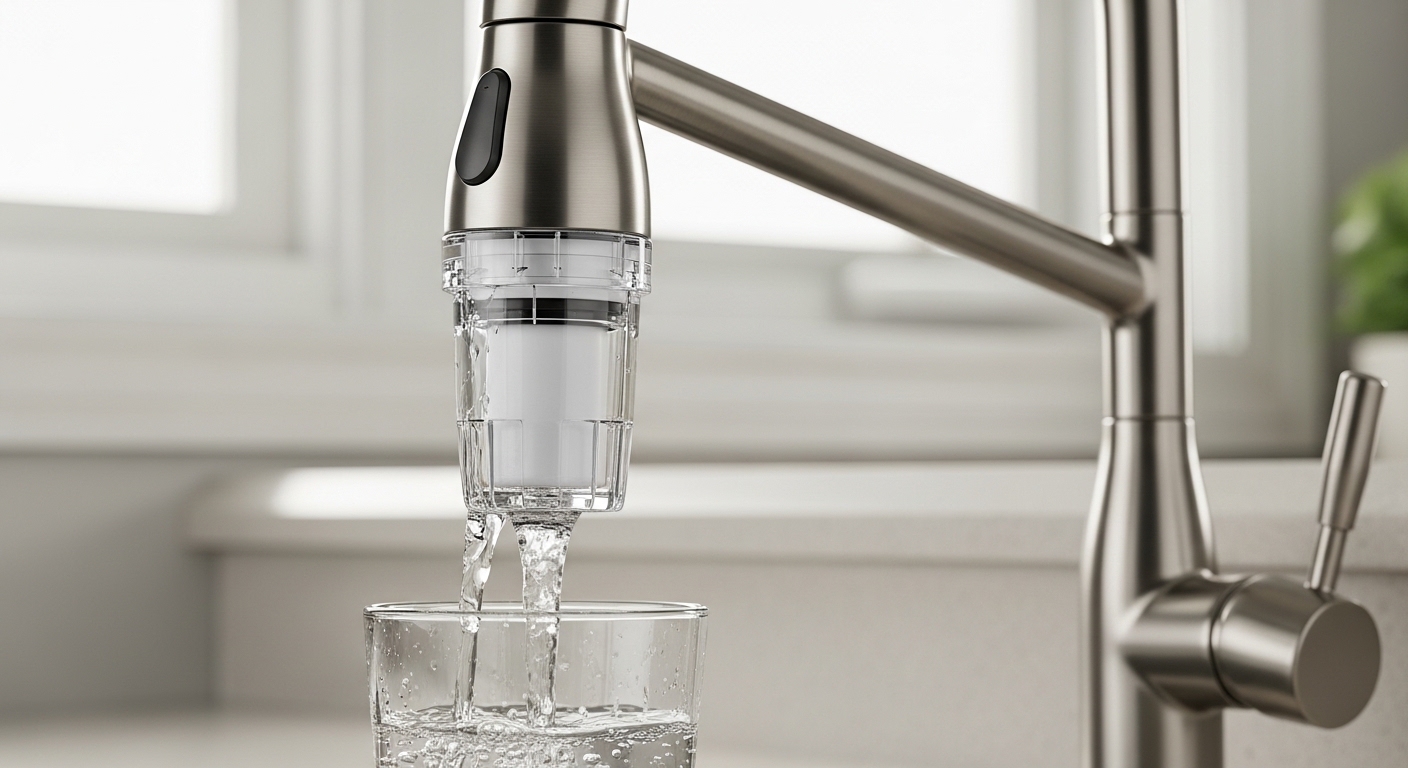
A faucet water filter head — the screw-on, point-of-use cartridge unit that attaches to your existing kitchen or bathroom faucet aerator — is the fastest way to upgrade your tap water without a plumber, without a reverse-osmosis system under the sink, and without paying $40 a month for bottled water. But “fast and cheap” is also where most buyers get burned. The market is flooded with $9 plastic units that crack at the threads, drop your flow rate to a trickle, and don’t actually filter anything finer than a grain of sand.
This 2026 buyer’s guide is written for the people actually shopping right now: renters who can’t modify plumbing, homeowners on city water with a chlorine smell, parents worried about lead in older homes, and anyone who’s tired of dragging Brita pitchers in and out of the fridge. We’ll cover what these units actually do, what they don’t, how to read the specs that matter, and how to match the right filter head to your real water problem — not a marketing buzzword.
What does a faucet water filter head actually do — and what doesn’t it do?
A faucet water filter head is a compact filtration housing that screws onto the end of your faucet (replacing the aerator) and forces water through a cartridge — typically activated carbon block, KDF media, or a hollow-fiber membrane — before it reaches your glass. In plain terms: it cleans the last 4 inches of the water’s journey, right at the tap.
Here’s what a good one will handle:
- Chlorine & chloramine — the #1 reason city water smells like a swimming pool. Carbon block removes 95–99%.
- Sediment & rust particles — anything down to 0.5 microns on better units.
- Lead — only on NSF/ANSI 53-certified models (this is critical; most cheap units only meet NSF 42 for taste).
- VOCs, pesticides, and some pharmaceuticals — on premium carbon block cartridges.
- Bad taste and odor — universally, even on entry-level units.
Here’s what it won’t do, no matter what the box claims:
- Soften hard water. A filter head doesn’t remove calcium or magnesium. If you have white scale on your faucet, you need a softener, not a filter.
- Remove dissolved solids (TDS). Only reverse osmosis does that.
- Kill bacteria reliably. Unless it has a UV stage or 0.1-micron hollow fiber, assume no.
- Filter hot water. Every faucet filter head is cold-water only — hot water destroys the carbon and the housing.
How do I know if I actually need one (or if I’m wasting money)?
Start with a $15 home water test kit or your municipal Consumer Confidence Report (CCR) — every U.S. utility is required to publish one annually. If you see chlorine above 1 ppm, any detectable lead, or you live in a home built before 1986, a faucet filter head pays for itself in months versus bottled water.
Quick decision tree for the most common situations:
| Your Situation | Do You Need a Filter Head? | Better Alternative |
|---|---|---|
| City water tastes like chlorine | Yes — entry-level carbon is fine | — |
| Pre-1986 home, kids in house | Yes — must be NSF 53 certified for lead | Under-sink lead filter for whole kitchen |
| Well water, high sediment | Maybe — add whole-house sediment pre-filter first | Whole-house + point-of-use combo |
| White scale, spotty dishes | No — won’t help | Water softener or descaler |
| Concerned about microplastics/PFAS | Only premium NSF 401 + P473 units | Reverse osmosis under sink |
| Rental, can’t modify plumbing | Yes — perfect fit, no plumber needed | — |
If you’re on city water and the only complaint is taste, an entry-level $30 faucet water filter head will completely change your morning coffee. If you’re worried about lead, do not buy on price — buy on certification.
What should I look for when buying a faucet water filter head in 2026?
Six specs matter. Ignore everything else on the box.
- NSF/ANSI certification numbers. NSF 42 = taste/odor/chlorine. NSF 53 = health contaminants (lead, cysts, VOCs). NSF 401 = “emerging contaminants” (pharmaceuticals, BPA). A real filter lists the standard number AND the certifying lab. “Tested to NSF standards” without a number is marketing fluff.
- Filter capacity in gallons. 100 gallons is the floor — that’s about 3 weeks for a family of four. Aim for 200+ gallons per cartridge so you’re not replacing it monthly.
- Flow rate. A standard kitchen aerator delivers 1.5–2.2 gpm. A good filter head holds 0.5–1.0 gpm. Anything below 0.5 gpm feels broken — you’ll wait 20 seconds to fill a glass.
- Housing material. ABS plastic is acceptable for the body; the threaded collar should be brass or stainless. All-plastic threads strip after 3–4 cartridge swaps. (This is the single biggest reason cheap units fail.) The same principle that makes brass the standard for crucial plumbing components applies here.
- Aerator thread size compatibility. Most U.S. faucets are 15/16″-27 male or 55/64″-27 female. A quality filter head ships with 3–4 adapters; a cheap one ships with one and hopes you got lucky.
- Bypass/diverter switch. Critical for usability. You want filtered water for drinking and cooking, unfiltered for rinsing dishes (so you’re not burning through cartridge life washing a pan).
How much should I spend? (And what do you actually get at each price tier?)
Honest answer: the sweet spot is $35–$65. Below that you’re buying disposable plastic; above $100 you’re paying for branded marketing on the same components.
| Price Tier | What You Get | Cartridge Life | Worth It? |
|---|---|---|---|
| $10–$20 | All-plastic housing, basic carbon, no certification | 1–2 months | No — leaks, low flow, no real filtration |
| $25–$40 | NSF 42 certified, plastic body + brass collar, 100–200 gal | 3–4 months | Yes — best value for taste/chlorine |
| $45–$80 | NSF 42 + 53, lead removal, diverter, 200–320 gal | 4–6 months | Yes — best for older homes or families |
| $90–$150 | NSF 42 + 53 + 401, electronic flow indicator, premium housing | 6 months | Only if your water test demands it |
| $150+ | Mostly branding, smart-home integration | 6 months | Rarely — get an under-sink RO instead |
One thing buyers underestimate: replacement cartridge cost is the real long-term number. A $30 unit with $25 cartridges every 8 weeks is more expensive over two years than a $60 unit with $20 cartridges every 6 months. Always calculate cost-per-gallon before checkout.
Will it fit my faucet? (The thread-size question everyone gets wrong)
Probably yes — but check before you click buy. About 90% of modern U.S. kitchen and bathroom faucets use one of three standard aerator threads: 15/16″-27 male, 55/64″-27 female, or the smaller 13/16″-24 found on some European-style faucets. Reputable manufacturers ship adapters for all three.
The faucets that won’t fit:
- Pull-down and pull-out sprayers. The wand head doesn’t unscrew like an aerator. You’ll need an under-sink filter instead.
- Touchless / sensor faucets. Same problem — integrated sprayer, no thread.
- Some commercial-style gooseneck faucets with hidden aerators. Check before ordering. Our guide to why commercial faucets work in home kitchens covers the aerator-removal differences in detail.
- Vintage or imported European bridge faucets. Many use non-standard thread pitches. A vintage copper faucet, for example, often has period-correct fittings that need a custom adapter.
To check yours in 30 seconds: unscrew the aerator (lefty-loosey). If it comes off cleanly and you see standard threads, you’re good. If it’s recessed and needs a special key, take a photo and message the seller before buying.
How do I install a faucet water filter head? (Step-by-step, no tools needed)
Installation takes under 5 minutes and requires zero plumbing skill. If you can change a lightbulb, you can do this.
- Shut off the faucet and run cold water for 10 seconds to clear the line.
- Unscrew the existing aerator counter-clockwise. Use a rubber band for grip if it’s stuck — never pliers, you’ll scratch the finish.
- Identify your thread type. Male threads on the outside of the faucet spout = male aerator socket. Threads on the inside = female.
- Choose the matching adapter from the kit and hand-tighten it onto the faucet. Add the included rubber washer.
- Screw the filter head onto the adapter, hand-tight only. Tools will crack the housing.
- Run cold water for 5 full minutes through the filter to flush carbon dust. The first water will look gray — this is normal and harmless.
- Test for leaks at all joints. A drop or two at the thread means re-seat the washer.
- Mark the install date on the housing with a sharpie so you remember when to swap the cartridge.
How often do I replace the cartridge, and how do I know it’s time?
Most cartridges last 3–6 months or 100–320 gallons, whichever comes first. The honest answer to “how do I know” is: noticeably reduced flow, returning chlorine taste, or you hit the manufacturer’s gallon count. Premium units have a flow meter or color-change indicator that takes the guessing out of it.
Rule of thumb for a family of 2–4 on city water using filtered water for drinking, coffee, cooking pasta, and washing produce (not dishes): you’ll use roughly 1.5–2 gallons per day. So a 200-gallon cartridge lasts 100–130 days — about 3.5 months. If yours is dying in 6 weeks, you’re either filtering more than you think or you have heavy sediment that’s clogging it; add a pre-filter.
One mistake to avoid: do not try to “extend” a dead cartridge by backwashing it. Once carbon is exhausted, it can release trapped contaminants back into your water — the opposite of what you want.
Faucet water filter head vs. pitcher filter vs. under-sink: which is right for your situation?
Short answer: filter head is best for renters and anyone wanting filtered water on demand without modifying plumbing; pitcher is fine if you only drink 1–2 glasses a day; under-sink is best for owned homes where you want unlimited filtered water at full flow.
| Feature | Faucet Filter Head | Pitcher Filter | Under-Sink System |
|---|---|---|---|
| Upfront cost | $30–$80 | $25–$50 | $150–$400 |
| Annual cartridge cost | $50–$100 | $60–$120 | $60–$150 |
| Installation | 5 min, no tools | None | 1–2 hours, plumber preferred |
| Filtered water capacity | Unlimited on-demand | ~10 cups at a time | Unlimited on-demand |
| Flow rate | 0.5–1.0 gpm (reduced) | N/A (slow pour) | Full flow 2.2 gpm |
| Lead removal | Yes (NSF 53 models) | Yes (some models) | Yes |
| Removes TDS | No | No | Yes (RO only) |
| Best for | Renters, fast upgrades | Singles, very light use | Homeowners, families |
For most apartments and starter homes, the faucet head wins on cost-per-gallon and zero installation friction. The moment you start filtering for a family of 5 — or you want a dedicated cold drinking-water tap that doesn’t reduce flow — switch to under-sink.
What about flow rate? (Will it slow my faucet to a trickle?)
A little, yes — but a good unit shouldn’t feel like a problem. Expect filtered flow around 0.5–1.0 gpm versus your aerator’s standard 1.5–2.2 gpm. With the diverter switched to unfiltered mode, you get full original flow back. The trick is buying a unit with a real diverter, not a “filter-always-on” design.
If you’ve already chosen a high-flow setup like the high-arc gooseneck style common in 2026 kitchens, a quality filter head paired with a diverter preserves the full unfiltered flow for pot-filling and pan-rinsing while giving you clean water for the glass. Cheap filter heads ruin the experience of a nice faucet — don’t pair a $400 fixture with a $9 filter.
About VIGA and our take on point-of-use filtration
VIGA is a Kaiping, China-based OEM/ODM faucet manufacturer with over 20 years of experience supplying brass kitchen, bathroom, and shower fixtures to brands across North America and Europe. Every faucet body we ship is lead-free brass certified to NSF/ANSI 61 and CUPC standards, and all our aerator threads follow U.S. and European standard pitches — meaning aftermarket filter heads fit our fixtures without proprietary adapters.
Our position on filter heads is practical: we don’t manufacture them ourselves, and we won’t pretend any single product is “best.” But after fielding hundreds of customer questions about water quality on our faucets, we’ve seen enough installations to tell you what works. The 2-year limited warranty on our faucets is not voided by aftermarket filter attachments, provided they use standard aerator threads and don’t exceed 60 psi back-pressure.
Author note: This guide was written by VIGA’s product team in consultation with our QA lab, where we test fixtures against NSF 61, NSF 372 (lead-free), and the U.S. EPA’s WaterSense flow specifications. Specs cited reflect typical 2026 market conditions; always verify the specific NSF certification number on any filter you purchase.
FAQ
Can I use a faucet water filter head on hot water?
No — never. Every faucet water filter head is rated cold-water only. Hot water (above 100°F / 38°C) destroys the carbon block, warps the plastic housing, and can release contaminants back into your water. If you run hot water through it by accident, replace the cartridge immediately.
Does a faucet filter head remove fluoride?
Standard carbon cartridges do not remove fluoride to any meaningful degree. Only specialized activated alumina or bone-char cartridges remove fluoride, and very few faucet-mount units use them. If fluoride removal is your goal, you need a reverse osmosis system or a dedicated fluoride filter pitcher.
Why does my water taste weird the first day after installing it?
That’s residual carbon fines from the new cartridge. Flush for 5 full minutes on cold before drinking, and the gray tint and ashy taste disappear. If it persists past day two, the carbon block is defective — return it under warranty.
Can I install a filter head on a pull-down kitchen faucet?
No. Pull-down and pull-out sprayer heads don’t have a removable aerator at the spout — the spray head is an integrated unit. For these faucets, you need an under-sink filter or a dedicated filtered-water faucet drilled into your countertop. Our pull-down faucet buyer’s guide covers compatible filtration alternatives.
How do I know if my faucet water filter head is NSF certified vs. just “tested to NSF standards”?
Real certification lists a specific standard number (42, 53, 401, P473) and the certifying organization (NSF International, WQA, IAPMO, UL). “Tested to NSF standards” with no number is marketing language that means the brand ran its own test in-house — not a third-party audit. Always check the NSF database online by product name before buying.
Will a filter head void my faucet’s warranty?
Most reputable faucet brands, including VIGA, do not consider standard aftermarket aerator-thread attachments to void the warranty, as long as the filter operates within the faucet’s pressure rating (typically 20–80 psi). However, modifications to the supply lines or internal cartridge will void coverage. When in doubt, check your faucet’s warranty card before installing.
How long does a faucet water filter head itself last (not the cartridge)?
The housing should last 3–5 years with regular cartridge changes. Failure modes are stripped threads (from over-tightening), cracked housing (from freezing or impact), and worn diverter switches. A brass-collar unit easily doubles the lifespan of an all-plastic one — which is why the $40 unit usually outlasts three of the $15 units.
Is it safe to drink filtered tap water for babies and formula?
Yes — if the filter is NSF 53 certified for lead and cyst removal, and you use cold water only. For infants, pediatricians generally recommend filtered tap water over bottled water (which has no fluoride standard) and over unfiltered tap water in older homes. Always boil water for newborn formula regardless of filtration.
WeChat
Scan the QR Code with WeChat