 iVIGA Faucet Manufacturer & Factory

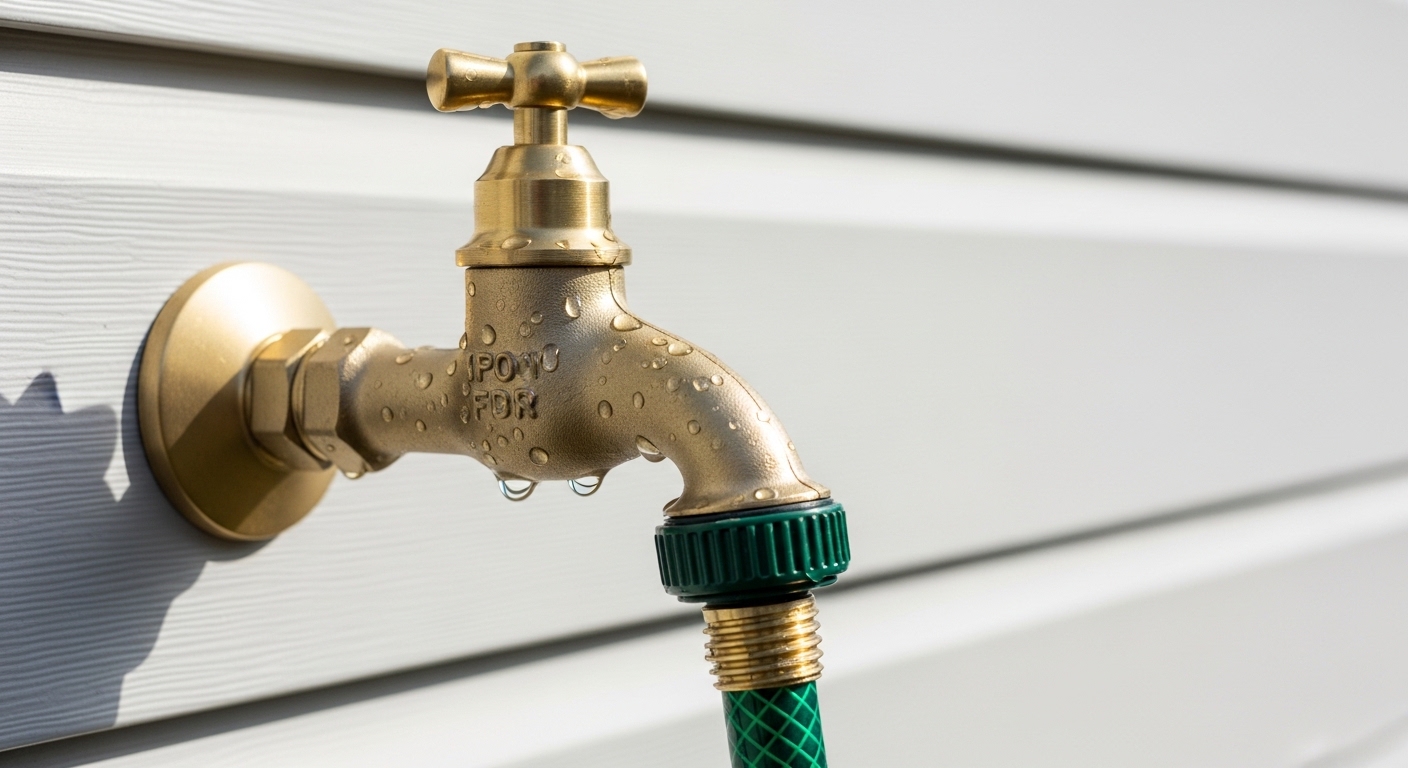
If you’ve ever filled a dog bowl or let your kids sip from the garden hose, a lead free outdoor faucet is not a “nice to have” — it’s the difference between clean water and water that has spent hours sitting against old leaded brass. The outdoor spigot on the side of your house is one of the most overlooked plumbing fixtures in the country, yet it’s the one people drink from without thinking. This guide walks through exactly what “lead free” means, when it legally matters, how to tell what you already have, and how to pick a replacement that won’t crack the first time it freezes.
We’ll answer the real questions homeowners actually type and ask out loud — including whether your existing spigot is dangerous, whether “lead free” and “no lead” are the same thing, and what you should pay for a good one. Let’s get into it.
What exactly makes an outdoor faucet “lead free”?
An outdoor faucet is “lead free” when the surfaces that touch water contain a weighted average of no more than 0.25% lead. That’s the federal legal limit set by the Reduction of Lead in Drinking Water Act, which amended the Safe Drinking Water Act and took effect in 2014. Older “lead free” brass was allowed up to 8% lead, so the term meant something very different before that date.
Here’s the part that trips people up: traditional plumbing brass is an alloy of copper and zinc, and manufacturers historically added a few percent of lead to make it easier to machine on a lathe. That lead sits in the metal and slowly leaches into any water that stands still inside the valve. A true lead free faucet swaps that alloy for a low-lead brass (often called “eco brass” or “green brass”), stainless steel, or a food-grade polymer.
So when you shop, you’re really looking for one of three things stamped or listed on the product:
- “Lead free” compliant with the 0.25% wetted-surface standard.
- NSF/ANSI 61 and NSF/ANSI 372 certification — the independent lab tests that verify low-lead compliance.
- Material callouts like “lead free brass,” “304 stainless steel,” or “DZR (dezincification-resistant) brass.”
If a listing just says “brass” with no lead statement, assume it is not compliant. Reputable manufacturers advertise the certification loudly because it costs money to earn.
Is my current outdoor spigot dangerous to drink from?
Possibly — especially if your home was built or re-plumbed before 2014, and doubly so for the first cup of water after the spigot has been sitting unused. Standing water inside older leaded brass is where lead concentrations climb, because the metal has had hours (or overnight) to leach into still water.
You can’t tell lead content by looking. A shiny chrome or brass spigot from 2005 can contain more lead than a plain-looking one from 2022. Here’s how to assess what you have without a lab:
- Check the age. Anything installed before 2014 predates the current federal standard and is suspect.
- Look for markings. Modern compliant faucets are often stamped with “NL” (no lead), “LF” (lead free), or a small NSF logo on the body.
- Do a hardware-store lead swab test. A rub test kit changes color if it contacts lead on the surface — cheap, and worth doing.
- When in doubt, run it first. Let the spigot run 30–60 seconds to flush standing water before anyone drinks. This is a stopgap, not a fix.
The honest truth: if you regularly drink from or fill drinking vessels at an old outdoor faucet, the cheapest permanent peace of mind is a $25–$50 replacement. That’s a smaller investment than most people put into a faucet water filter head for the kitchen — and the outdoor tap is the one nobody thinks to protect.
Lead free brass vs. stainless steel vs. polymer — which should I buy?
For most homes, a lead free brass frost-free hose bibb is the best all-around choice; pick stainless steel if you’re on the coast or want maximum corrosion resistance, and polymer only for mild climates and tight budgets. The material decides durability, freeze resistance, price, and how long the fixture lasts outdoors.
Here’s the practical breakdown so you can match the material to your situation and budget:
| Material | Typical Price | Best For | Freeze/Corrosion Notes |
|---|---|---|---|
| Lead free brass (eco/DZR brass) | $25–$60 | Most homes; all-purpose use | Excellent durability; DZR grades resist dezincification and hard water |
| 304 / 316 stainless steel | $40–$90 | Coastal, salt air, well water | Top corrosion resistance; won’t stain or pit |
| Food-grade polymer / composite | $15–$30 | Mild climates, budget builds | Won’t corrode but less impact-resistant; can degrade in UV over years |
| Old-style leaded brass (avoid) | $10–$20 | Non-potable only | Cheapest, but not drinking-water safe |
My general recommendation: a lead free frost-free brass hose bibb hits the sweet spot for durability and safety. Frost-free (also called frost-proof or freezeless) means the actual shut-off valve sits 6–12 inches back inside the warm wall of your house, so the water drains out of the exposed pipe and can’t freeze and burst. If you live anywhere that sees a hard frost, this feature matters more than the finish.
What’s the difference between a hose bibb, a sillcock, and a yard hydrant?
They’re all outdoor faucets, but they serve different spots: a hose bibb (or sillcock) mounts on the wall of your house, while a yard hydrant stands up out of the ground somewhere out in the yard or on a farm. Knowing the name gets you the right lead free part fast.
- Hose bibb / sillcock: The classic wall-mounted spigot with a threaded outlet for a garden hose. “Sillcock” usually implies the longer frost-free version that passes through the house wall.
- Yard hydrant: A tall, freeze-proof standpipe planted in the ground away from the house, common on acreage, farms, and large gardens. Lead free versions exist and matter here because livestock and vegetable beds get this water.
- Wall hydrant: A recessed, lockable box-style spigot used on commercial buildings.
Whatever the style, the lead free standard is identical — it’s about the wetted metal, not the shape. If you’re shopping for the shut-off side of the system too, our guide on where to find a garden hose valve nearby covers matching valves and connectors that won’t reintroduce lead upstream of your nice new spigot.
Do I legally need a lead free outdoor faucet?
Yes, in most of the U.S., new and replacement outdoor faucets connected to a potable water line must be lead free by federal law — and a handful of states enforce even tighter rules. The federal 0.25% standard applies to fixtures “used for human consumption,” and regulators interpret an outdoor hose bibb as potentially consumed water because people and animals drink from it.
Some specifics worth knowing:
- Federal: The 0.25% wetted-surface limit applies nationwide to anything sold for potable connections.
- California & Vermont: Historically the strictest — their earlier state laws pushed the whole country toward low-lead brass.
- Exemptions: Faucets sold explicitly for “non-potable” use (like some industrial or irrigation-only spigots) can be exempt, which is exactly why you should read the label. A cheap “irrigation only” spigot is legal to sell but not something you want your kids drinking from.
Bottom line: when you buy a modern faucet from a reputable brand, you’re almost certainly getting a compliant product. The risk is buying the cheapest unlabeled spigot online, or keeping a pre-2014 fixture in service.
How much should I pay, and where do people cut corners?
Expect to pay $25–$60 for a quality lead free frost-free hose bibb, and $80–$200 for a full lead free yard hydrant. Anything dramatically cheaper usually skips the certification, the frost-free length, or uses thin castings that fail in a few seasons.
The three places buyers get burned:
- Skipping certification to save $10. An uncertified “brass” spigot may be old-stock leaded alloy. The savings aren’t worth it on a drinking-water fixture.
- Buying standard instead of frost-free in a cold climate. A burst pipe behind the wall costs hundreds to thousands to repair. Frost-free is cheap insurance.
- Ignoring the vacuum breaker. Code requires a backflow preventer (vacuum breaker) on outdoor spigots so hose water can’t siphon back into your home’s supply. Most modern lead free bibbs include one built in — confirm it does.
Hard water regions add one more consideration: mineral scale chews up cheap valves and stiffens handles over time. Dezincification-resistant (DZR) brass holds up far better against aggressive water. If your existing fixtures already show white crust, it’s worth reading our tips on the best hard water cleaner for a faucet so your new spigot stays smooth-turning for years.
How do I replace an outdoor faucet myself?
Most standard wall-mounted hose bibbs can be swapped in 30–45 minutes with basic tools — shut off the water, unthread or unsolder the old one, and install the new lead free unit with fresh thread sealant. Frost-free sillcocks that pass through the wall are a little more involved because of their length, but still a doable DIY job for a confident homeowner.
The general steps for a threaded replacement:
- Shut off the water to that line (look for a dedicated interior shut-off; otherwise the main).
- Open the old spigot to drain remaining water and relieve pressure.
- Unthread the old faucet with a pipe wrench, holding the interior pipe steady so you don’t twist it inside the wall.
- Wrap the male threads of the new lead free bibb with PTFE (Teflon) tape, 3–4 wraps clockwise, or use pipe dope.
- Thread on the new faucet hand-tight, then snug it a half-turn past with the wrench until the outlet points down.
- Restore water and check for leaks at the connection and around the handle.
If your old spigot is soldered (sweated) onto copper pipe rather than threaded, you’ll need to cut the pipe and either solder or use a push-to-connect fitting — at that point many homeowners call a plumber. Either way, match the new faucet’s certifications; there’s no point installing lead free brass on a fixture and undermining it with leaded solder.
What certifications and standards should I actually look for?
Look for three marks: NSF/ANSI 61 (health effects of drinking-water contact), NSF/ANSI 372 (low-lead compliance), and a “lead free” statement referencing the 0.25% standard. These are the same trust signals that matter across all plumbing — the certification framework behind a kitchen faucet UPC certification is the same ecosystem of independent testing that keeps outdoor water safe.
Reputable manufacturers back compliant faucets with a warranty — commonly 5 years to lifetime on the valve body against defects. A warranty isn’t just marketing; it signals the company stands behind the casting quality and the low-lead alloy. If a product has no listed certification and no warranty, treat that as your answer.
FAQ
Is a lead free outdoor faucet safe to drink from directly?
Yes — a certified lead free outdoor faucet is safe for drinking, provided the plumbing feeding it (pipes, valves, solder) is also low-lead. The faucet itself won’t add meaningful lead. For any spigot that’s been sitting unused for hours, still run it 15–30 seconds first to flush out water that’s been sitting in the pipe, regardless of the faucet’s rating.
What does “0.25% lead” actually mean?
It’s the maximum weighted-average lead content allowed across all the surfaces that touch water inside the fixture, set by federal law in 2014. Before that, “lead free” plumbing could legally contain up to 8% lead, which is why an older fixture with a “lead free” stamp isn’t necessarily safe by today’s standard.
Can I just filter the water instead of replacing the faucet?
You can reduce risk with a filter, but it’s a weaker solution for outdoor use. Most outdoor filters are bulky, freeze-prone, and easy to forget. Replacing a $30 spigot fixes the problem at the source permanently, whereas a filter needs cartridges and maintenance. For indoor drinking water a filter makes more sense; outdoors, replacement usually wins.
Does a lead free faucet cost much more than a regular one?
Not really — the price gap has nearly closed. A quality lead free brass hose bibb runs $25–$60, only a few dollars more than the leaded versions that are now largely phased out. The biggest price driver is actually the frost-free feature and the material grade, not the lead-free status itself.
How long does a lead free outdoor faucet last?
A quality lead free brass or stainless frost-free faucet typically lasts 15–25 years, and often longer in mild climates. The main failure points are worn washers or cartridges (a cheap fix) and freeze damage on non-frost-free units. DZR brass in hard water and stainless in coastal air will outlast budget polymer models by a wide margin.
Will a new lead free spigot fit my existing pipe?
Usually yes — the standard outdoor faucet inlet is 1/2-inch or 3/4-inch NPT (threaded) or a matching copper sweat connection, and lead free replacements come in these same sizes. Measure your existing thread or pipe diameter before buying, and pick the same connection type and length (especially for frost-free models, where the wall thickness dictates length).
The bottom line
An outdoor faucet is the one tap in your home people drink from without a second thought — kids off the hose, dogs from a bowl, a gardener rinsing tomatoes. A lead free outdoor faucet makes that water safe by design, meets current federal law, and costs only a few dollars more than the outdated leaded alternative. If your spigot predates 2014 or has no certification markings, replacing it is one of the cheapest, highest-value plumbing upgrades you can make this year.
Author’s note: This guide was written by the product team at vigacc, drawing on our experience manufacturing and testing faucets and outdoor fixtures. As a faucet manufacturer, VIGA produces fixtures to international lead-free and drinking-water standards, and every wetted-surface component we ship is specified against NSF/ANSI 61 and 372 requirements. We back our fixtures with a manufacturer warranty because we test the castings and cartridges before they leave the factory — not after. Always confirm the certifications listed on any specific product before you buy.
WeChat
Scan the QR Code with WeChat