 iVIGA Faucet Manufacturer & Factory

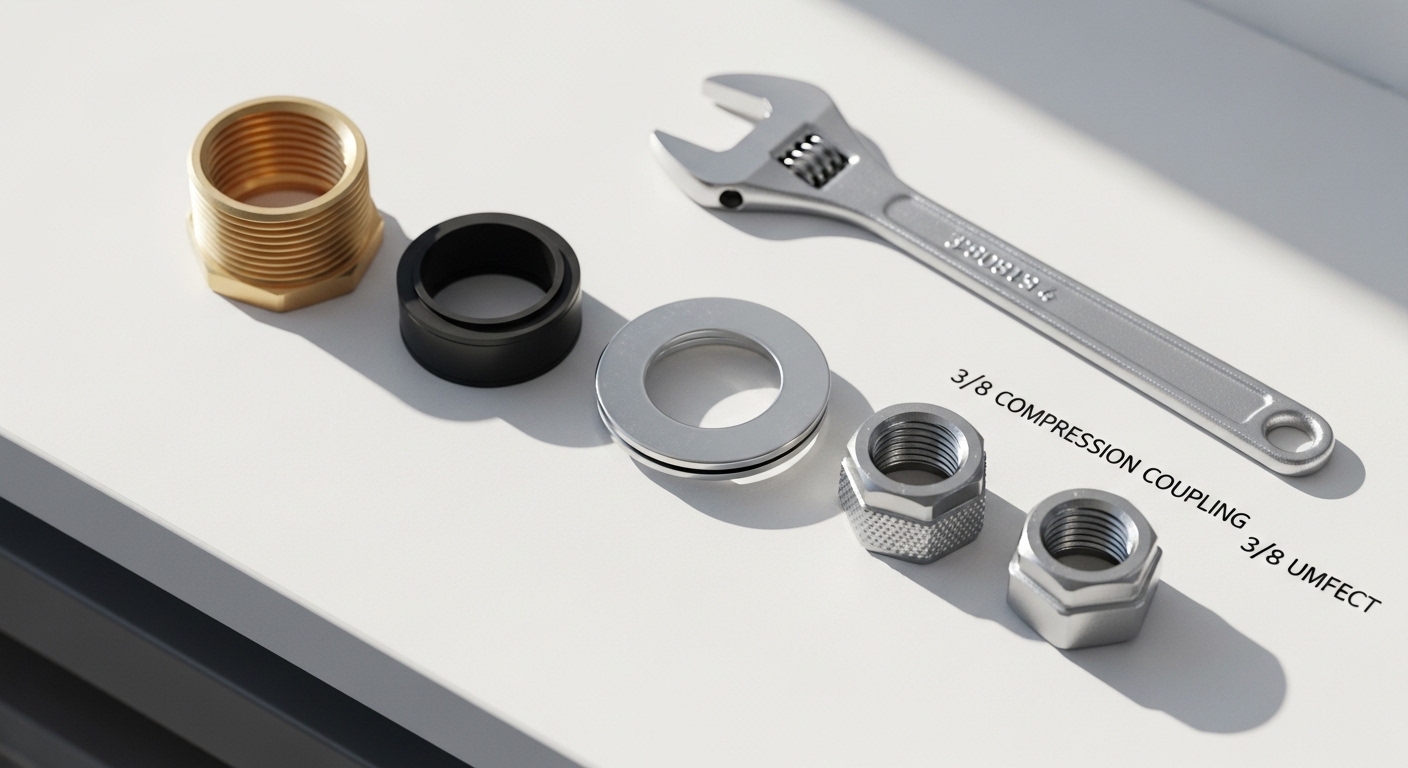
If you’re standing in the plumbing aisle or scrolling a parts page wondering which bathroom faucet nuts actually fit your sink, you’re not alone — this is one of the most-searched faucet parts questions, and the answer depends on three things: the faucet hole configuration (single-hole, centerset, or widespread), the supply line connection type (compression, IPS, or quick-connect), and the material the nut is made from. Get those three right and installation takes 30 minutes; get them wrong and you’ll be making a second trip to the hardware store before the silicone dries.
At VIGA, we’ve been manufacturing bathroom faucets and their hardware for over 20 years out of Kaiping, China — the heart of the global faucet industry — and we sell to wholesalers, contractors, and homeowners in more than 70 countries. This guide is the plain-English version of what our engineering team tells our B2B buyers every week. No fluff, no upsell, just the parts you actually need and why.
What exactly are bathroom faucet nuts and what do they do?
Bathroom faucet nuts are the threaded fasteners that do two jobs: they clamp the faucet body to the sink or countertop from underneath, and they connect the faucet’s tailpieces (or supply tubes) to your shut-off valves so water can actually flow. There are typically 4 to 6 nuts involved in a standard bathroom faucet install, and they are not interchangeable.
Here’s the short version of what each one does:
- Mounting nut (basin nut / lock nut): The big nut that threads up onto the faucet’s tailpiece from underneath the sink and pulls the faucet down tight against the deck. Usually 1/2″ or 13/16″ inner thread.
- Coupling nut (compression nut): The hex nut at the end of your braided supply line that screws onto the faucet shank — almost always 3/8″ or 1/2″ female thread.
- Supply line nut (angle stop nut): The nut on the other end of the supply line, attaching to the shut-off valve under the sink. Typically 3/8″ compression or 1/2″ FIP.
- Pop-up drain nut: If you’re installing a pop-up assembly, the slip-joint nut that holds the drain body to the tailpiece.
- Aerator nut: The small knurled ring at the spout tip that holds the aerator screen — usually 15/16″ male or 55/64″ female.
If a nut leaks, the faucet wobbles, or you can’t get the faucet to sit flush against the sink, 90% of the time the problem is one of these five pieces — either the wrong size, the wrong material, or simply over- or under-tightened.
What size are bathroom faucet nuts? (The numbers people actually search)
For modern North American bathroom faucets, the mounting nut is almost always 1/2-inch NPS (14 threads per inch) and the supply line coupling nut is 3/8-inch compression. Older faucets and European fittings can vary — but if you’re buying a faucet made in the last 15 years for the US, Canada, or Australia market, those two sizes cover roughly 90% of installations.
Here’s a quick reference table for the sizes you’ll actually run into:
| Nut Type | Most Common Size | Where It Goes | Wrench You Need |
|---|---|---|---|
| Mounting nut (single-hole) | 1/2″ NPS or 1-1/4″ hex | Underside of sink, on faucet shank | Basin wrench or 1-1/4″ socket |
| Mounting nut (centerset 4″) | 1/2″ NPS, two pieces | Both side tailpieces | Basin wrench |
| Mounting nut (widespread 8″) | 1/2″ NPS, three pieces | Each handle and the spout | Basin wrench |
| Supply coupling nut | 3/8″ compression | Top of supply line to faucet | 9/16″ or 5/8″ open-end wrench |
| Angle stop nut | 3/8″ compression or 1/2″ FIP | Bottom of supply line to valve | 9/16″ open-end wrench |
| Aerator nut | 15/16″ male / 55/64″ female | Spout tip | Hand-tight or aerator key |
The most common mistake we see in customer service tickets isn’t size — it’s confusing compression with IPS (iron pipe straight). Compression nuts use a small brass ferrule that crushes onto the supply tube to seal; IPS nuts have a flat gasket and rely on thread engagement. They look almost identical at a glance, but they will not seal against each other. If you’re not sure, the rule of thumb: braided stainless supply lines from any big-box store in the US are 3/8″ compression at both ends. Done.
Brass vs. plastic bathroom faucet nuts: which should I actually buy?
Buy brass. Always buy brass for any nut that holds the faucet to the sink, and accept the plastic mounting nut only if it’s a name-brand quick-install system with a known engineering track record. Plastic mounting nuts crack under torque, deform under heat from a vanity that gets afternoon sun, and strip the first time you try to remove the faucet 8 years later.
Here’s the honest comparison:
| Material | Lifespan | Cost | Best For | Avoid When |
|---|---|---|---|---|
| Forged brass | 25+ years | $$ | Mounting nuts, coupling nuts, every load-bearing connection | Never — it’s the gold standard |
| Chrome-plated brass | 25+ years | $$ | Exposed nuts (P-traps, supply lines) where looks matter | Same as brass |
| Stainless steel | 30+ years | $$$ | Marine or coastal installations, hard water regions | Galvanic mismatch with copper supply lines (rare but possible) |
| Zinc alloy / Zamak | 5-10 years | $ | Honestly, almost nothing in a wet environment | Hard water, hot water, anywhere it matters |
| Plastic (PEX / nylon) | 5-15 years | $ | Quick-install systems by major brands only | Older homes, high water pressure (>60 psi), DIY tightening |
Why we’re so insistent on brass: it’s the same reason every serious plumbing component is made of brass. It’s corrosion-resistant, dimensionally stable across temperature swings, and lead-free brass (the CEC AB 1953 / NSF 61 standard since 2014) is genuinely safe for potable water. If you want the deeper version of that argument, we wrote about it here: why crucial plumbing components are made of brass. The short version: a brass nut on a brass shank, properly tightened to roughly 8-10 ft-lbs, will outlast the faucet itself.
How do I replace a leaking bathroom faucet nut without removing the whole faucet?
In most cases, yes — you can replace a leaking nut without pulling the faucet, as long as the leak is on a coupling nut, supply line nut, or aerator. If the mounting nut itself is the problem, the faucet has to come up. Here’s the step-by-step for the common case (a leak at the supply-line-to-faucet connection):
- Shut off the water at the angle stop under the sink. Turn the faucet handle on to confirm it’s really off and to drain residual pressure.
- Place a towel and small bowl under the connection. There’s always a few ounces of trapped water.
- Loosen the coupling nut with a 9/16″ or 5/8″ open-end wrench. Counterclockwise. Hold the faucet shank with a second wrench so you don’t twist the faucet body.
- Inspect the old nut and ferrule. If the brass ferrule is deformed or the rubber washer inside the nut is cracked, replace both.
- Hand-tighten the new nut first, then a quarter-turn past hand-tight with the wrench. That’s it. Over-tightening is what causes 80% of “new” leaks.
- Turn the water back on slowly and check for drips with a dry paper towel held under the joint for 60 seconds.
If it still drips, don’t keep cranking the nut tighter — that just chews up the ferrule. Take the nut off, wrap two turns of PTFE thread tape clockwise around the male threads, and reinstall. For a complete walkthrough of the top causes of bathroom faucet leaks (most of them nut-related), our team has a separate guide on the top 5 bathroom faucet problems and solutions that goes into the diagnostic side.
What size mounting nut do widespread vs. centerset vs. single-hole faucets use?
This is the question that trips up the most buyers. The mounting nut size doesn’t actually change much between faucet configurations — what changes is how many nuts you need and where they sit. Here’s the breakdown:
Single-hole faucets
One mounting nut, almost always 1/2″ NPS on a single threaded shank. Easiest install of the three. The nut is typically a tall hex nut you tighten with a basin wrench from below. Some modern designs (like our pull-down kitchen-style bathroom faucets) use a quick-mount plate with a single 1-1/4″ hex nut instead.
4-inch centerset faucets
Two mounting nuts, one on each outer tailpiece, both 1/2″ NPS. The faucet body bridges the three holes (two for the handles, one for the spout) on 4-inch centers, so the deck plate hides the middle hole. If you want the deep dive on why centerset is still the most-installed bathroom faucet configuration in North America, we wrote about it here: why we choose 4-inch centerset faucets.
8-inch widespread faucets
Three separate mounting nuts — one for each handle (hot and cold) and one for the spout body. All three are typically 1/2″ NPS, but they sit on three independent valve bodies connected by flexible hoses or rigid copper risers underneath the sink. More install work, but the upside is you can position each piece anywhere between 6 and 16 inches apart. For the trade-offs vs. centerset, see our centerset vs. widespread comparison.
Vessel faucets
One mounting nut, but the shank is much longer (typically 4-6 inches) because the faucet has to clear the height of a vessel sink bowl. Same 1/2″ NPS thread in most cases. If you’re spec’ing one of these, our vessel sink faucet combo guide covers the height math.
How tight is “tight enough”? The torque question nobody answers
Hand-tight plus a quarter-turn with a wrench. That’s the answer for almost every nut on a bathroom faucet, and it’s the answer most plumbers will give you if you ask. Translated to torque numbers, you’re looking at roughly 8-12 ft-lbs for mounting nuts and 4-6 ft-lbs for coupling nuts on supply lines.
The reason this matters: bathroom faucet nuts are sealed by either a rubber washer (mounting nuts) or a brass ferrule that crushes (compression nuts). Both seal correctly at low torque. Going harder doesn’t make the seal better — it deforms the washer past its sealing range or splits the ferrule, both of which cause leaks. We’ve torn down warranty returns where the customer cracked a brass nut just from over-tightening with a 14″ pipe wrench. Brass is strong, but it has a limit.
A few practical rules our QC team lives by:
- Never use a pipe wrench on a chrome-plated nut you’ll see again — it chews up the finish.
- If a nut won’t stop weeping at hand-tight + quarter turn, the problem is the gasket or the threads, not the tightness.
- PTFE tape (white plumber’s tape) goes on male threads only, and only on NPT/NPS threads — never on compression fittings, which seal at the ferrule, not the threads.
- Plastic mounting nuts get hand-tight only. No wrench. Ever.
What about hard water? Will my faucet nuts corrode?
Brass nuts will not corrode in hard water, but they can develop mineral buildup on the threads that makes future removal difficult. If you’re in a high-mineral region (most of the US Southwest, parts of the Midwest, much of Texas and Florida), the nuts themselves are fine — the problem is what builds up around them.
Two things help: (1) a quality faucet body with a ceramic disc cartridge (which reduces internal scale that migrates outward), and (2) considering an in-line filter if your water hardness exceeds about 180 mg/L (10.5 grains per gallon). We cover the filter side in our faucet water filter head guide if that’s relevant to your situation.
For coastal installations, this is where stainless steel nuts have a real edge over chrome-plated brass — salt air doesn’t pit them. But for 95% of installs, lead-free forged brass is the right answer.
Where do I actually buy quality bathroom faucet nuts (and what to avoid)?
You have three options, in roughly descending order of reliability: (1) buy the OEM replacement nut from the faucet manufacturer, (2) buy a name-brand universal repair kit from a plumbing supply house, or (3) buy a generic nut from a big-box store. For mounting nuts, always go OEM if you can — the thread pitch can be subtly non-standard. For supply line coupling nuts and aerator nuts, generic is usually fine because those threads are highly standardized.
Red flags to avoid:
- Unmarked yellow metal nuts. Real brass nuts from reputable suppliers are stamped with the manufacturer mark or at least “CW617N” / “C36000” (the alloy spec). Unmarked yellow metal is often zinc with a brass-tone coating.
- Mounting nuts sold without a rubber washer. The washer is what actually seals the faucet to the sink. If it’s not in the bag, the seller is cutting corners.
- Plastic nuts marketed as “lifetime.” They aren’t.
- No UPC or NSF marking on the package. For US installations, your local plumbing code likely requires components to meet NSF 61 for potable water contact. We cover what those certifications actually mean in our kitchen faucet UPC certification guide.
VIGA produces all our faucet nuts in lead-free CW617N brass forged in our Kaiping facility, and every faucet ships with the correct mounting hardware in the box — including replacement washers. For wholesale buyers, we keep service kits in stock for every model going back at least 10 years, which matters when you’re a contractor finishing a punch list and need a part on Monday.
FAQ
Are all bathroom faucet mounting nuts the same size?
No, but they’re closer than you might think. About 90% of modern bathroom faucet mounting nuts in the US/Canada market are 1/2″ NPS thread, but the outer hex size and overall height vary by manufacturer. The thread is what has to match — the outer dimensions just affect which wrench you grab.
Can I use a kitchen faucet nut on a bathroom faucet?
Sometimes, but don’t count on it. Kitchen faucet shanks are often 5/8″ or larger because the spouts are heavier, while bathroom faucet shanks are typically 1/2″. The threads can also differ. Check the manufacturer spec sheet before substituting — and if you’re shopping for a kitchen install, our pull-down kitchen faucet guide covers the different shank sizes used there.
Why does my new faucet nut keep leaking even after I tighten it?
Three usual suspects: (1) you’re over-tightening and crushing the gasket past its sealing point, (2) the wrong type of nut for the connection (compression vs. IPS), or (3) the threads have debris or old PTFE tape clogging them. Take it apart, clean both sides, replace the washer or ferrule, and reinstall hand-tight plus a quarter turn.
Do I need plumber’s putty or silicone under the mounting nut?
No — the mounting nut seals against the underside of the sink with its rubber or fiber washer. Plumber’s putty or silicone goes on top, between the faucet base and the top of the sink, to seal that joint against splash water. Two different seals, two different jobs.
How long do brass bathroom faucet nuts last?
In residential conditions with municipal water and a properly installed faucet, lead-free brass mounting and coupling nuts will outlast the faucet — typically 25+ years. The faucet’s cartridge usually fails before any nut does. That’s why our standard B2B warranty on faucet bodies and brass hardware runs 5 years (and longer for project-spec orders), backed by NSF 61 and CSA certifications.
What’s the difference between a compression nut and a flare nut?
Compression nuts use a separate brass ring (the ferrule) that crushes onto a straight piece of tubing — common in residential supply lines. Flare nuts seal against a cone-shaped flare formed at the end of the tubing itself — common in gas lines and some commercial water applications. They look similar but are not interchangeable, and you should not mix them.
Are plastic faucet nuts ever acceptable?
For the supply-line-to-faucet connection on a quick-install system from a major brand (think Moen, Delta, Kohler’s M-style connectors), the engineered plastic nuts are fine because they’re designed and tested as a system. For mounting nuts that hold the faucet to the sink, we’d skip plastic every time — brass is only a few dollars more and lasts indefinitely.
What’s the right tool to remove a stuck faucet nut?
A basin wrench is the right tool — its long handle and pivoting jaws reach up into the cabinet to grab the nut. For really stuck nuts, spray PB Blaster or white vinegar on the threads, wait 15 minutes, and try again. Heat from a hair dryer can also help break mineral seizure. If it’s truly seized, a small nut splitter or rotary tool with a cut-off wheel is the last resort.
The VIGA take, in one paragraph
Bathroom faucet nuts are one of those parts where spending $3 more upfront saves you $300 in a leak two years later. Buy lead-free brass, match the thread (1/2″ NPS for mounting, 3/8″ compression for supplies in 90% of US installs), use the gasket that came with the nut, and stop at hand-tight plus a quarter turn. That’s the whole game. If you’re sourcing for a project — a hotel, a multifamily build, a custom home — talk to a manufacturer that ships the right nuts with the right faucets the first time. We’ve spent two decades building that system, and it’s why our customers come back for the next project.
About the author: This guide was written by VIGA’s technical content team in collaboration with our in-house faucet engineering group at our Kaiping, Guangdong manufacturing facility. VIGA has been designing and producing bathroom and kitchen faucets since 2003, supplying OEM and ODM clients across 70+ countries. All VIGA faucet hardware is produced from lead-free CW617N brass and tested to NSF/ANSI 61, UPC, CSA, and CE standards before shipping. For project quotes or technical questions, visit www.viga.cc.
WeChat
Scan the QR Code with WeChat