 iVIGA Faucet Manufacturer & Factory

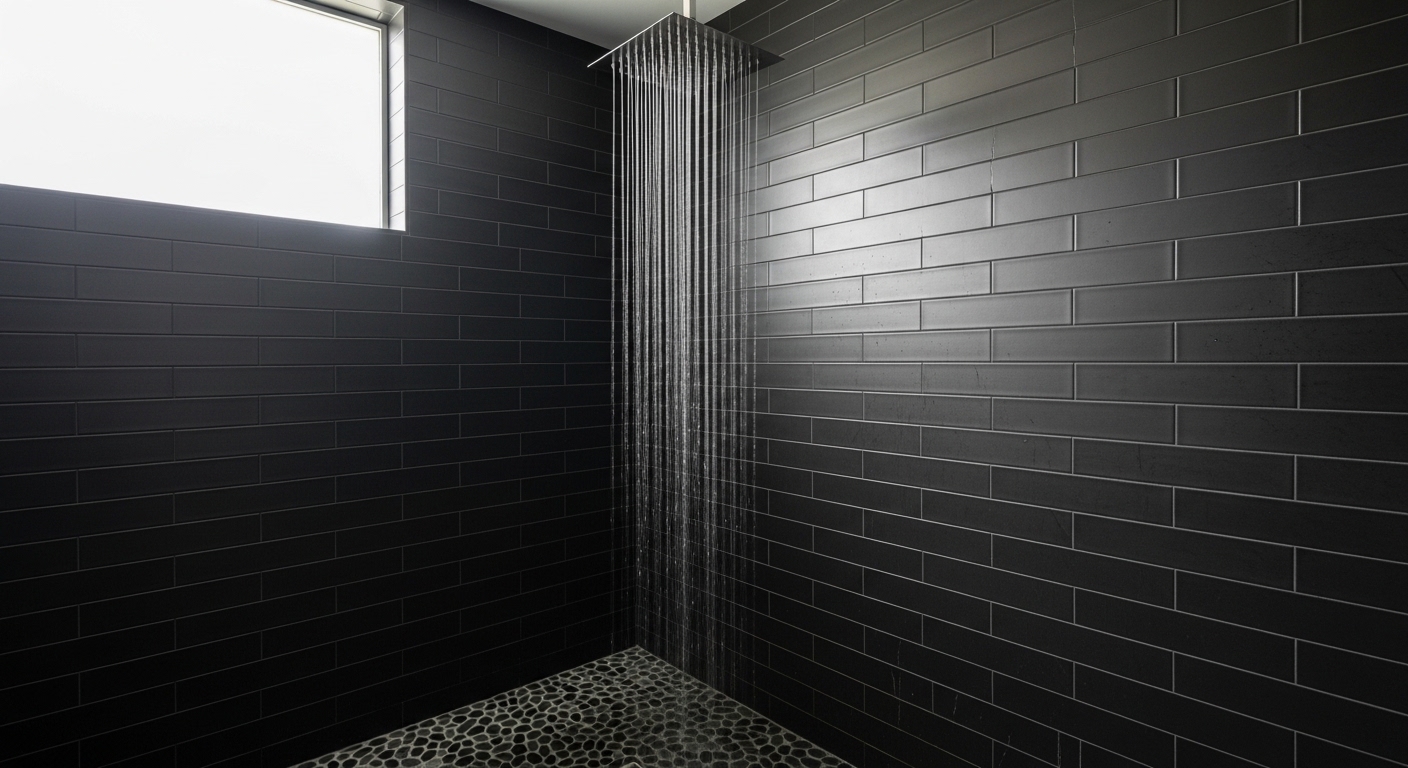
A rainfall shower head square is a flat, wide, ceiling-or-wall-mounted shower head with a square face that pours water straight down over your whole head and shoulders — instead of blasting it at you like a traditional cone-shaped head. If you’ve ever stood under a hotel spa shower and wished your bathroom felt like that, this is the fixture that gets you there. Below, I’ll answer the real questions people actually ask before buying one: what size to get, whether the water pressure will disappoint you, how it compares to a round rainfall head, and what actually matters in the spec sheet versus what’s just marketing.
What exactly is a square rainfall shower head, and how is it different from a regular one?
A square rainfall shower head is a large, flat panel — usually 8 to 12 inches per side — with dozens or hundreds of small nozzles across the underside that release water in a gentle, evenly spread “rain” pattern. The difference from a standard shower head comes down to three things: orientation, spread, and feel. A regular head sprays a concentrated, angled jet; a rainfall head drops water vertically over a much larger area at lower velocity.
That vertical drop is the whole point. Because the water falls with gravity instead of being aimed at you under high pressure, it feels softer and more enveloping — closer to standing in warm rain than being power-washed. The square shape, specifically, gives you a clean architectural line that pairs well with rectangular tile, frameless glass, and minimalist vanities. Round rainfall heads feel a little more classic and organic; square heads read as contemporary and deliberate.
- Coverage: A 10-inch square face covers your head, both shoulders, and upper back at once — no shuffling to stay in the stream.
- Feel: Softer, wider, lower-velocity droplets versus a tight, drilling jet.
- Look: Square lines suit modern, geometric bathrooms; the flat profile can mount flush to the ceiling or angle off the wall on an arm.
- Mounting: Available as ceiling-mount (truly overhead rain) or wall-arm mount (angled rain) — pick based on your plumbing.
What size square rainfall shower head should I actually buy?
For most home bathrooms, a 10-inch square rainfall head is the sweet spot. It’s big enough to feel genuinely luxurious and drench your shoulders, but not so wide that it overwhelms a standard-sized shower stall or starves for pressure. Go to 12 inches only if you have strong water pressure (45+ PSI) and a larger walk-in shower; drop to 8 inches for small showers, apartments, or weaker supply lines.
Here’s the trade-off nobody tells you at the store: bigger is not automatically better. A larger face spreads the same volume of water over more nozzles, so each individual droplet leaves with less force. In a home with modest pressure, a 12-inch head can feel weak and drizzly, while a 10-inch head over the same plumbing feels full and satisfying. Match the size to your water pressure, not just to your Pinterest board.
| Head Size | Best For | Pressure Needed | Feel |
|---|---|---|---|
| 8″ square | Small showers, apartments, low-pressure homes | Works at 30+ PSI | Focused, still full |
| 10″ square | Most home bathrooms (the sweet spot) | 40+ PSI ideal | Wide, drenching, balanced |
| 12″ square | Large walk-in showers, strong pressure | 45+ PSI recommended | Full spa coverage, softer droplets |
| 16″+ square | Luxury / custom spa builds | 50+ PSI or a booster pump | Immersive, but pressure-hungry |
Will a square rainfall shower head kill my water pressure?
Not if you buy the right one and set your expectations correctly. A rainfall head will always feel gentler than a jet-style head — that’s by design — but a well-made square rainfall head with a properly matched flow rate delivers a strong, satisfying drench, not a sad trickle. The mistakes that cause weak-pressure complaints are almost always an oversized head, a too-restrictive flow limiter, or hard-water clogging — not the rainfall design itself.
Three things determine how it’ll feel in your shower:
- Your home’s water pressure (PSI). Below ~40 PSI, favor a smaller 8–10 inch head. You can test pressure cheaply with a $10 gauge that screws onto a hose bib.
- The flow rate (GPM). Federal max is 2.5 GPM; WaterSense models run 1.8–2.0 GPM. A quality air-injection rain head at 1.8 GPM can feel as full as a cheap 2.5 GPM one because it whips air into each droplet to add body.
- The nozzle design. Look for soft silicone/rubber nozzle tips. They resist mineral clogging, and you can wipe buildup off with your thumb — clogged nozzles are the #1 reason a rainfall head slowly turns weak over a year or two.
If you live somewhere with hard water, this matters even more. Mineral scale builds up inside and around the nozzles and chokes flow over time. Keeping the head clean is half the battle — our guide to the best hard water cleaner for a faucet with stubborn lime buildup works exactly the same on shower heads, and soaking the face in white vinegar every couple months keeps the spray even.
Square vs. round rainfall shower head — which one is better?
Neither is objectively better; it comes down to your bathroom’s style and your shower’s shape. Square rainfall heads suit modern, geometric bathrooms with rectangular tile, straight-edge vanities, and frameless glass. Round heads suit transitional, classic, or organic-feeling spaces. Functionally they perform almost identically at the same size and GPM — the water experience is nearly the same.
A few practical nudges:
- Square pairs cleanly with subway tile, large-format rectangular tile, and matte black or brushed finishes. Its corners give a crisp, intentional look.
- Round hides slight installation misalignment better — a square head that’s rotated even 3–4 degrees off-axis reads as “crooked” against square tile grout lines, so it demands a careful install.
- Coverage is marginally wider on a square face at the same nominal size, because the corners add area a circle of the same “diameter” doesn’t have.
If you’re redoing the whole shower and not just swapping the head, it’s worth planning the valve, head, and handheld together as a set. Our guide to the best shower faucet and head combo for a bathroom remodel walks through matching finishes and valves so nothing clashes. And if you want a wand you can grab for rinsing, pets, or cleaning the stall, pairing a rain head with a low-flow handheld shower head gives you the best of both without wrecking your water bill.
What should I look for in the spec sheet before I buy?
Buy on material, nozzle type, flow rate, and mounting — in that order. Everything else is styling. A cheap plastic-chromed head at $25 will feel identical to a $180 solid-brass head on day one and completely different two years later, when the plastic one has yellowed, clogged, and started dripping from a cracked joint. Here’s what each spec actually buys you.
| Spec | What to look for | Why it matters |
|---|---|---|
| Body material | Solid brass or 304 stainless steel | Won’t crack, corrode, or yellow; holds finish for years |
| Nozzles | Soft silicone / self-cleaning tips | Wipe off hard-water scale with a thumb; flow stays even |
| Flow rate | WaterSense 1.8–2.0 GPM (or 2.5 max) | Balances drench feel against water/heating cost |
| Finish | Brushed nickel, matte black, chrome | Matte hides water spots; match to your other fixtures |
| Mount | Ceiling or wall-arm, ½” NPT standard | Determines plumbing work and rain angle |
| Certification | cUPC / NSF / WaterSense | Verifies lead-safe materials and tested flow |
One finish tip: matte black and brushed finishes hide hard-water spotting far better than polished chrome, which shows every droplet. If your bathroom leans warm and bright rather than dark and modern, it’s worth reading how other finishes wear before you commit — the trade-offs in our polished nickel pros and cons breakdown apply to shower fixtures just as much as faucets.
How hard is it to install a square rainfall shower head myself?
A wall-arm square rainfall head is a genuinely easy 15-minute DIY swap — if your plumbing already has a shower arm coming out of the wall. A true ceiling-mount rainfall head is a bigger job that usually means opening the wall or ceiling to run new pipe, and that’s where you may want a plumber. For most people upgrading an existing shower, the wall-arm version is the realistic choice.
For the straightforward wall-arm swap:
- Unscrew the old shower head counterclockwise by hand (or with a cloth-wrapped wrench).
- Clean the old thread tape off the shower arm threads completely.
- Wrap the threads clockwise with 3–4 turns of fresh PTFE plumber’s tape.
- Hand-thread the new head or its extension arm on, then snug it a quarter-turn with a wrench — do not overtighten.
- Run the shower and check every joint for drips; add a half-turn if you see weeping.
If you want that straight-down overhead rain but don’t want to open the ceiling, buy an S-shaped or gooseneck extension arm — it lets a wall-fed head hang out and downward so water still falls vertically over you. It’s the single most common way people get the ceiling-rain look without re-plumbing.
Author’s note & why trust this guide
This guide was written by the vigacc product team at viga.cc, drawing on our work manufacturing and testing bathroom and kitchen fixtures for global markets. We pressure-test shower heads across a 20–60 PSI range, run salt-spray corrosion checks on finishes, and verify flow rates against WaterSense and cUPC standards before a product ships. Our square rainfall heads use solid brass and 304 stainless bodies with self-cleaning silicone nozzles, and they’re backed by a limited warranty against leaks and finish defects. We’ve been an exhibitor and manufacturer in the kitchen and bath space for years — you can see us at the 2026 China International KBC Kitchen & Bath Expo. The short version: we recommend what we’d install in our own bathrooms, and we tell you the trade-offs, not just the sales pitch.
FAQ
Do square rainfall shower heads have less pressure than normal shower heads?
They feel gentler because the water falls vertically at lower velocity instead of being jetted at you — but a properly sized head (8–10 inches for average home pressure) with air-injection nozzles delivers a strong, full drench. Weak pressure almost always comes from an oversized head, a clogged nozzle face, or home pressure below 40 PSI, not the rainfall design itself.
What size square rainfall shower head is best for a standard shower?
A 10-inch square head is the best all-around choice for a standard home shower — wide enough to cover your head and shoulders, small enough to keep good pressure. Use 8 inches for small stalls or low-pressure homes, and 12 inches only if you have a large walk-in and 45+ PSI.
Can I install a ceiling rainfall head without opening the ceiling?
Not a true ceiling-mount, but you can get the same overhead effect with an S-shaped or gooseneck extension arm that screws onto your existing wall shower pipe and positions the head directly above you. That gives you straight-down rain in a 15-minute DIY install with no drywall work.
How do I keep a rainfall shower head from clogging with hard water?
Buy a head with soft silicone nozzle tips and rub them clean with your thumb every couple of weeks — the buildup pops right off. Every one to two months, soak the face in warm white vinegar for an hour to dissolve internal scale, which keeps the spray even and the flow strong.
Is a square or round rainfall shower head better?
Performance is nearly identical at the same size and flow rate, so it’s a style choice. Square suits modern bathrooms with rectangular tile and straight lines; round suits classic or transitional spaces and is more forgiving if the install is slightly off-level.
What flow rate should a rainfall shower head have?
Look for a WaterSense-certified 1.8–2.0 GPM model for the best balance of drench feel and lower water and heating bills; 2.5 GPM is the U.S. federal maximum. A quality 1.8 GPM air-injection head feels as full as a cheaper 2.5 GPM one while using roughly 20–28% less water.
WeChat
Scan the QR Code with WeChat