 iVIGA Faucet Manufacturer & Factory

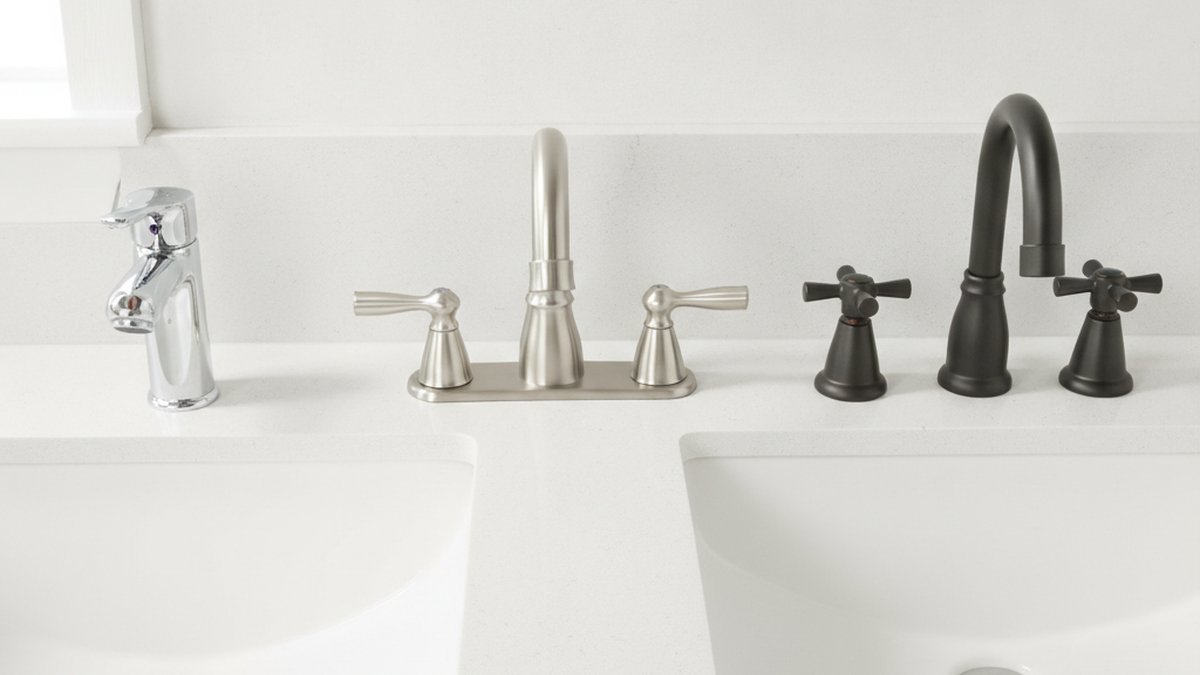
If you’ve been searching for a wide faucet sink combo, you’ve probably run into a wall of confusing terms — widespread, centerset, spread, reach, deck plate — and none of the product pages tell you plainly whether the faucet will actually fit your sink. This guide fixes that. We’ll cover exactly what “wide” means in faucet-speak, how to measure so you buy the right one the first time, which configurations look best on large basins, and what to spend. By the end you’ll be able to order with confidence instead of returning a faucet that leaves ugly gaps or won’t reach the drain.
What does “wide faucet sink” actually mean?
“Wide faucet sink” is shorthand people use for two related things: a widespread faucet (a three-piece faucet where the spout and the two handles are separate and set 8 to 16 inches apart), and a wide sink or basin that needs a faucet with enough reach and height to serve the whole bowl. Most of the time both are true at once — you have a large or long sink and you want a faucet that spans it properly.
The key measurement is faucet spread: the distance between the centers of the two outermost mounting holes. In North America the three standard configurations are:
- Single-hole — one hole, spout and handle combined. Clean and modern, works on nearly any sink with a 1.25″–1.5″ hole.
- Centerset (4″) — three holes but only 4 inches apart, often mounted on a shared base plate. The “standard” narrow bathroom look.
- Widespread (8″) — three separate pieces, holes set 8 inches apart (adjustable roughly 6″–16″). This is the true “wide” faucet.
So when someone says wide faucet sink, they almost always mean an 8-inch widespread faucet on a full-size sink — or a single-hole faucet with a tall gooseneck spout on a wide vessel or trough basin. The wrong pairing (a 4-inch faucet on a sink drilled for 8 inches, for example) simply will not mount.
How do I know if my sink is drilled for a wide (widespread) faucet?
Flip your sink over or look at the back deck: count the holes and measure the distance between the centers of the two outer ones. If they’re about 8 inches apart, you need a widespread faucet; if they’re 4 inches apart, you need a centerset; one hole means single-hole. That measurement decides everything, so do it before you shop.
Here’s the exact process, which takes about two minutes with a tape measure:
- Locate the mounting holes on the sink deck (the flat area behind the basin) or on the countertop if it’s an undermount setup.
- Measure center-to-center between the two farthest-apart holes. Round to the nearest standard size: 4″ or 8″.
- Note the hole diameter — most faucets need 1-3/8″ (1.375″), and a wide basin often has thicker decks, so check your faucet’s included mounting shank length.
- Confirm the deck thickness. Widespread faucets typically fit decks up to about 2.5 inches thick; a thick stone or double-layer countertop may need extension kits.
If your sink has three holes at 8 inches but you love the look of a single-hole faucet, you can bridge the gap with a deck plate (also called an escutcheon) — a metal cover that spans the extra holes so a single-hole or centerset faucet mounts cleanly. This is the single most useful trick for making a modern faucet work on a wide, older sink.
Widespread vs single-hole vs bridge: which is best for a wide sink?
For a wide sink, an 8-inch widespread faucet gives the most balanced, high-end look, a single-hole gooseneck is the easiest to clean and install, and a bridge faucet delivers vintage character — so choose based on style and how much counter clearance you have, not just width. Here’s how they compare head to head.
| Configuration | Best for | Typical spread | Install difficulty | Price range (USD) |
|---|---|---|---|---|
| Widespread (8″) | Wide vanities, double-handle temperature control, classic + modern looks | 8″–16″ adjustable | Moderate (3 pieces, 2 water lines + spout) | $90–$400 |
| Single-hole gooseneck | Wide vessel/trough sinks, minimal cleaning, quick swaps | 1 hole | Easy (one body) | $60–$250 |
| Centerset (4″) | Standard-size wide-ish sinks, budget builds | 4″ | Easy (often one base) | $50–$180 |
| Bridge faucet | Farmhouse/vintage wide kitchen or bath sinks | 8″ (exposed connecting bridge) | Harder (exposed plumbing, precise spacing) | $150–$600 |
| Wall-mount | Very wide trough or vessel sinks with no deck | Rough-in dependent | Hard (in-wall valve) | $120–$500 |
The biggest real-world factor is spout reach and height, not just spread. A wide sink with a shallow bowl needs a taller spout so water lands in the center and doesn’t splash; a deep basin can take a lower profile. Aim for a spout that reaches roughly to the middle of the basin — for most wide bathroom sinks that’s 4.5″–6″ of reach, and for kitchen sinks 8″–10″. If you’re weighing tall versus low profiles, our guide on high arc vs low arc bathroom faucets breaks down exactly when each shape wins.
Which wide faucet sink combo works best for a vessel or wide vanity?
For a wide vessel sink, choose a tall single-hole vessel faucet (12″+ overall height) or a wall-mount, because the raised bowl needs extra clearance the spout can pour into; for a wide undermount or drop-in vanity, an 8-inch widespread is the classic winner. The mistake people make is putting a standard-height faucet behind a vessel bowl — the spout ends up too low and water splashes over the rim.
Vessel sinks sit on top of the counter, so you’re adding 4–6 inches of bowl height before the faucet even starts. That’s why vessel-specific faucets are noticeably taller. If you’re shopping a wide vessel setup specifically, we did a deep dive on one popular model in our Kraus Ramus vessel sink faucet review that shows exactly how height and reach play out on a real bowl.
A few pairings that consistently work on wide basins:
- Wide rectangular vanity (24″–36″): 8″ widespread, spout reach 5″, two-handle for precise temperature. Fills the space and looks intentional.
- Wide oval or round vessel: single-hole vessel faucet, 12″–14″ tall, or a wall-mount to keep the counter clean.
- Trough / double-station sink: two single-hole faucets spaced evenly, or one wide wall-mount per station.
- Farmhouse kitchen apron sink: tall pull-down single-hole, or a bridge faucet for a period look.
Finish matters more on a wide deck because there’s simply more metal on display. Matte black and brushed gold read beautifully against white or stone, but they do need a little care — if you go dark, skim our tips on matte black faucet care so it doesn’t spot or fade around a busy sink. And if you’re pairing metal with a white basin, our piece on the copper faucet and white sink combo covers how warm finishes look against bright ceramic.
How much should I spend on a wide faucet for my sink?
Plan on $90–$180 for a solid mid-range 8-inch widespread faucet that will last a decade, $200–$400 for a premium ceramic-disc, solid-brass model with a lifetime finish warranty, and $50–$90 only for light-use or rental installs. The single biggest driver of longevity isn’t the price tag — it’s the valve cartridge and the body material.
What you’re actually paying for as the price climbs:
- Body material: solid brass (best, corrosion-resistant, heavy) > zinc alloy (budget, lighter, shorter life) > stainless. On a wide faucet you feel the difference in heft immediately.
- Cartridge: ceramic-disc cartridges are the standard for drip-free, smooth operation and should be rated to 500,000+ cycles.
- Finish process: PVD (physical vapor deposition) coatings resist scratching and tarnish far better than cheap electroplating — this is what “lifetime finish warranty” usually protects.
- Flow rate: look for a WaterSense-labeled aerator around 1.2 GPM for bath, 1.8 GPM for kitchen, so a wide, high-arc spout doesn’t waste water.
A quick way to judge quality: pick the faucet up. A quality wide faucet feels dense because it’s real brass, and the handles turn with a smooth, weighted resistance rather than a loose wobble. Deals that feel suspiciously light are usually thin zinc that will pit within a couple of years in a humid bathroom.
Can I install a wide widespread faucet myself?
Yes — a widespread faucet is a very doable DIY job that takes about 45–90 minutes with a basin wrench, plumber’s tape, and an adjustable wrench, as long as your sink is already drilled for 8-inch spacing. The one thing that trips people up is that a widespread has three separate pieces connected under the deck, so you work a little more under the sink than with a single-hole model.
The basic sequence looks like this:
- Shut off the hot and cold supply valves under the sink and open the old faucet to release pressure.
- Disconnect the supply lines and remove the old faucet (a basin wrench makes the tight nuts far easier).
- Drop the new spout and both handle valves into their holes; secure each from below with the mounting nuts.
- Connect the two handle valves to the spout with the included T-connector or hoses — this is the step unique to widespreads.
- Wrap threads with plumber’s tape, attach the supply lines, turn the water back on slowly, and check every joint for drips.
Take the aerator off and run the water for 15–20 seconds before reinstalling it, to flush any debris from the new lines. If you’re swapping out an old unit first, our step-by-step on removing an old kitchen faucet the right way applies almost identically to bathroom deck-mount faucets and will save you a stripped connector or two.
Wide faucet sink mistakes to avoid
The most common and expensive mistake is buying a faucet whose spread doesn’t match the sink’s drilled holes — everything else is fixable, but a mismatch means a return. Beyond spacing, watch for these:
- Spout too short for a wide bowl: water hits the back wall instead of the drain, causing constant splashing.
- Spout too tall for a shallow basin: the higher the drop, the more it splashes out — height must match basin depth.
- Ignoring deck thickness: thick stone counters may need shank extensions the faucet doesn’t include.
- Forgetting the drain: many widespread faucets don’t include a pop-up drain assembly — check before you buy.
- Cheap zinc on a humid deck: a wide faucet has more exposed surface, so a poor finish shows wear faster and more visibly.
Author note & why trust vigacc
This guide was written by the product team at vigacc (viga.cc), a faucet and bathroom-fixture manufacturer that has produced widespread, single-hole, wall-mount, and bridge faucets for both retail and OEM clients for over 15 years. Our engineers pressure-test cartridges to 500,000 open/close cycles and salt-spray-test finishes so we can stand behind them. Every vigacc faucet is built from lead-free solid brass, fitted with ceramic-disc cartridges, and manufactured to meet cUPC and NSF/ANSI 61 standards for drinking-water safety, backed by a limited lifetime warranty on the finish and function. We recommend configurations based on what actually holds up in real bathrooms and kitchens, not just what’s easiest to sell.
FAQ
What is the difference between a widespread and a centerset faucet?
A widespread faucet has three separate pieces — a spout and two handles — spaced 8 inches or more apart, while a centerset combines them on a single base with handles only 4 inches apart. Widespread gives a more custom, spread-out look suited to wide sinks; centerset is the compact standard.
What size faucet do I need for a wide bathroom sink?
Match the faucet spread to your sink’s drilled holes first — usually an 8-inch widespread for wide vanities — then pick a spout with about 4.5″–6″ of reach so the water lands in the center of the basin. For a wide vessel bowl, choose a taller vessel faucet (12″+ overall) to clear the raised rim.
Can I put an 8-inch widespread faucet on a sink with 4-inch holes?
No — the holes won’t line up, so a true 8-inch widespread can’t mount on a 4-inch sink. You’d either need a centerset/single-hole faucet with a deck plate, or a sink drilled for 8-inch spacing. Always measure center-to-center between the outer holes before buying.
Do widespread faucets leak more because they have more connections?
Not if they’re installed correctly with plumber’s tape on the threaded joints and quality ceramic-disc cartridges inside. The extra under-deck connections just mean a bit more assembly; once tightened and tested, a good widespread is no more leak-prone than a single-hole faucet.
What finish is best for a wide faucet on a white sink?
Brushed nickel and chrome are the safest, most timeless choices on white; matte black and brushed gold add contrast and look high-end but show water spots more on a large surface, so they benefit from a quick daily wipe. Whichever you pick, choose a PVD-coated finish for the best scratch and tarnish resistance.
How do I stop my wide sink faucet from splashing?
Splashing usually means the spout height and reach don’t match the basin — the water is landing too close to the back wall or falling too far. Choose a spout that reaches the center of the bowl, add or clean the aerator to soften the stream, and for shallow wide basins pick a lower-profile spout rather than a very tall gooseneck.
WeChat
Scan the QR Code with WeChat