 iVIGA Faucet Manufacturer & Factory

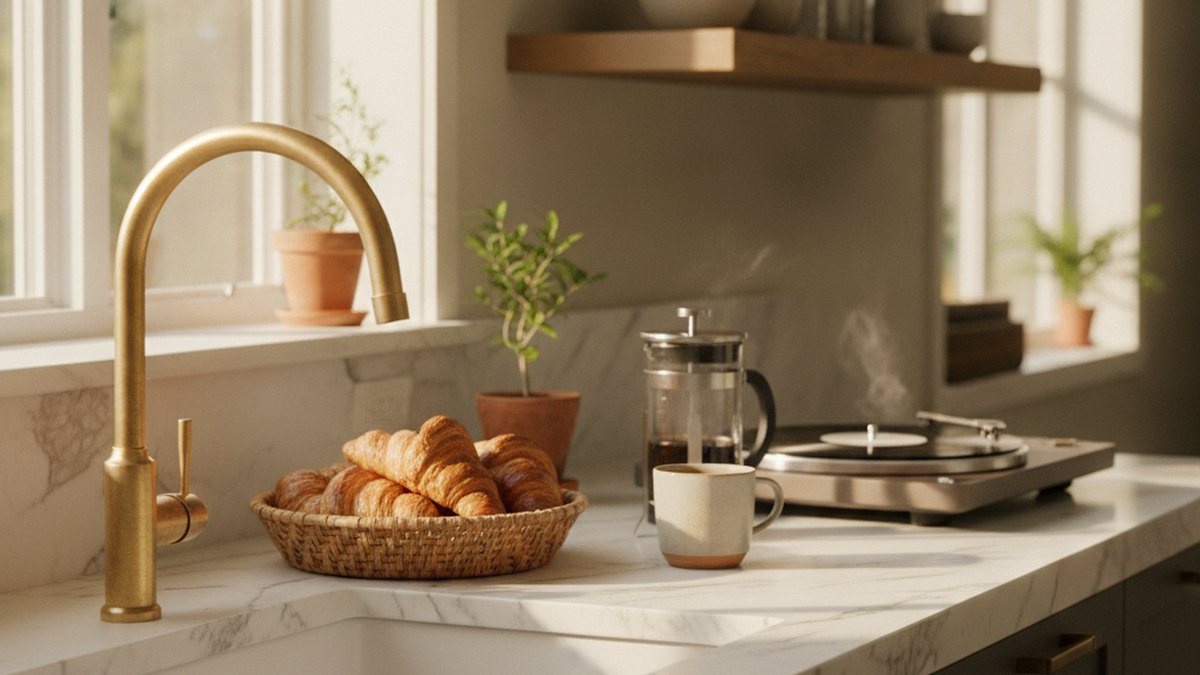
If you have ever hosted or dreamed of hosting a slow Sunday spread with a saxophone playing in the background, you have probably searched something like “brass tap jazz brunch” — trying to figure out whether that warm golden faucet you saw in a boutique hotel or a New Orleans café can actually work in your own kitchen or bar area. The short answer is that it absolutely can, and a brass tap is doing more heavy lifting for that mood than almost any other object in the room. Below, we break down exactly which brass finish delivers the vibe, what it costs, how to keep it looking good, and how to avoid the cheap fakes that peel within a year.
What exactly is a “brass tap jazz brunch” aesthetic, and why does brass nail it?
The “brass tap jazz brunch” look is a warm, vintage-luxe hospitality aesthetic — think 1920s speakeasy meets a leisurely Sunday brunch — and brass nails it because its golden tone reads as relaxed, moneyed, and lived-in rather than clinical. Chrome and stainless steel look modern and cold; matte black looks sharp and contemporary. Brass, by contrast, glows. Under warm 2700K lighting it turns honey-gold, and it’s the exact finish you subconsciously associate with bar rails, cocktail shakers, saxophones, and old hotel lobbies.
That emotional association is the whole point. When people build a jazz-brunch corner at home — a coffee-and-mimosa station, a wet bar, or just a beautiful kitchen sink — they are chasing a feeling of unhurried warmth. Brass is the material that carries that feeling in fixture form. A single brass tap over a stone counter, plus warm bulbs and a little greenery, gets you 80% of the way to the look for a fraction of a full remodel.
- Warm color temperature: brass echoes candlelight and golden-hour tones, unlike blue-cool chrome.
- Vintage credibility: real brass ages and patinas, giving instant “this has always been here” character.
- Material pairing: it flatters wood, marble, terrazzo, terracotta, and deep green — the classic brunch palette.
- Versatility: works on a kitchen sink, a bar prep sink, or a bathroom vanity without looking out of place.
Which brass finish should you pick for that warm brunch glow?
For the truest jazz-brunch warmth, choose unlacquered (living) brass if you want it to age and patina, or brushed/satin brass if you want the golden look to stay consistent with almost no maintenance. Skip bright polished brass unless you love a high-shine, more formal 1980s look — it shows every fingerprint and water spot.
Here’s the honest breakdown, because the word “brass” hides four very different experiences:
| Finish | Look | Ages/Patinas? | Upkeep | Best for the brunch vibe? |
|---|---|---|---|---|
| Unlacquered brass | Living, warm, develops darker spots over time | Yes, noticeably | Wipe dry; embrace the patina | ★★★★★ most authentic |
| Brushed/satin brass | Soft matte gold, hides spots | No (sealed) | Very low | ★★★★★ easiest win |
| Polished (lacquered) brass | Bright mirror gold | No | Shows fingerprints/spots | ★★★ formal, less relaxed |
| Champagne bronze / gold PVD | Cooler, pinkish-gold | No (PVD is very durable) | Very low | ★★★★ modern-warm hybrid |
If you want the look with zero fuss, brushed brass with a PVD (physical vapor deposition) coating is the sweet spot. PVD bonds the color at a molecular level, so it resists scratching, tarnishing, and the dreaded peeling that plagues cheap electroplated “gold” taps. If you love the romance of a fixture that changes and darkens with use — genuinely part of the vintage brunch charm — go unlacquered and let it live.
Is a brass tap actually good quality, or just pretty for photos?
A brass tap is one of the most durable choices you can make — as long as it’s solid brass, not a zinc-alloy body with a thin brass-colored coating. Solid brass resists corrosion better than most materials, handles hot water without warping, and is the industry standard for premium faucets precisely because it lasts decades. The “just for photos” reputation comes entirely from cheap fakes.
The difference between a tap that still looks great in ten years and one that peels in ten months is almost entirely about the base metal and the coating process. This is the same debate that plays out across the whole industry — we cover it in depth in our guide on brass vs stainless steel faucet manufacturing, which explains why quality brass castings command a premium and how to spot thin-walled bargain-bin bodies. If you want the brunch look to survive real daily use, the body material matters more than the finish name on the box.
Here’s what separates a serious brass tap from a decorative dud:
- Solid brass body (often marked “lead-free brass” or “H59/C46500”), not zinc alloy. A solid-brass tap feels noticeably heavier in the hand.
- Ceramic-disc cartridge rated for 500,000+ cycles, so it never drips and the handle turns smoothly for years.
- PVD or unlacquered finish — avoid cheap electroplating, which is what actually peels.
- Certified for potable water — look for cUPC / NSF 61 / WRAS marks (more on that below).
The cartridge point deserves its own mention because it’s the part that fails first on any faucet, regardless of finish. A gorgeous brass tap with a mushy ball valve inside will start dripping within a year or two. If you want to understand why the internals matter as much as the shell, our comparison of ceramic disc vs ball valve cartridges lays out exactly which mechanism to insist on.
How do I keep a brass tap from spotting, fading, or looking grimy at brunch?
Keep a brass tap looking good by matching your cleaning routine to the finish: wipe brushed and PVD brass with a soft damp cloth and dry it, and for unlacquered brass, either polish it occasionally or simply let it patina naturally. Never use abrasive pads, bleach, or acidic descalers on any brass — they strip the finish and cause exactly the blotchy look you’re trying to avoid.
Day to day, the enemies are hard-water mineral spots and fingerprints, not the brass itself. A quick dry-off after use handles 90% of it. For a fixture that’s constantly in your guests’ eye-line during a brunch, that thirty-second habit is what keeps it photo-ready. Care principles for warm and specialty finishes overlap a lot with darker finishes — our matte black faucet care guide covers the same “no abrasives, dry after use” logic that keeps any premium finish from spotting or dulling.
- Daily: wipe with a soft microfiber cloth, dry to prevent water spots.
- Weekly: mild dish soap and warm water, then dry. That’s it for PVD/brushed.
- Unlacquered brass: use a dedicated brass polish only if you want the bright look back; otherwise leave it to develop character.
- Never: steel wool, scouring powder, bleach, vinegar, or acidic lime-scale sprays.
Where should the brass tap go — kitchen sink, bar, or bathroom?
For a brunch-focused setup, the highest-impact spot is a prep or bar sink where guests can see it, followed by the main kitchen sink; a bathroom vanity is a lovely bonus but less central to the hosting experience. The tap you choose should match the sink’s job: a tall gooseneck for washing produce and filling carafes, a lower-profile spout for a tight bar corner.
Spout height is where a lot of people go wrong. A dramatic high-arc brass gooseneck looks incredible over a farmhouse sink and makes filling pitchers effortless, but it can splash in a shallow bar basin. If you’re deciding between a statement arc and a subtle silhouette, our breakdown of high arc vs low arc faucets applies directly — the same trade-offs between clearance, splash, and visual drama carry over to kitchen and bar taps.
A few placement scenarios worth thinking through:
- Coffee & mimosa station: a compact single-hole brass bar tap keeps the counter clear for glassware and pastries.
- Main kitchen sink: a pull-down brass spray tap gives you the look plus real functionality for cleanup after the crowd leaves.
- Powder room for guests: a slim brass vessel or vanity tap carries the warm theme into the one room every guest visits.
How much should a good brass tap cost, and are the cheap ones worth it?
Expect to pay roughly $120–$350 for a genuinely good solid-brass tap with a PVD finish and ceramic cartridge; anything under about $60 marketed as “brass” is almost always zinc alloy with a thin coating that will peel. The mid-range is where the value lives — you’re paying for the base metal and the coating process, not just a brand name.
Here’s a realistic price map so you know what you’re actually buying at each tier:
| Price range | What you typically get | Verdict for the brunch look |
|---|---|---|
| Under $60 | Zinc-alloy body, electroplated “gold,” basic cartridge | Looks fine for months, then peels — skip |
| $120–$200 | Solid or mostly-brass body, PVD finish, ceramic disc | Best value; lasts years, looks the part |
| $200–$350 | Heavy solid brass, unlacquered option, premium cartridge, warranty | Heirloom-grade, true vintage character |
| $350+ | Designer/European brand markup | Great if you want the label; not required for the look |
The cheap ones are worth it only if you’re staging a space temporarily or you truly don’t mind replacing the tap in a year. For anything you’ll live with and host around, the mid-range solid-brass tap is the smart buy. Brass quality and certification standards vary enormously by manufacturer — if you’re curious how respected makers achieve consistent finishes, our roundup of the best German faucet brands is a useful benchmark for what premium engineering looks like, even if you ultimately buy at a friendlier price point.
Vigacc’s take: getting the look without the fragility
At Vigacc, we manufacture solid-brass taps specifically because the warm, vintage finishes people love — the exact “brass tap jazz brunch” glow — only hold up long-term when the base metal and coating are done right. Every brass tap we produce uses a lead-free solid-brass body, a ceramic-disc cartridge cycle-tested to well over 500,000 open-close cycles, and PVD coating for the finishes meant to stay consistent (with unlacurered options for those who want a living patina).
Our fixtures are produced to international potable-water standards — cUPC and NSF 61 for the North American market, WRAS and CE where required — and every finish batch is inspected for adhesion and color consistency before it ships. That testing is the difference between a tap that looks incredible for a decade and one that photographs well on day one and disappoints by month ten. We back our brass taps with a multi-year warranty on the finish and cartridge because we’ve done the salt-spray and cycle testing to stand behind them.
Author note: This guide was written by the Vigacc product team, who design, spec, and factory-test brass and PVD-finished faucets year-round. Our recommendations come from hands-on cartridge cycle testing, finish-adhesion checks, and real installations — not marketing copy. Brass tap “brass tap jazz brunch” styling should be beautiful and durable, and we test to make sure ours are both.
FAQ
Does a brass tap tarnish over time?
It depends on the finish. Unlacquered brass will patina and darken over time — that’s intentional and part of the vintage charm. Brushed or PVD-coated brass is sealed and won’t tarnish; it keeps its golden tone with minimal care. Cheap electroplated fakes don’t tarnish so much as peel, which is a different and worse problem.
Is a brass tap safe for drinking water?
Yes, as long as it’s made from certified lead-free brass and carries potable-water certifications such as cUPC or NSF 61 (or WRAS in the UK). These standards limit lead content and confirm the tap is safe for kitchen and bar use. Always check for these marks before buying a brass tap you’ll drink from.
What’s the difference between brass and gold or champagne bronze taps?
Brass is the actual metal and gives a warm honey-gold tone; “gold” is usually a bright plated finish, and champagne bronze is a cooler, slightly pinkish-gold PVD finish. For the classic jazz-brunch warmth, true brass (unlacquered or brushed) reads warmest, while champagne bronze suits a more modern warm-neutral scheme.
Will a brass tap match my stainless steel appliances?
Yes — mixed metals are very much in style, and warm brass against cool stainless creates an intentional, curated look rather than a clash. Keep it deliberate by repeating the brass in at least one other element (cabinet pulls, a light fixture, or a bar accessory) so it reads as a choice, not an accident.
How hard is it to install a brass tap myself?
For a standard single-hole or three-hole sink, swapping to a brass tap is a straightforward DIY job — usually 30 to 60 minutes with a basin wrench, assuming your supply lines and mounting hole configuration match. If you’re replacing an older, corroded fixture, budget extra time for removal. The tap itself being brass doesn’t make installation any harder than any other faucet.
Does an unlacquered brass tap need special maintenance?
Not really — you just decide whether to fight the patina or embrace it. Wipe it dry after use to control water spots, and if you want the bright look back, use a dedicated brass polish occasionally. If you like the aged, darker character, do nothing and let it develop naturally. Never use abrasives or acidic cleaners on it.
WeChat
Scan the QR Code with WeChat