 iVIGA Faucet Manufacturer & Factory

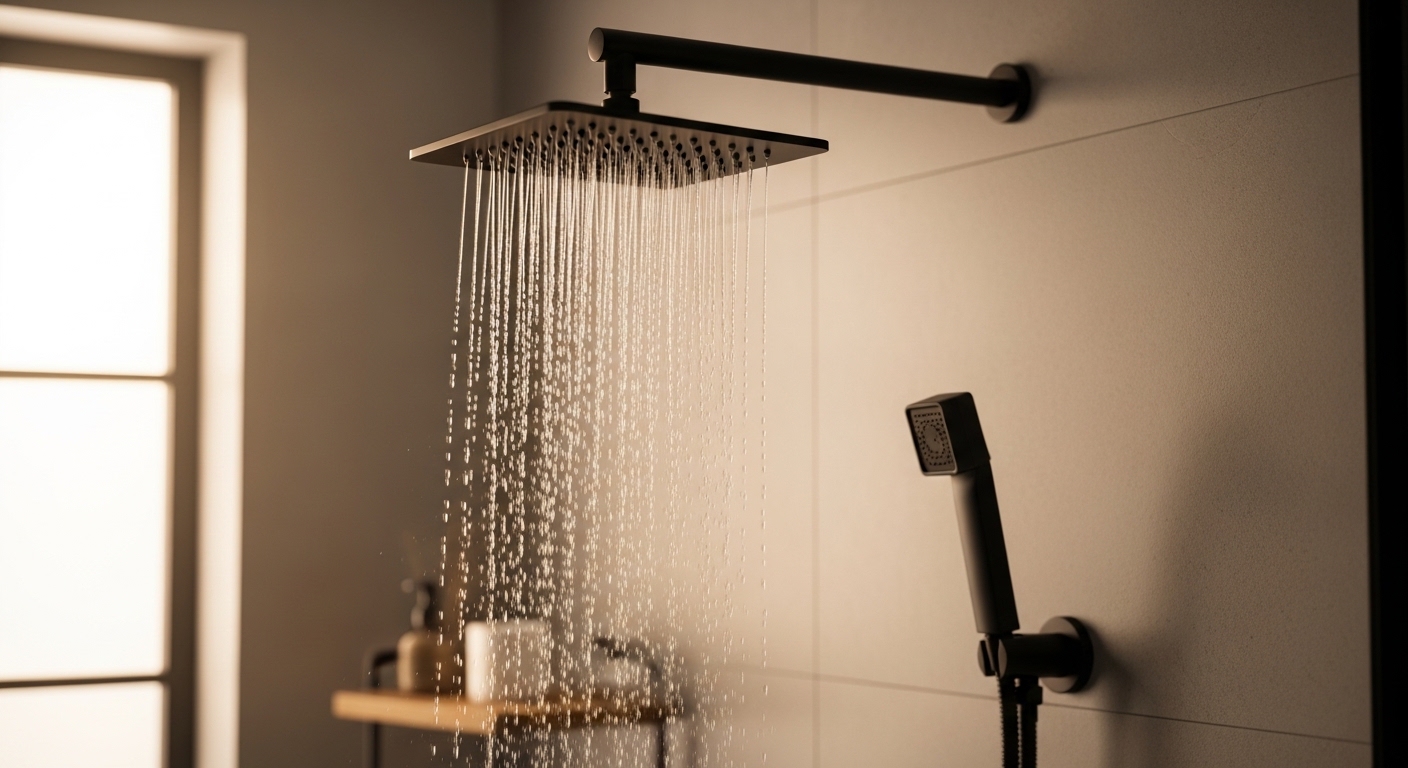
A rainfall shower head with handheld combo is a two-in-one shower system that pairs a large fixed overhead “rain” head with a separate hand-held sprayer on a flexible hose, both fed through a single diverter valve so you can run one, the other, or both at once. If you’ve ever loved the wide, gentle downpour of a rain head but hated that you can’t aim it to rinse the tub, wash your hair without soaking your whole body, or clean the walls — the combo solves exactly that. Below, we’ll walk through who it’s really for, what to look for, how the water pressure actually behaves, and whether it’s worth the money in 2026.
What exactly is a rainfall shower head with handheld combo, and how does it work?
It’s one shower valve feeding two spray heads through a diverter. Water comes up your shower arm, hits a small three-way diverter (usually a smooth cylinder with an arrow selector), and from there splits to the big overhead rain panel and to a flexible hose that holds the handheld wand. You choose the path with the diverter: rain only, handheld only, or both together.
The overhead is the “rainfall” part — a wide, flat face (typically 8 to 12 inches) with dozens or hundreds of tiny silicone nozzles that break the flow into a soft, vertical shower that feels like standing in warm rain. The handheld is the “combo” part — a smaller wand on a 5-to-6-foot hose that pops out of a cradle so you can point water wherever you need it. Most systems mount the rain head on an extended arm off the wall or ceiling, and the handheld on a slide bar or a fixed hook lower down.
The key spec people overlook is the diverter type. A two-way diverter switches between rain and handheld. A three-way diverter adds a “both at once” mode. If running both heads together matters to you, confirm the listing says three-way — plenty of budget combos only do one head at a time to keep the pressure up.
Is a rainfall and handheld combo better than a single fixed shower head?
For most households, yes — the combo is more useful day to day, as long as your water pressure is at least average (around 45–60 PSI). A single fixed head does one thing. The combo covers the soak and every job a fixed head can’t: rinsing conditioner out of long hair, spraying down the tub, bathing a toddler or a dog, and hosing off shower walls so soap scum never gets a foothold.
The honest trade-off is pressure. Water flow is shared. If your home has weak pressure, splitting it between a huge rain face and a handheld can leave the overhead feeling like a light drizzle when both run at once. That’s why smart shoppers with low pressure pick a smaller rain head (8–9 inches instead of 12), choose a three-way diverter but mostly run one head at a time, and avoid heavily “flow-restricted” models below 1.8 GPM.
- You’ll love the combo if: you have decent pressure, share the shower with kids or pets, clean your own tub, or just want that spa soak with a practical backup sprayer.
- You might skip it if: your water pressure is genuinely low and you only care about a strong, pinpoint massage spray — a single high-pressure fixed head may satisfy you more.
- Great middle ground: a smaller 8-inch rain head paired with a handheld, which keeps each spray strong.
If you’re weighing a full shower system rather than just a head swap, our guide to the best shower faucet and head combo for a bathroom remodel breaks down valve trim and rough-in choices so the plumbing behind the wall matches the fixtures you hang on it.
How do I choose between a square and a round rainfall head for the combo?
It’s mostly about the look — square reads modern and architectural, round reads soft and classic — but square heads do sit a little differently overhead. Square and rectangular panels give you a crisp, contemporary edge that suits frameless glass and minimalist tile, while round heads feel timeless and pair naturally with traditional or transitional bathrooms.
Functionally they spray almost identically; the nozzle count and face width matter far more than the shape. That said, a square head’s corners project the outer nozzles slightly wider, which some people love for a fuller “canopy” feel. If you’re leaning square, we go deep on sizing, ceiling vs. wall mounting, and finishes in our dedicated breakdown of whether a rainfall shower head square is the right upgrade for your bathroom.
Rainfall + handheld combo vs. other shower head options
| Option | Best for | Typical price | Pressure feel | Cleaning & versatility |
|---|---|---|---|---|
| Rainfall + handheld combo | Families, spa lovers who still want a sprayer | $70–$180 | Soft overhead, adjustable wand | Excellent — wand reaches everything |
| Rainfall head only (fixed) | Pure spa soak, minimalist look | $40–$140 | Soft, enveloping | Poor — can’t aim it |
| Handheld only | Small tubs, accessibility, pet washing | $25–$90 | Adjustable, targeted | Great, but no overhead soak |
| Standard fixed head | Budget, high-pressure lovers | $15–$60 | Strong, pinpoint | Limited |
| Dual rain + handheld system | Full remodels, luxury builds | $150–$400+ | Depends on plumbing | Best — every mode |
What water pressure and flow rate do I actually need for this to feel good?
Aim for at least 45 PSI of household water pressure and a shower head rated around 1.8–2.5 GPM for the rainfall to feel like an even downpour instead of a dribble. Rain heads spread water over a large area, so they rely on adequate pressure to push flow through every nozzle at once. If both heads run together on weak plumbing, that pressure gets divided and the rain face is the first to suffer.
Here’s how to think about it before you buy:
- Test your pressure. A cheap screw-on gauge at an outdoor spigot tells you your PSI. Below 40 PSI, favor a smaller rain head and run one mode at a time.
- Check the GPM rating. Federal max is 2.5 GPM; many “eco” heads restrict to 1.8. Lower GPM saves water but softens a rain head noticeably — a fair trade if your pressure is strong, a mistake if it’s weak.
- Mind the diverter mode. Running “both heads” halves flow to each. Low-pressure homes should treat “both” as an occasional luxury, not the default.
- Remove the flow restrictor only if legal and safe. Some homeowners pop the restrictor washer to boost a starved rain head; know your local codes and that it raises water use.
One more real-world tip: hard water is the quiet killer of rain heads. Those hundreds of tiny nozzles clog with lime scale, and a clogged nozzle sprays sideways or not at all. Buy a head with flexible silicone nozzles you can rub clean with a thumb, and keep a descaler on hand — our guide to the best hard water cleaner for stubborn lime buildup works on shower heads too.
Can I install a rainfall shower head with handheld combo myself?
In most cases, yes — if you’re only replacing the shower head and handheld (not moving the valve inside the wall), it’s a 20-to-40-minute job with no plumber and no wall demolition. The combo threads onto your existing standard ½-inch shower arm, the same connection your old head used. You’re swapping fixtures, not re-plumbing.
The basic process looks like this:
- Unscrew your old shower head from the arm (turn counterclockwise; use a cloth-wrapped wrench so you don’t scratch the finish).
- Clean the old plumber’s tape off the arm threads and wrap three or four clockwise turns of fresh PTFE tape.
- Thread on the diverter mount, then attach the rain head arm and the handheld hose per the instructions, hand-tightening plus a gentle quarter-turn with a wrench.
- Mount the handheld cradle or slide bar (some are adhesive, some screw into tile — pre-drill tile with a diamond bit).
- Run the water and check every joint for drips; add a wrap of tape to any weeping connection.
If your project is bigger — say you’re converting a tub setup or adding a shower where there wasn’t one — that’s a different scope. Our walkthrough on changing a bathroom faucet for a shower on a DIY weekend covers when you can and genuinely can’t do it yourself.
What finishes hold up best in a real bathroom?
Brushed nickel and matte black hide water spots and fingerprints best, while polished chrome shows every drop but is the easiest to wipe shiny. Your finish choice is more than looks — it decides how much daily cleaning you’ll actually do.
- Brushed nickel: warm, forgiving, hides hard-water spotting — the low-maintenance favorite.
- Matte black: bold and modern, disguises spots well, but can show soap film and needs a soft cloth (no abrasives).
- Polished chrome: classic and cheapest, reflects everything, wipes clean in seconds but reveals every water spot.
- Brushed gold / champagne bronze: luxe and trendy; make sure the rain head, handheld, and cradle all match the same finish family.
How much should I spend, and what separates a good combo from a cheap one?
Plan on $70–$180 for a quality rainfall shower head with handheld combo that will last — below about $50, you’re usually buying thin ABS plastic, a leak-prone diverter, and a spray face that clogs fast. Price mostly tracks three things: the diverter mechanism, the material of the mounting arm and body, and the nozzle quality.
What actually justifies spending a bit more:
- A solid brass or stainless diverter and arm instead of chromed plastic — brass threads don’t strip and won’t crack under a wrench.
- Anti-clog silicone nozzles you can wipe clean, critical in hard-water regions.
- A metal-reinforced hose on the handheld that resists kinking and pinhole leaks.
- A genuine three-way diverter if you want both heads running at once.
- A real warranty — quality brands back the finish and function for years, which tells you they expect it to last.
At vigacc, we design our rainfall-and-handheld systems around brass cores and third-party spray testing rather than chasing the lowest price, because a shower head is a fixture you touch every single day. Look for products that meet or exceed standards like ASME A112.18.1 / CSA B125.1 (the North American plumbing fixture standard) and cETLus certification — those marks mean the flow, pressure, and safety were independently verified, not just claimed on a box.
FAQ
Can you run the rain head and handheld at the same time?
Only if the system has a three-way diverter. Two-way diverters switch between the two heads; three-way models add a “both” position. Just remember that running both splits your water flow, so on lower-pressure plumbing each head will feel softer when they share the supply.
Will a rainfall shower head with handheld combo lower my water pressure?
The overhead rain head can feel gentler than a standard head because it spreads the same water over a much larger area — that’s the intended “soft rain” effect, not a defect. Your actual household pressure doesn’t drop, but if it’s already weak, choose a smaller 8–9 inch rain face and run one head at a time for the strongest feel.
Does it fit my existing shower without new plumbing?
Almost always, yes. These combos thread onto the universal ½-inch shower arm you already have, so it’s a direct swap with plumber’s tape — no opening the wall. You only need a plumber if you’re relocating the in-wall valve or adding a shower where none existed.
How do I stop the nozzles from clogging with hard water?
Buy a head with flexible rubber (silicone) nozzles and rub them with your thumb periodically to break off scale. Every month or two, soak the head or handheld in a descaling solution or white vinegar for an hour, then rinse. A dedicated hard-water cleaner works faster on stubborn lime than vinegar alone.
What size rainfall head is best for a standard shower?
For most standard showers, an 8-to-10-inch rain head is the sweet spot — big enough to feel immersive, small enough to keep pressure firm. Save the 12-inch-plus panels for homes with strong water pressure and a ceiling-mount arm, where the extra width really pays off.
Is the handheld part good for cleaning and washing pets?
It’s one of the biggest reasons people choose the combo. The detachable wand on a 5–6 foot hose lets you rinse the tub, spray down shower walls to prevent soap scum, and bathe kids or dogs without wrestling them under a fixed head. That everyday utility is what a plain rain head simply can’t offer.
About the author: This guide was written by the vigacc product team, drawing on hands-on testing of dozens of shower systems across real-world water-pressure conditions, from low-pressure apartments to high-flow single-family homes. vigacc designs and manufactures faucets, shower heads, and bathroom fixtures sold through www.viga.cc, and every combo system we ship is spec’d around brass cores, independently tested spray performance, and finishes backed by a multi-year warranty. We only recommend what we’d install in our own bathrooms.
WeChat
Scan the QR Code with WeChat