 iVIGA Faucet Manufacturer & Factory

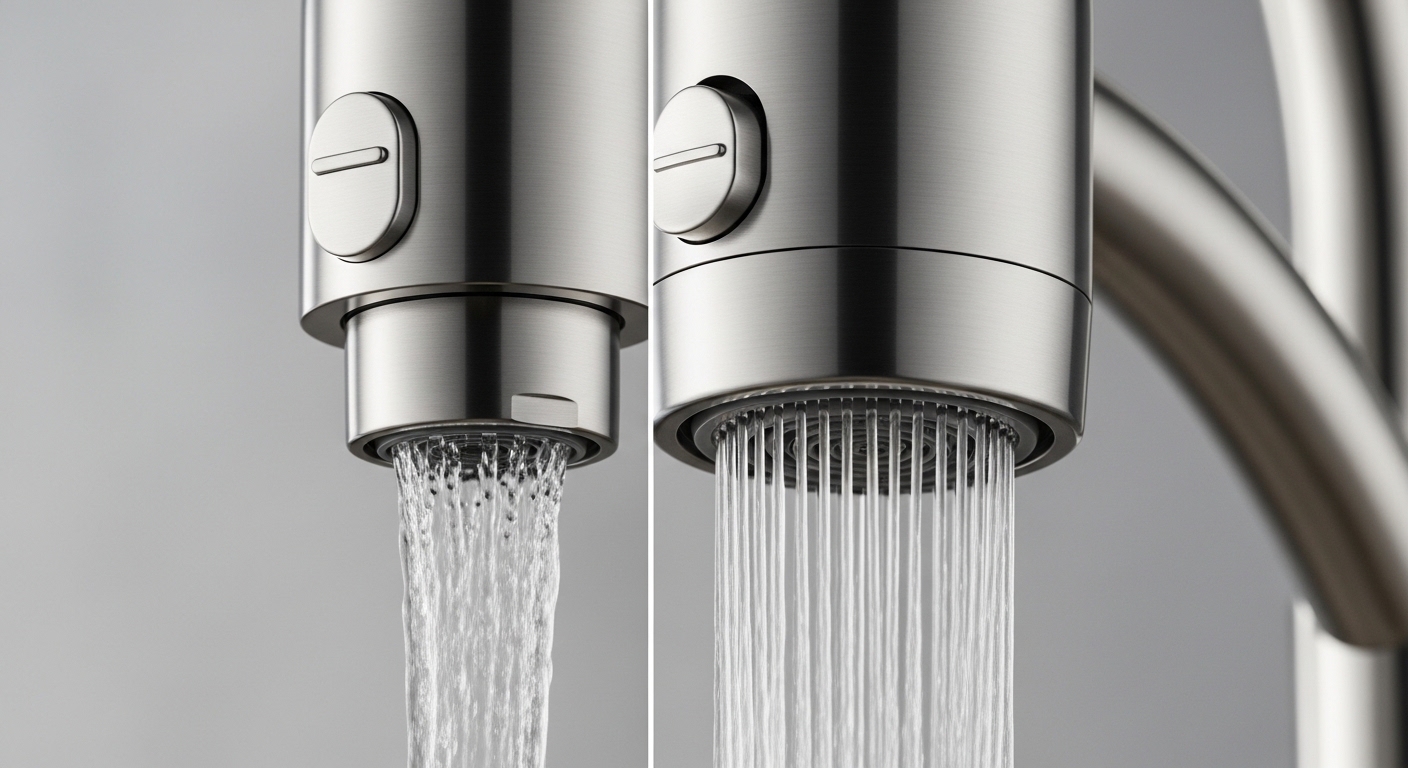
If you’ve been shopping for a kitchen faucet, the faucet spray meaning question comes up fast: product pages throw around words like “stream,” “spray,” “sweep,” “boost,” and “pause” as if everyone already knows the difference. Here’s the plain-English version — the “spray” is simply the pattern and force of the water coming out of the faucet head, and the mode you choose changes how fast you fill a pot, how much you splash, and how easily you knock stuck-on food off a pan. Below we break down every spray type, what the numbers actually mean, and how to pick the right one for your sink and water pressure.
What does “faucet spray” actually mean on a product page?
Faucet spray means the water delivery mode — the shape, pattern, and pressure of the water as it leaves the sprayer head. When a listing says “dual-function spray head,” it means the head can switch between at least two water patterns. When it says “three-function,” you get a third mode, usually a high-pressure jet or a gentle pause.
Think of the faucet head as having a set of internal channels. Press the toggle and a small diverter redirects water through a different set of nozzle holes, changing how the water behaves. The physical hardware doing this is the spray face — the round or oval disc at the tip of the faucet with the rubber nozzle dots on it. Those rubber dots aren’t decoration; they’re what makes limescale wipe off with your thumb instead of clogging the holes.
Aerated stream vs. spray — what’s the real difference?
An aerated stream mixes air into a single soft column of water, while a spray breaks the water into many separate jets fanned out in a cone. Use the stream for filling glasses, filling pots, and anything where you don’t want splashback. Use the spray for rinsing lettuce, washing down a cutting board, or knocking rice and sauce off a plate before it goes in the dishwasher.
The reason the stream feels “fuller” but doesn’t splash is aeration: air bubbles bulk up the water so it looks generous while actually using less flow. That’s also why an aerated stream is quieter and gentler on your hands. The spray mode skips the aeration and instead uses pressure and angle to cover a wider area with more mechanical force — great for cleaning, bad for filling a coffee cup without soaking your shirt.
What are the different faucet spray modes, and when do you use each?
Most kitchen faucets offer between two and four spray modes. Here’s what each one does and the real-world job it’s built for.
| Spray Mode | What It Looks Like | Best For | Typical Flow |
|---|---|---|---|
| Aerated Stream | Soft, single column with air mixed in | Filling pots, glasses, gentle rinsing, everyday use | 1.5–1.8 GPM |
| Spray | Wide fan of separate jets | Rinsing produce, washing dishes, cleaning the sink basin | 1.5–1.8 GPM |
| Boost / PowerClean | Concentrated high-pressure jet | Blasting stuck-on food, scrubbing pots | Same GPM, higher velocity |
| Sweep | Flat, wide blade of water | Sweeping debris to the drain, rinsing the whole basin | 1.5–1.8 GPM |
| Pause | Stops water at the head, tap stays on | Moving the sprayer without splashing across the counter | 0 GPM (temporary) |
Notice the flow rate barely changes between modes on a compliant faucet — that’s on purpose. Modern faucets are capped at a maximum flow (often 1.8 GPM in the U.S., 1.5 GPM in water-conscious states), so a “boost” mode doesn’t cheat that limit. Instead, it forces the same amount of water through a smaller opening, which raises velocity — the water hits harder without using more water. That’s the trick that lets you clean a lasagna pan without a wasteful firehose.
What is “sweep” spray and is it worth paying extra for?
Sweep spray shapes the water into a flat, wide blade — like a squeegee made of water — designed to push food scraps and debris toward the drain. It’s worth it if you cook a lot and hate scrubbing your sink basin by hand, but it’s a convenience feature, not a must-have. If your budget is tight, a solid dual-function stream/spray head handles 95% of kitchen tasks.
Sweep is most useful in a deep single-bowl sink where debris collects in the corners. In a shallow or divided sink you’ll get less benefit because you can already reach everything. Think of sweep as a “nice to have” that shows up on mid-tier and premium faucets rather than a reason on its own to jump a price bracket.
Does faucet spray meaning matter for water pressure and GPM?
Yes — spray mode directly affects how the water feels, even though a compliant faucet keeps the same GPM across modes. GPM (gallons per minute) is the total volume; spray mode changes the velocity and coverage of that fixed volume. So a “weak” spray usually isn’t a low-GPM problem — it’s a clogged aerator, low household pressure, or a spray face caked in limescale.
If your spray feels weak or uneven, the culprit is almost always mineral buildup on the nozzle dots. Because faucet spray faces sit right where hard water evaporates, they scale up fast. The good news is the fix is a five-minute soak — we walk through it in our guide to the best hard water cleaner for a faucet with stubborn lime buildup. Rubbing the rubber nozzles clears most clogs instantly; a deeper vinegar soak handles the rest.
Here’s a quick diagnostic checklist when your spray underperforms:
- Uneven fan or stray jets: limescale on the spray face — wipe the rubber dots, then soak in a 1:1 vinegar solution for 30 minutes.
- Weak in every mode: unscrew and clean the aerator, or check that your under-sink shutoff valves are fully open.
- Won’t switch modes cleanly: the internal diverter is sticking — often mineral-related, sometimes a worn button spring.
- Low across the whole house: a pressure-regulator or supply issue, not the faucet itself.
What GPM should a good faucet spray have?
Aim for 1.5 to 1.8 GPM — that’s the sweet spot most quality kitchen faucets hit. Anything above 2.2 GPM is outdated and often non-compliant in water-restricted regions; anything under 1.2 GPM can feel frustratingly slow when filling a stockpot. The key is that a well-engineered 1.5 GPM sprayer with a good spray face and boost mode will out-clean a poorly designed 2.2 GPM faucet every time.
Single-spray vs. multi-function heads — which should you buy?
Buy a multi-function (dual or three-function) head unless you have a specific reason not to. The ability to switch between a gentle stream and a strong spray covers the two things you do most at a sink — filling and rinsing — and the price difference is small on modern pull-down faucets. A single-mode faucet only makes sense for a bar prep sink, a utility application, or a strict period-authentic look.
If you’re weighing a two-handle pull-down setup, the spray head works the same way regardless of handle count — the modes live in the sprayer, not the handles. Our two-handle pull-down buyer’s guide covers how handle design and spray function pair up. And if you’re torn between a tall and a short faucet body, spout height changes splash behavior with each spray mode — the low arc vs. high arc comparison breaks down which arc suits your sink depth.
Do pull-down and pull-out sprayers spray differently?
Not fundamentally — both deliver the same spray modes; the difference is ergonomics. A pull-down sprayer drops straight down into the sink from a tall spout, ideal for deep single-bowl sinks and filling tall pots. A pull-out sprayer extends toward you on a shorter spout, better for smaller kitchens, shallow sinks, and rinsing items on the counter. The spray face and its modes can be identical on both.
If you have a low window behind the sink, a pull-out avoids the tall arc clearance problem entirely. If you regularly wash sheet pans and stockpots, the pull-down’s extra height and vertical spray reach wins. Either way, prioritize a magnetic dock — it’s what keeps the sprayer head snapping back into place cleanly for years instead of drooping over time.
How do you clean and maintain a faucet spray head so it keeps working?
Wipe the rubber nozzle dots weekly and deep-soak the spray face in vinegar monthly if you have hard water. That two-step routine prevents 90% of spray complaints. The rubber dots are self-cleaning by design — a firm rub with your thumb pops off fresh mineral deposits before they harden into the nozzle channels.
Here’s the full maintenance routine:
- Weekly: Run the spray mode and rub the rubber nozzle face with your thumb or a cloth to dislodge fresh scale.
- Monthly (hard water): Fill a bag or bowl with equal parts white vinegar and water, submerge the spray head for 30–60 minutes, then rinse and cycle through all modes.
- Every few months: Unscrew the aerator (if separate) and clear it the same way.
- As needed: If mode switching sticks, a vinegar soak usually frees the internal diverter; persistent failure means a worn cartridge or diverter that a manufacturer warranty typically covers.
A good spray head is also a matter of build quality and certification. Faucets that carry UPC/cUPC certification have passed independent testing for material safety and durability — worth checking before you buy, as we explain in our breakdown of what kitchen faucet UPC certification means. A certified spray head with a solid brass or lead-free body and a ceramic diverter will outlast a bargain plastic unit by years.
Which faucet spray type is best for your specific kitchen?
Match the spray to your cooking style and sink. If you cook heavy meals and scrub a lot of pots, prioritize a three-function head with a boost/PowerClean jet. If you mostly fill kettles and rinse produce, a clean dual-function stream/spray is plenty. If you have very hard water, prioritize a rubber-nozzle spray face over a metal one so cleaning stays a five-second wipe.
- Heavy home cooks: Three-function head with a high-pressure boost mode.
- Small kitchens / shallow sinks: Pull-out sprayer, dual-function.
- Deep single-bowl sinks: High-arc pull-down with sweep mode.
- Hard-water regions: Rubber nozzle spray face + monthly vinegar soak habit.
- Bar / prep sinks: Compact single or dual-function is fine.
FAQ
What does faucet spray meaning refer to in simple terms?
It refers to the water pattern coming out of the faucet head. “Stream” is a soft single column for filling and gentle rinsing; “spray” is a wide fan of jets for cleaning dishes and produce. Multi-function heads let you switch between them with a button on the sprayer.
What’s the difference between aerated stream and spray on a kitchen faucet?
An aerated stream mixes air into one soft column so it fills without splashing, while a spray breaks water into many separate jets for stronger, wider cleaning coverage. Use stream for filling pots and glasses; use spray for rinsing food off dishes and produce.
Why is my faucet spray weak or uneven?
Almost always mineral buildup on the spray face. Rub the rubber nozzle dots to clear fresh scale, then soak the head in a 1:1 white-vinegar solution for 30 minutes. If it’s weak in every mode, check the aerator and make sure your under-sink shutoff valves are fully open.
Is a three-function spray head worth the extra money?
If you scrub a lot of pots and pans, yes — the boost or PowerClean jet concentrates the same GPM into a higher-velocity stream that blasts stuck-on food. If you mostly fill kettles and rinse produce, a two-function stream/spray head handles everything you need for less money.
Does spray mode change how much water I use?
No — on a compliant faucet the GPM stays the same across modes (typically 1.5–1.8 GPM). Boost mode doesn’t use more water; it forces the same volume through a smaller opening so it hits harder. Spray mode changes velocity and coverage, not total consumption.
What spray face material lasts longest with hard water?
A rubber nozzle spray face is best for hard water because limescale wipes off the flexible dots with a thumb rub, whereas metal-hole faces clog and need soaking more often. Pair it with a lead-free brass or stainless body and a ceramic diverter for the longest service life.
Author note: This guide was written by the VIGA product team, drawing on hands-on testing of pull-down and pull-out spray heads across a range of water-pressure and hard-water conditions.
About VIGA (vigacc): VIGA is a faucet and bathroom-fixture manufacturer specializing in kitchen and bath fittings. Our kitchen faucets are built with lead-free bodies and ceramic diverters, tested to UPC/cUPC standards, and backed by a manufacturer warranty covering the cartridge and spray mechanism. Explore more buying guides at www.viga.cc.
WeChat
Scan the QR Code with WeChat