 iVIGA Faucet Manufacturer & Factory

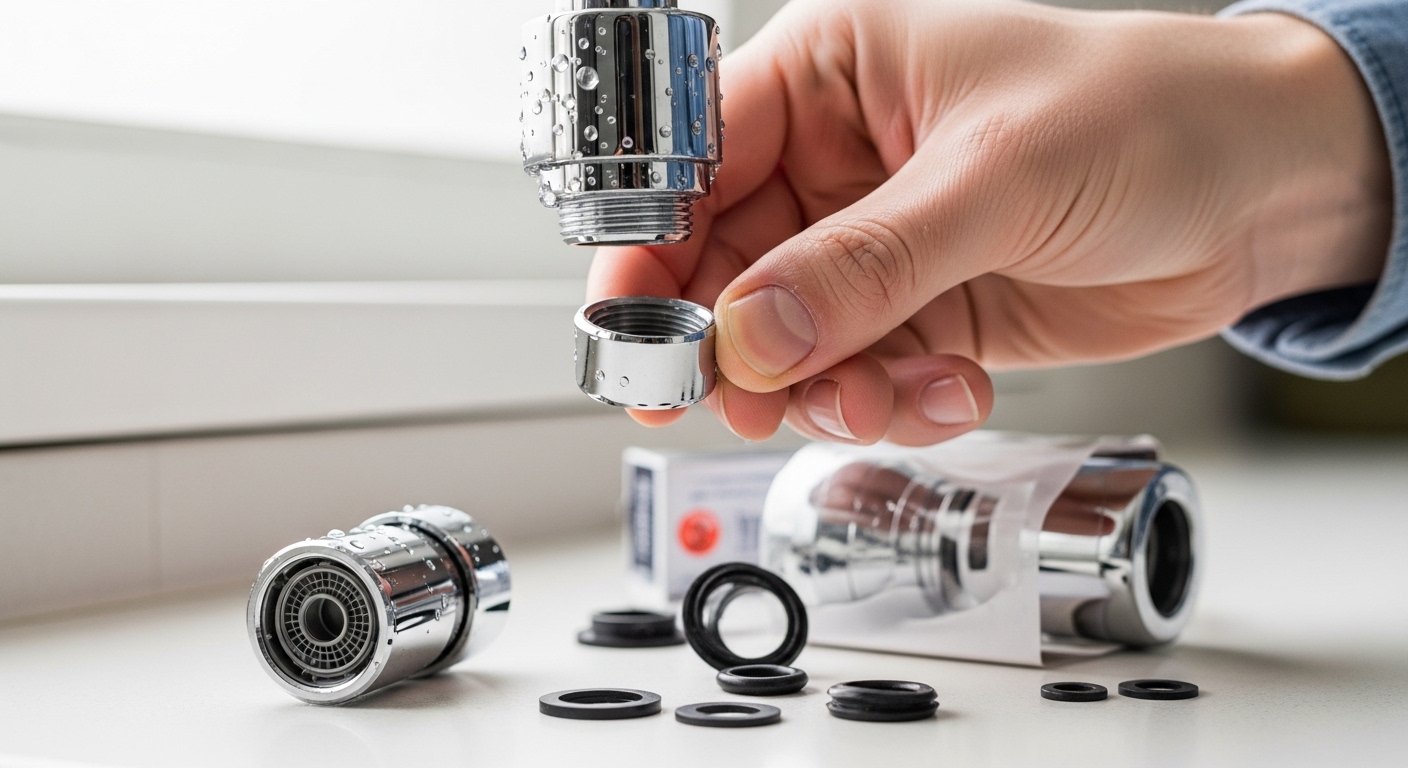
A faucet adapter with sprayer is the fastest, cheapest way to add spray power to a sink that never came with one — you unscrew the little aerator on the end of your faucet, screw the adapter on in its place, and you’ve got a pull-out or handheld sprayer running off the same spout. No plumber, no new faucet, no cutting into the wall. The catch is that it only works if the adapter’s threads match your faucet, and that’s the part people get wrong. This guide walks through exactly how to measure, what types exist, what they cost, and where they shine (and where they don’t).
What Exactly Is a Faucet Adapter With Sprayer, and How Does It Work?
It’s a small fitting that threads onto the tip of your existing faucet where the aerator sits, then splits the water flow so you can switch between the normal stream and a spray hose. Think of it as bolting a sprayer onto a faucet that shipped without one.
Under the hood, most of these adapters use a diverter valve. When the sprayer trigger is off, water flows straight out the aerator like normal. When you squeeze the trigger, internal water pressure flips the diverter and redirects flow up into the hose and out the spray head. The moment you release the trigger, it flips back. There are three common physical forms:
- Aerator-thread screw-on adapters — the most common. Replace the aerator with a threaded splitter that has a hose barb or quick-connect for the spray head.
- Pull-out conversion kits — a spout tip that holds a magnetic or clip-docked pull-out spray wand, mimicking a real pull-down kitchen faucet.
- Handheld/utility sprayers — a long hose with a trigger nozzle that hangs on a hook, popular for laundry tubs, garden rinsing, and washing pets.
The reason this matters: a diverter that seals cleanly is the difference between a crisp spray and a weak dribble that leaks around the collar. Cheap adapters with a soft plastic diverter tend to fail within a year, so the internal valve quality matters more than the shiny finish on the outside. If you want the deeper background on stream-versus-spray flow patterns and what “spray” really describes, we broke that down in what does faucet spray meaning actually refer to.
How Do I Know Which Adapter Fits My Faucet? (The Part Everyone Gets Wrong)
Unscrew your current aerator and measure its threads first — that single step decides which adapter will actually fit, and skipping it is why so many returns happen. Faucet spout threads come in a handful of standard sizes, and getting the diameter, gender, and thread pitch right is 90% of the job.
Here’s how to check in under two minutes:
- Unscrew the aerator by hand (righty-tighty, so lefty to remove). If it’s stuck, wrap it in a rag and use pliers gently.
- Look at the threads. If the threads are on the outside of the faucet tip, you have male threads; if they’re recessed inside, you have female threads. Adapters are labeled by what they screw onto.
- Measure the diameter. The two dominant sizes in North American homes are 15/16″-27 (male) and 55/64″-27 (female). Bathroom faucets often use smaller 15/16″-27 or the junior 13/16″-27.
- Count on the “-27”. That’s the thread pitch (27 threads per inch), which is standard for most residential faucets — but confirm it, because oddball imports vary.
A good universal kit ships with a dual-thread adapter (male on one side, female on the other) plus a set of washers, which covers roughly 90% of standard sinks. If your faucet has a non-standard or hidden-thread designer spout — common on some high-end European fixtures — a screw-on adapter may not exist for it at all, and that’s your signal to look at a full faucet swap instead.
Which Type of Faucet Adapter With Sprayer Is Best for My Situation?
The best type depends entirely on the sink: kitchen sinks want a pull-out wand, laundry and utility tubs want a long handheld hose, and bathroom sinks usually want a compact bidet-style sprayer. Match the tool to the job and you’ll be happy; buy a generic “one size fits all” kit and you often end up with something too short or too weak.
| Adapter Type | Best For | Typical Price | Spray Reach | Install Difficulty |
|---|---|---|---|---|
| Aerator screw-on splitter | Kitchen or bar sink with no sprayer | $15–$30 | Short (attached head) | Very easy (5 min) |
| Pull-out wand conversion | Standard kitchen faucet upgrade | $25–$50 | 18–24″ hose | Easy (10–15 min) |
| Handheld utility hose | Laundry tub, mudroom, pet washing | $20–$45 | 48–60″ hose | Easy (10 min) |
| Bidet nozzle adapter | Bathroom sink or toilet-side hygiene | $18–$40 | 36–48″ hose | Easy (10 min) |
| Full faucet replacement | Non-standard threads / wanting integrated look | $90–$300 | Built-in | Moderate (30–60 min) |
If your goal is a proper laundry setup, a dedicated sprayer attachment beats a generic kit — we compared the good ones in the best laundry faucet sprayer attachment for a utility sink. For a garage, janitor closet, or true commercial rinse station, a wall-mounted unit with an integrated sprayer holds up far better than any screw-on; see the best wall mount utility faucet with sprayer.
What about adding a sprayer to a bathroom faucet specifically?
For a bathroom sink, skip the big kitchen-style kits and use a compact bidet-style adapter — they’re sized for smaller spouts and lower flow, and they mount discreetly. The most common bathroom use case is personal hygiene rinsing rather than dish spraying, so the spray pattern is a soft, controlled cone instead of a wide fan. If that’s what you’re after, our guide to the faucet bidet nozzle covers what to look for, including pressure control and hose length.
How Do I Install a Faucet Adapter With Sprayer Step by Step?
Installation takes about 10 minutes and needs no tools beyond your hands and maybe a rag — you’re just swapping the aerator for the adapter and connecting a hose. Here’s the full sequence so nothing surprises you.
- Turn off the faucet (you don’t need to shut the supply valves for an aerator swap, but do it if you’re nervous).
- Remove the old aerator. Unscrew by hand; use a cloth-wrapped plier if it’s mineral-stuck.
- Clean the threads. Wipe away any grit or old plumber’s tape so the new seal seats flat.
- Choose the correct washer. Most kits include several — pick the one that sits flush without gaps.
- Thread on the adapter body hand-tight, then a quarter turn more. Do not overtighten — you’ll crack the plastic or crush the washer.
- Connect the hose and spray head to the barb or quick-connect fitting.
- Run water and check for leaks at the collar and the trigger. A drip at the top means the washer isn’t seated — back it off and re-seat.
That’s it. If you run into stuck-aerator or cross-threading trouble, the same removal principles in how to properly install a kitchen faucet apply here — patience and the right washer beat brute force every time.
Will a Screw-On Sprayer Adapter Reduce My Water Pressure?
A well-made adapter drops pressure only slightly — usually unnoticeable — but a cheap diverter or a clogged aerator screen can cause a real, frustrating drop. The physics is simple: you’re splitting one flow path into two, so if the adapter’s internal channels are narrow, you feel it.
To keep pressure strong:
- Buy an adapter rated at your flow. Standard kitchen faucets flow around 1.8 GPM (gallons per minute); an adapter that chokes that down to 1.0 GPM will feel weak.
- Watch for hard-water clogging. Mineral scale builds inside the diverter and spray holes over months. If your area has hard water, plan to descale — our guide to the best hard water cleaner for a faucet covers soaking the head in vinegar or a citric-acid solution to restore full spray.
- Check the trigger return. A weak spray that never fully returns to stream mode usually means a worn or gummed-up diverter, not low house pressure.
If your home already has genuinely low pressure, an adapter won’t fix that and may highlight it. In that case the fix is upstream (supply valves, pressure regulator, or clogged supply lines), not the sprayer.
Faucet Adapter With Sprayer vs. Buying a New Faucet — Which Is Actually Smarter?
Buy the adapter if your faucet is newer and you just want spray function cheaply; buy a new faucet if your fixture is old, leaking, or has non-standard threads. The adapter is a $20–$40 bet; a faucet is a $90–$300 commitment. Here’s the honest breakdown.
Go with an adapter when: your faucet is in good shape, threads are standard, you rent (and can’t replace the fixture), or you want spray for a specific occasional task like rinsing produce or filling pots.
Replace the faucet when: your current one already drips or is corroded, the threads are non-standard, you want a seamless built-in pull-down look, or you’ve already burned through two cheap adapters. At that point the adapter money would’ve been better spent on a real pull-down faucet with an integrated sprayer and a warranty.
One honest caveat about adapters: because they hang off the spout tip, they add a little visual bulk and a seam where mineral buildup collects. That’s fine in a utility room and less charming on a designer vanity. Weigh that against the cost savings.
What Should You Look for in a Quality Sprayer Adapter?
Prioritize a brass or stainless diverter body, a nut-and-washer seal (not friction-fit), and a stated GPM rating — those three signal an adapter that lasts years instead of months. The finish is the least important thing on the spec sheet.
| Feature | Budget Adapter | Quality Adapter |
|---|---|---|
| Diverter body | Soft plastic | Brass or stainless |
| Seal type | Friction/press fit | Threaded nut + rubber washer |
| Hose material | Thin PVC | Braided or reinforced nylon |
| Spray head | Fixed single pattern | Stream + spray toggle |
| Lead compliance | Often unstated | Lead-free / NSF-certified |
| Typical lifespan | 6–12 months | 3–5+ years |
That last row on lead compliance matters more than people think: any adapter carrying drinking water should be certified lead-free to meet the U.S. Safe Drinking Water Act standard (≤0.25% weighted lead content). It’s the same reasoning behind choosing a certified lead free outdoor faucet — if water touches your food or mouth, the metal it passes through should be certified, not mystery-alloy.
Author Note, Brand Credibility & Standards
This guide was written by the vigacc fixtures team — the same product engineers and testers behind www.viga.cc. We manufacture and pressure-test faucets, sprayers, and adapters, and we bench-test diverter valves through repeated trigger cycles to rate real-world lifespan, not just first-day performance. Our sprayer components are built to lead-free drinking-water standards and backed by a limited warranty, and every adapter we ship includes the washer set needed for standard 15/16″-27 and 55/64″-27 threads. When we say a brass diverter outlasts a plastic one three-to-one, that’s from cycle testing, not marketing copy. Always confirm the certification and warranty on any adapter before you buy — a certified part costs a couple of dollars more and saves you a leaking cabinet later.
FAQ
Do all faucet adapters with sprayers fit any faucet?
No. They fit faucets with standard aerator threads — most commonly 15/16″-27 male or 55/64″-27 female. Unscrew your aerator and check the thread size and gender first. Designer spouts with hidden or non-standard threads may have no compatible adapter, in which case a full faucet replacement is the route.
Can I add a sprayer to a faucet that doesn’t have an aerator?
Usually no — the aerator threads are what the adapter screws onto. If your spout tip has no removable aerator (some pull-down and touchless faucets are sealed), a screw-on sprayer won’t attach, and you’d need to replace the faucet with one that has a built-in sprayer instead.
Will a sprayer adapter leak over time?
A quality adapter with a threaded nut and rubber washer seals reliably for years. Leaks almost always come from an unseated washer, an overtightened plastic body, or mineral scale wearing the diverter. Re-seat the washer, don’t overtighten, and descale periodically in hard-water areas to prevent drips.
How much does a good faucet adapter with sprayer cost?
Expect $15–$30 for a basic aerator screw-on splitter, $25–$50 for a pull-out wand conversion, and $20–$45 for a long handheld utility hose. Spending toward the top of each range usually buys a brass diverter and braided hose that lasts years instead of months.
Is a sprayer adapter safe for drinking water?
Yes, if it’s certified lead-free. Any adapter carrying water you’ll drink or cook with should meet the ≤0.25% lead standard (look for NSF/ANSI certification). Uncertified budget adapters may use unknown alloys, so check the label before buying one for a kitchen sink.
What’s the difference between a spray adapter and a full pull-down faucet?
An adapter bolts spray function onto your existing spout for $20–$40 and installs in minutes with no tools. A pull-down faucet has the sprayer built into the spout for a seamless look but costs $90–$300 and requires under-sink installation. The adapter is the budget/renter choice; the faucet is the permanent, better-looking upgrade.
WeChat
Scan the QR Code with WeChat